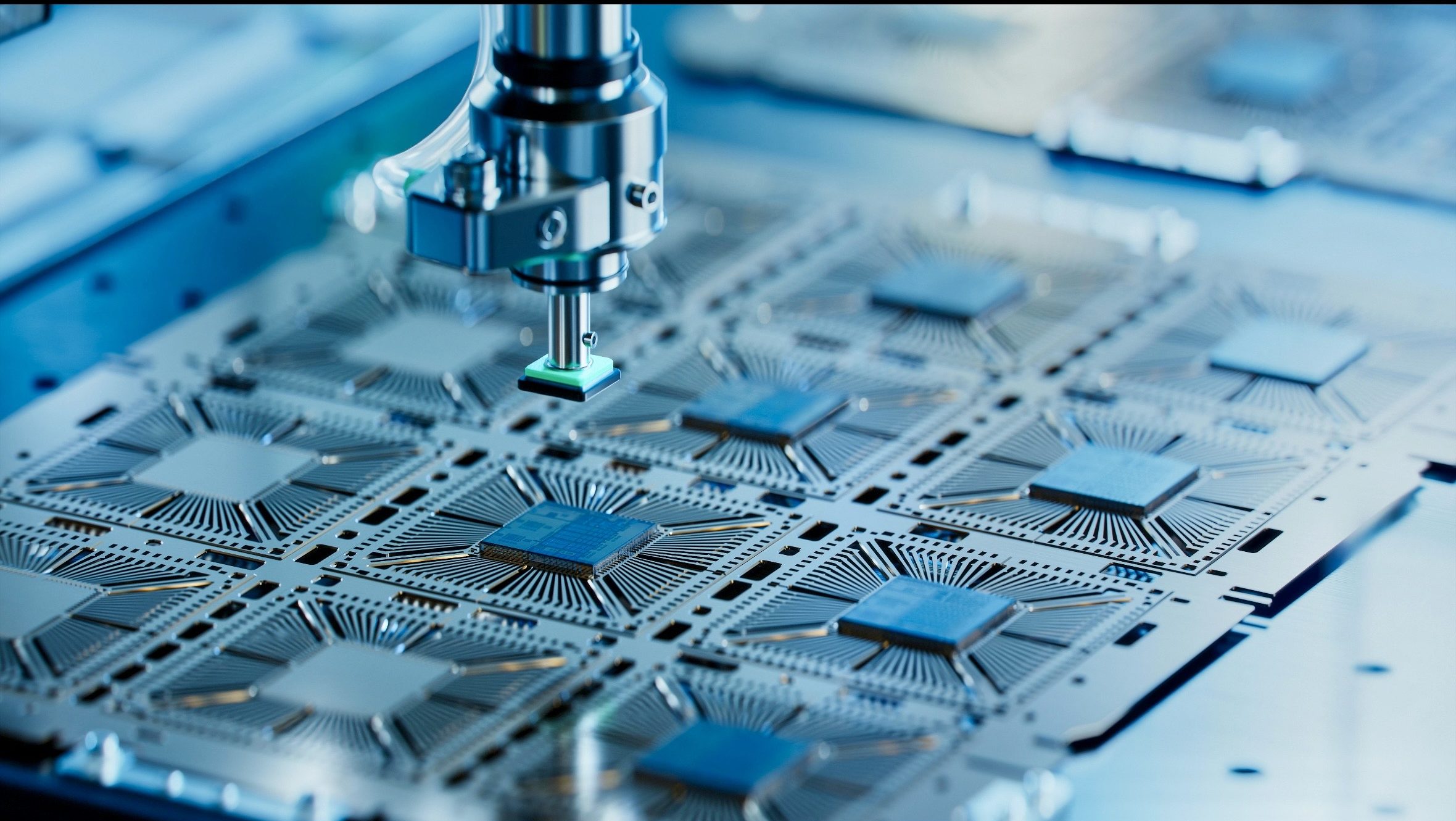
Artificial intelligence demand is driving one of the most significant expansions in semiconductor manufacturing in decades. Companies including NVIDIA, Advanced Micro Devices, Intel, TSMC, Samsung Electronics, and Qualcomm are increasing production capacity to meet growing demand for AI-capable processors.
AI systems require specialised hardware such as graphics processing units (GPUs), tensor cores, and neural processing units (NPUs). These components are essential for training large language models, powering generative AI applications, running enterprise automation platforms, and enabling real-time AI processing in consumer devices.
Cloud providers have significantly expanded AI-optimised data centres to support machine learning workloads. Training advanced AI models requires thousands of high-performance GPUs operating in parallel, driving increased investment in cooling infrastructure, energy capacity, and high-bandwidth memory systems. Analysts report that AI data centre build-outs are influencing global electricity planning and semiconductor supply chains.
At the same time, AI processing is shifting toward “edge computing,” where AI models operate directly on smartphones, laptops, and embedded devices rather than relying solely on cloud servers. Modern flagship processors now integrate dedicated NPUs capable of running language models, image recognition tools, translation systems, and health-monitoring analytics locally. This shift reduces latency and enhances privacy by limiting external data transmission.
Semiconductor fabrication at advanced process nodes such as 3-nanometre and upcoming 2-nanometre technologies has become central to competitive positioning. TSMC remains the largest contract chip manufacturer globally, while Intel and Samsung are investing heavily to expand advanced fabrication capabilities. Governments in the United States, European Union member states, Japan, and South Korea have introduced semiconductor incentive programmes to strengthen domestic production and reduce geopolitical supply risks.
The semiconductor sector has also become strategically significant from a national security perspective. Export controls and technology restrictions have reshaped global chip trade flows, particularly concerning advanced AI accelerators and manufacturing equipment.
Financial markets continue to respond strongly to AI-driven chip demand. AI infrastructure investment has influenced stock valuations, venture capital funding, and capital expenditure forecasts across the technology industry. Semiconductor equipment manufacturers and memory producers have also experienced increased demand due to AI server deployment.
Energy efficiency and sustainability remain active policy discussions. AI data centres require substantial power and cooling resources, prompting investment in renewable energy integration and more efficient chip architectures.
The expansion of AI semiconductor capability is expected to influence technological leadership, economic competitiveness, and digital infrastructure development over the next decade.
About the Author Brad Socha is the founder of The Universal Record, focused on sourced, factual global reporting. Coverage includes international news, geopolitics, technology, and major developments.