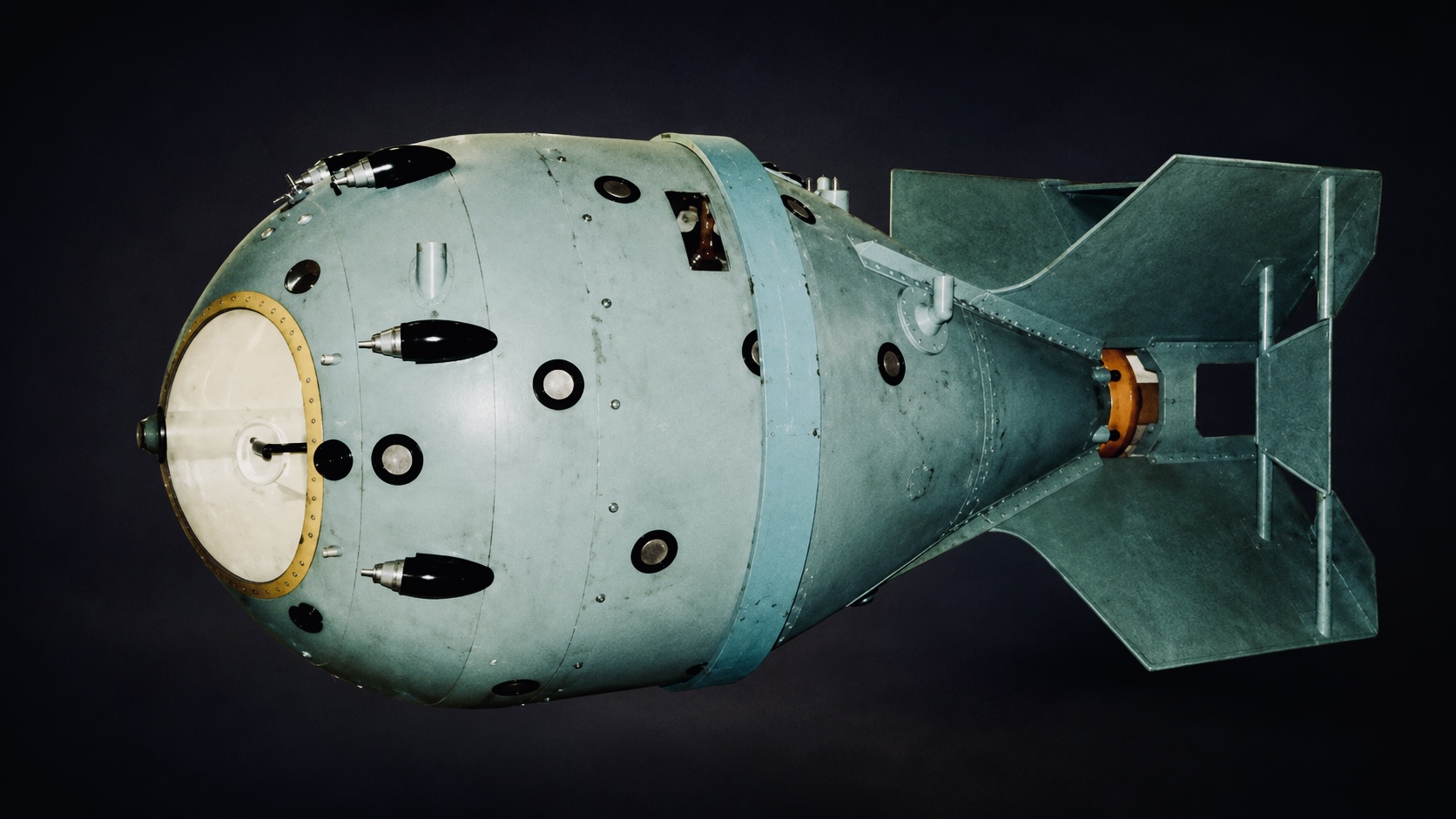
The first Soviet nuclear test ended the United States’ atomic monopoly, altered the Cold War balance of power and accelerated the race for more powerful weapons.
At 7 a.m. Moscow time on August 29, 1949, the Soviet Union detonated its first atomic weapon at the Semipalatinsk test site in the Kazakh Soviet Socialist Republic, now Kazakhstan. The successful test of RDS-1 ended the United States’ four-year monopoly on nuclear weapons and fundamentally changed the strategic balance of the emerging Cold War.
The Soviet device was a plutonium implosion weapon developed at the secret KB-11 design bureau under the scientific leadership of physicist Igor Kurchatov and chief designer Yulii Khariton. Russian archival sources place its explosive yield at approximately 20 kilotons of TNT; Kazakhstan’s reporting to the International Atomic Energy Agency gives an estimate of about 22 kilotons. The difference is small enough that the test is generally described as roughly a 20-kiloton explosion.
For Washington, the timing was a shock. American intelligence had expected the Soviet Union eventually to acquire nuclear weapons, but assessments made shortly before the test generally believed it would take longer. A nuclear rivalry that had been anticipated for the future had arrived.
Building the Soviet Atomic Bomb
The Soviet atomic program had roots in wartime nuclear research, but Joseph Stalin’s government accelerated the effort after the United States demonstrated atomic weapons in 1945. Kurchatov directed the scientific work, while the Soviet state mobilized extensive industrial, scientific and security resources behind the project.
Creating RDS-1 required far more than designing a bomb. The Soviet Union had to construct reactors and facilities capable of producing plutonium, develop specialized manufacturing techniques and bring together scientists, engineers and industrial workers within a highly secret program.
Espionage also played an important role.
Soviet intelligence obtained classified information from people associated with the American-led Manhattan Project. Declassified records from Los Alamos National Laboratory identify wartime spies including Klaus Fuchs and Theodore Hall among those who supplied nuclear information to Moscow. The RDS-1 design closely resembled the plutonium implosion concept used in the American “Fat Man” bomb dropped on Nagasaki.
That intelligence provided significant assistance, but it did not amount to a ready-made Soviet bomb. Producing the weapon still required a functioning nuclear industry, fissile material, engineering expertise and successful integration of thousands of components.
By August 1949, that infrastructure was ready.
RDS-1 was assembled and prepared at Semipalatinsk, a vast test area established on the Kazakh steppe. Russian Presidential Library records describe the weapon as approximately 3.3 metres long, 1.5 metres in diameter and weighing about 4.7 tonnes.
When it detonated on August 29, the Soviet Union became the world’s second nuclear-armed state.
The test was initially secret. The United States nevertheless operated an atmospheric monitoring program designed to detect evidence of foreign nuclear explosions. Radioactive debris associated with the Soviet test was collected and analyzed, providing evidence that an atomic explosion had occurred.
On September 23, President Harry Truman publicly announced that the United States had evidence of a recent atomic explosion inside the Soviet Union. He also acknowledged that scientists had long understood no nation could permanently monopolize the underlying knowledge of atomic weapons.
A New Nuclear Balance
The consequences went well beyond the possession of a single Soviet bomb.
Since 1945, American nuclear superiority had been an important element of U.S. strategic power. RDS-1 demonstrated that this advantage would not last indefinitely. Both superpowers now had the technological foundation for nuclear arsenals capable of threatening each other’s territory.
The Soviet breakthrough also intensified a debate already underway in the United States over whether to pursue the far more powerful thermonuclear, or hydrogen, bomb.
Five months after RDS-1, Truman announced on January 31, 1950, that he had directed the Atomic Energy Commission to continue work on all forms of atomic weapons, explicitly including the hydrogen bomb. The Soviet test was not the sole factor behind that decision, but it substantially increased the strategic pressure surrounding it.
The United States conducted the first full-scale thermonuclear test in 1952. The Soviet Union soon demonstrated thermonuclear capabilities of its own. Over the following decades, both countries developed increasingly powerful warheads, intercontinental ballistic missiles, submarine-launched weapons and strategic bomber forces.
Semipalatinsk became one of the central locations of that competition, and left a profound legacy in Kazakhstan.
Between 1949 and 1989, 456 nuclear tests were conducted at the Semipalatinsk site, according to Kazakhstan’s reporting to the International Atomic Energy Agency. They included atmospheric, surface and underground explosions that contaminated areas of the test site and exposed surrounding populations to radioactive fallout.
Kazakhstan closed Semipalatinsk on August 29, 1991, exactly 42 years after RDS-1. After independence, the country also relinquished the Soviet nuclear weapons left on its territory. In 2009, at Kazakhstan’s initiative, the United Nations designated August 29 as the International Day against Nuclear Tests.
The anniversary therefore carries two sharply different meanings: the beginning of Soviet nuclear testing in 1949 and Kazakhstan’s decision to close the test site in 1991.
RDS-1 did not by itself create the Cold War or the nuclear arms race. But its detonation removed a defining strategic imbalance. From that morning in Kazakhstan onward, nuclear weapons were no longer the exclusive capability of one superpower.
The consequences shaped deterrence, diplomacy, military planning and international security for the remainder of the Cold War, and helped create a nuclear order whose legacy remains with the world today.
About the Author Brad Socha is the founder of The Universal Record, focused on sourced, factual global reporting. Coverage includes international news, geopolitics, technology, and major developments.