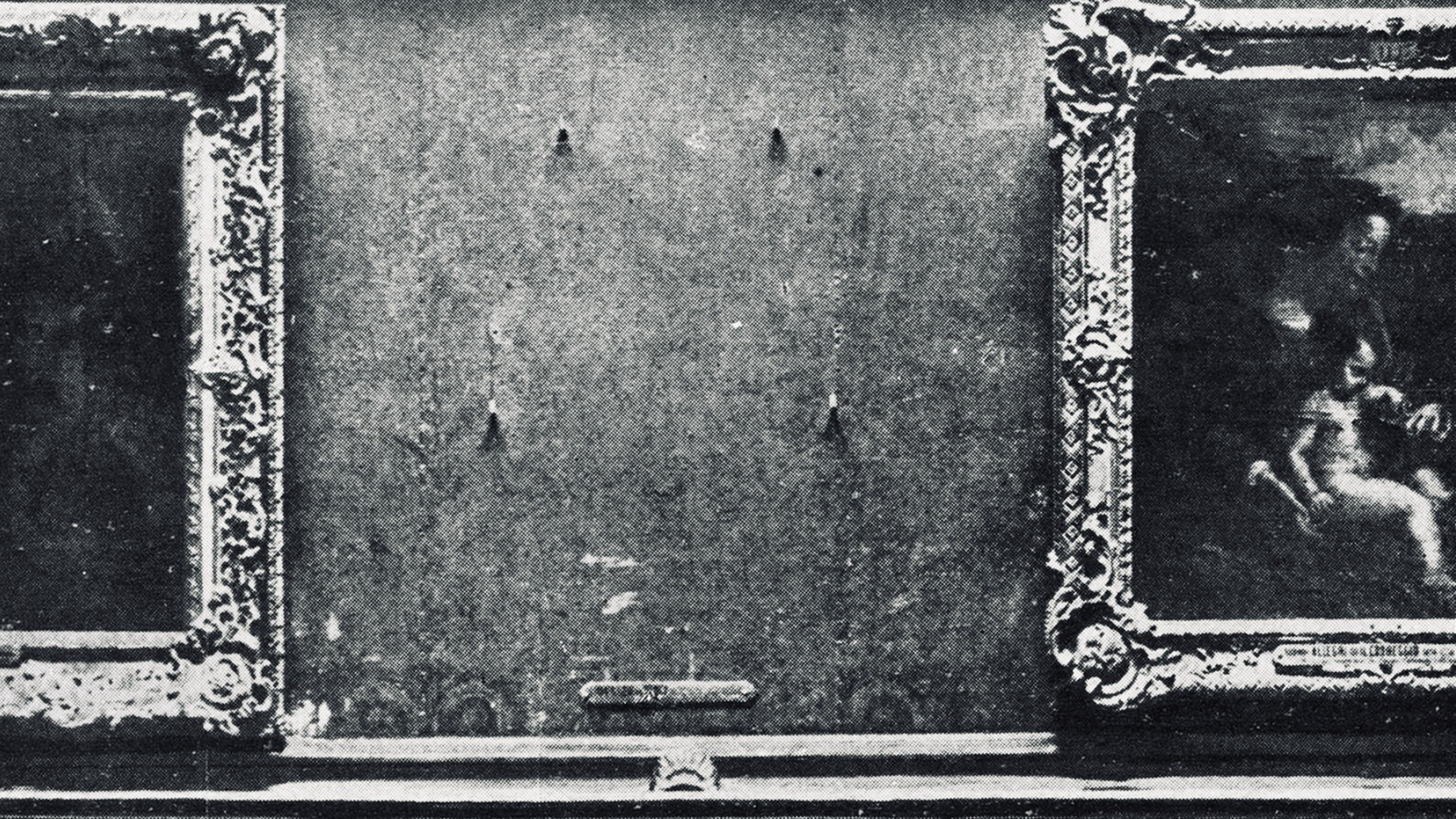
Leonardo da Vinci’s masterpiece vanished from a Paris museum on August 21, setting off an international search and helping transform the painting into a global cultural icon.
On August 21, 1911, Vincenzo Peruggia removed the Mona Lisa from the Louvre in Paris and escaped with one of Leonardo da Vinci’s most celebrated works. The painting would remain missing for more than two years, while its disappearance generated enormous press attention, an expanding police investigation and fascination far beyond the art world.
The theft did not create the painting’s importance. Leonardo’s portrait was already regarded as a major Renaissance work, admired for its technique, enigmatic expression and use of sfumato, the subtle blending of tones that softens transitions between light and shadow. But its disappearance, and the mystery surrounding it, introduced the portrait to an even larger international audience. The Louvre itself credits the theft with giving the painting greater, more popular worldwide fame.
Peruggia was particularly well positioned to carry out the crime. An Italian glazier who had worked at the Louvre, he had been employed by a company involved in installing protective glass over paintings. His familiarity with the museum and the way works were protected gave him knowledge that an ordinary visitor would not have possessed.
The Mona Lisa Disappears
The Louvre was closed to the public on Mondays, including August 21. Peruggia removed the portrait from its display and took it from the museum. Accounts of precisely how the theft was carried out have varied, particularly over whether Peruggia acted entirely alone during all stages of the operation. What is firmly established is that he was responsible for the theft and successfully carried the painting out of the Louvre.
The disappearance was not immediately recognized as a robbery. When the empty space was noticed, there was initially reason to believe the painting might simply have been removed for museum purposes. Once staff determined that it was genuinely missing, however, the incident became a major criminal investigation.
News spread rapidly. Newspapers reported the disappearance, rewards were offered and the empty space where Leonardo’s portrait had hung itself became an attraction. The theft transformed a museum security failure into an international story.
The investigation also moved in unexpected directions.
French poet Guillaume Apollinaire became a suspect because of his association with Géry Pieret, who had previously stolen small antiquities from the Louvre. Pablo Picasso, who had acquired Iberian sculptures taken from the museum by Pieret, was also questioned in connection with the investigation. Neither Picasso nor Apollinaire was responsible for stealing the Mona Lisa. The Louvre’s own historical material specifically identifies Picasso as innocent of the crime.
Peruggia, meanwhile, escaped serious suspicion. Police interviewed him during their investigation of people who had worked at the museum, but the painting remained hidden and the case went unresolved.
For more than two years, one of Europe’s most recognizable works of art was absent from the Louvre.
A Theft That Changed the Painting’s Fame
The mystery finally began to unravel in late 1913.
Peruggia took the painting to Italy and contacted Alfredo Geri, an art dealer in Florence. He claimed that he wanted to return Leonardo’s work to Italy. Peruggia apparently believed that the painting had been wrongfully taken from Italy by France, although that premise was historically mistaken: Leonardo had brought the portrait to France himself, and it later entered the French royal collection.
Geri became suspicious and alerted the authorities. The painting was authenticated, Peruggia was arrested, and after more than two years the mystery of its whereabouts was over.
Before returning to Paris, the recovered Mona Lisa was displayed in Italy, drawing considerable public attention. It finally returned to its place in the Louvre on January 4, 1914.
Peruggia was subsequently tried in Italy and received a relatively short prison sentence. His stated patriotic motive became part of the mythology surrounding the theft, although the enduring significance of the episode lies less in the thief than in what happened to the painting’s public identity.
The Mona Lisa had been respected long before 1911. Nineteenth-century writers and critics had already helped build its reputation, and Leonardo’s artistic stature was firmly established. It would therefore be misleading to claim that Peruggia single-handedly made an obscure painting famous.
The theft did something different: it expanded that fame into mass popular culture.
For more than two years, the portrait appeared in newspapers as an absent object, reproduced, discussed and searched for by people who might never have visited the Louvre. Its recovery generated another wave of attention. The Louvre describes the theft as an event that gave the painting worldwide and, crucially, more popular celebrity.
Today, the Mona Lisa occupies the Salle des États at the Louvre, protected inside a temperature- and humidity-controlled case. Millions of visitors associate the portrait with Leonardo’s technical achievement and the mystery of its famous smile. Yet part of its extraordinary modern cultural status can also be traced to three remarkable years in the early 20th century, when the world’s attention focused not on the painting hanging in a museum, but on the empty space it had left behind.
About the Author Brad Socha is the founder of The Universal Record, focused on sourced, factual global reporting. Coverage includes international news, geopolitics, technology, and major developments.