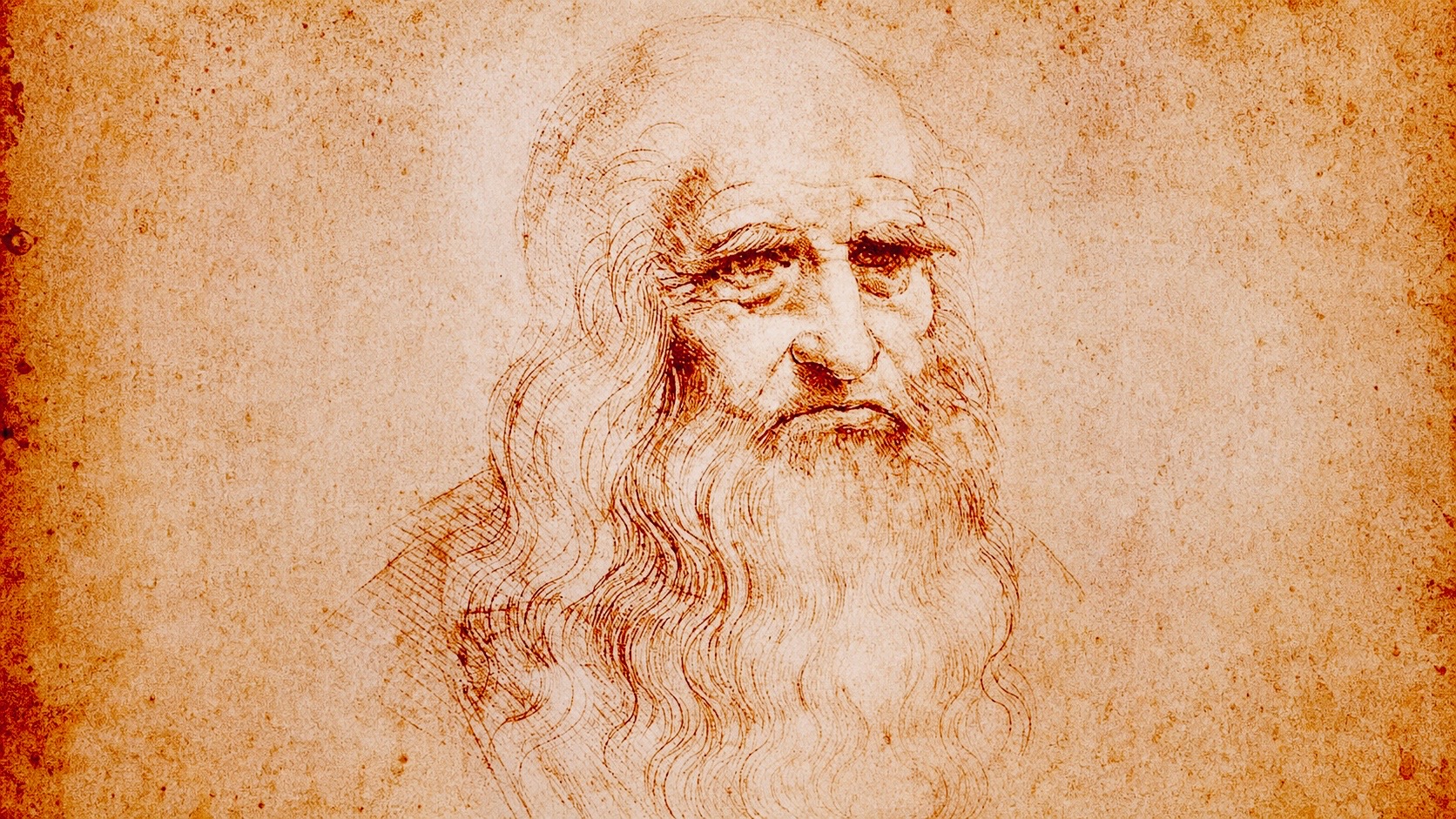
The death of Leonardo da Vinci on May 2, 1519, still resonates more than five centuries later because his influence continues to shape the modern world. At a time when artificial intelligence, engineering breakthroughs, and scientific discovery dominate global attention, Leonardo’s life serves as a powerful reminder that the fusion of art and science has long driven human progress. His ideas, many centuries ahead of their time, continue to influence how humanity approaches innovation, creativity, and knowledge.
Leonardo da Vinci died in Amboise, France, at the age of 67, leaving behind a legacy that remains unmatched in both breadth and depth. Known primarily as a painter, he was also a scientist, engineer, anatomist, inventor, and visionary thinker. His work defined the spirit of the Renaissance, a period marked by a revival of learning, exploration, and the pursuit of knowledge across disciplines.
Born in 1452 in Vinci, Italy, Leonardo demonstrated extraordinary talent early in life. He trained in Florence under the artist Andrea del Verrocchio, where he developed foundational skills in painting and sculpture. However, Leonardo quickly moved beyond traditional artistic boundaries, exploring anatomy, physics, engineering, and natural sciences in ways that were rare for his time.
His artistic contributions alone would have secured his place in history. Paintings such as the Mona Lisa and The Last Supper are among the most recognized and studied works of art in the world. Leonardo’s use of perspective, composition, and his signature technique known as sfumato transformed how artists approached realism and human expression. His ability to capture subtle emotion and depth in his subjects set a new standard that continues to influence artists today.
Yet Leonardo’s genius extended far beyond the canvas. His notebooks, filled with thousands of sketches and observations, reveal a mind constantly seeking to understand how the world works. He studied human anatomy through detailed dissections, producing drawings that were remarkably accurate and centuries ahead of medical knowledge at the time. His investigations into the human body helped lay the groundwork for future advancements in medicine and biology.
In engineering and invention, Leonardo envisioned machines that would not be realized until centuries later. His designs included early concepts for helicopters, tanks, parachutes, and complex mechanical systems. Although many of these inventions were never built during his lifetime, they demonstrate a level of foresight that continues to fascinate historians and engineers alike. His work reflects a deep understanding of mechanics, aerodynamics, and structural design.
Leonardo’s approach to knowledge was holistic. He did not separate art from science but saw them as interconnected paths toward understanding reality. This perspective is increasingly relevant today, as modern innovation often relies on interdisciplinary thinking. From technological development to creative industries, Leonardo’s philosophy continues to influence how progress is achieved.
In his later years, Leonardo accepted an invitation from King Francis I of France and spent his final days at the Château du Clos Lucé near Amboise. There, he continued his studies and shared his knowledge with the French court. His death in 1519 marked the end of a remarkable life, but not the end of his influence.
Today, Leonardo da Vinci is widely regarded as one of the greatest minds in human history. His work represents the ideal of the “Renaissance man”, someone whose curiosity and abilities span multiple fields. His legacy is not confined to art galleries or historical texts but is embedded in the foundations of modern science, engineering, and creative expression.
The significance of Leonardo’s life becomes even more apparent in the context of today’s technological advancements. As artificial intelligence, robotics, and scientific discovery continue to evolve, the integration of creativity and technical knowledge remains essential. Leonardo exemplified this integration centuries ago, demonstrating that true innovation often arises at the intersection of disciplines.
More than 500 years after his death, Leonardo da Vinci’s influence remains visible in countless aspects of modern life. His relentless curiosity, commitment to observation, and willingness to challenge established thinking continue to inspire new generations of thinkers, creators, and innovators.
His death on May 2, 1519, marked the loss of an extraordinary individual, but his ideas ensured that his impact would endure far beyond his lifetime. In many ways, the world is still catching up to the vision he began to shape during the Renaissance.
About the Author Brad Socha is the founder of The Universal Record, focused on sourced, factual global reporting. Coverage includes international news, geopolitics, technology, and major developments.