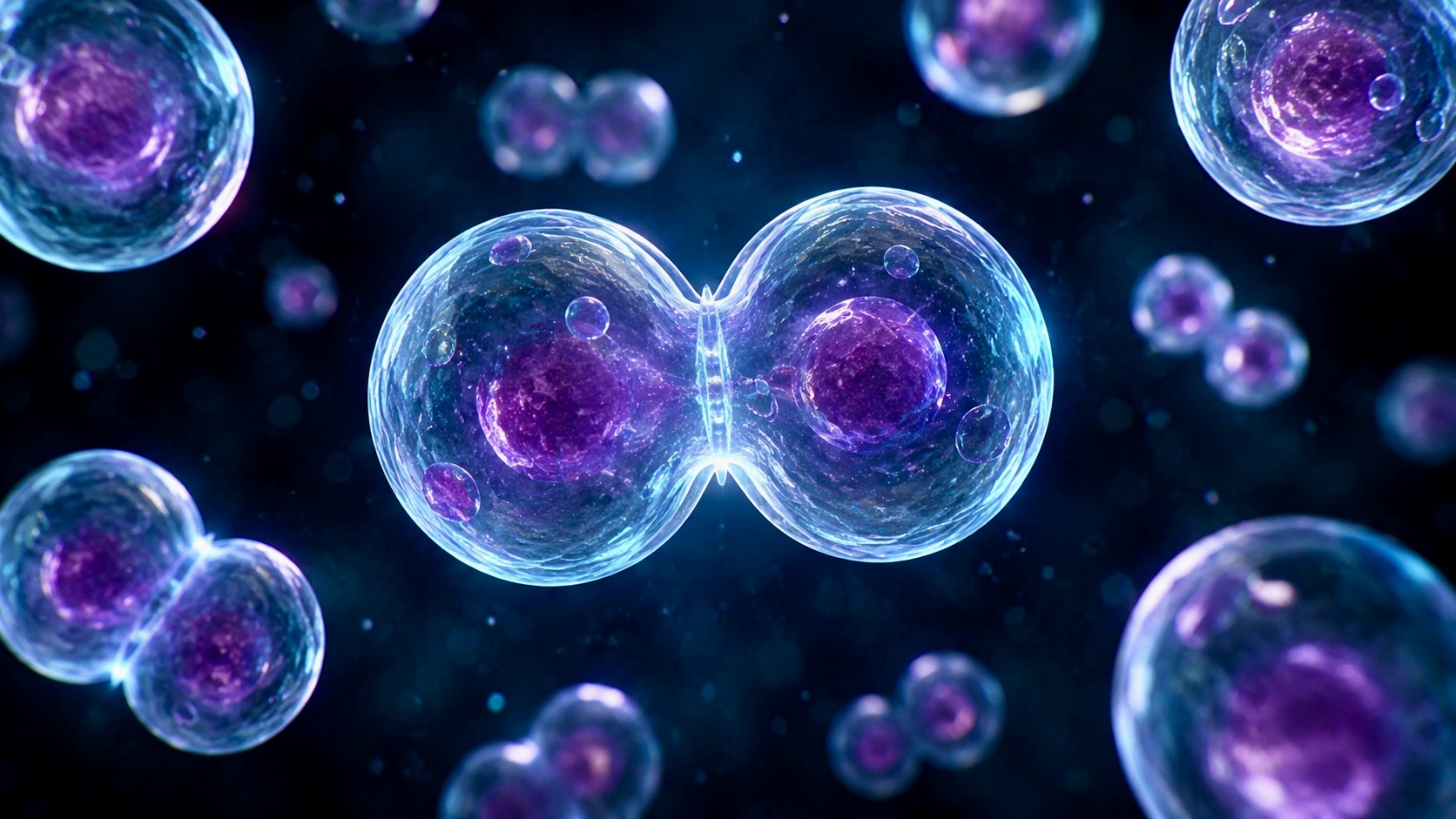
Researchers achieve a major synthetic biology milestone by creating laboratory-built cells capable of completing a full life cycle, opening new possibilities for medicine, manufacturing and biological research.
Scientists have reached one of the most significant milestones in synthetic biology to date after creating laboratory-built synthetic cells that can grow, replicate their DNA and divide, completing what researchers describe as the first full life cycle achieved by an entirely bottom-up artificial cell system. While the cells are not considered fully alive, the achievement represents a major step toward understanding how life functions and how biology itself may eventually be engineered with unprecedented precision.
The research was led by Dr. Kate Adamala and colleagues at the University of Minnesota, who developed what they call “SpudCells”, artificial cells assembled entirely from non-living chemical components rather than modified from existing organisms. Unlike genetically engineered bacteria, these synthetic cells were constructed from the ground up, allowing scientists to understand and control every major component inside the system.
For decades, researchers have attempted to build artificial cells that could mimic the essential behaviors of living organisms. Previous synthetic systems demonstrated isolated biological functions such as protein production or DNA replication, but none had successfully combined growth, genome replication and cell division into a complete cycle within a single synthetic platform.
That milestone has now been achieved.
The synthetic cells begin as microscopic membrane-bound compartments known as liposomes. Researchers inserted carefully designed synthetic DNA containing the instructions needed for basic cellular functions. The cells are then supplied with external molecular machinery, including ribosomes, enzymes and energy molecules, that allow them to manufacture proteins, duplicate their DNA and eventually divide into daughter cells.
Although the process resembles biological reproduction, the synthetic cells remain heavily dependent on their laboratory environment. They cannot independently generate the energy required to survive, produce all of their own cellular machinery or sustain unlimited generations.
For that reason, scientists emphasize that these synthetic systems are not living organisms in the same sense as bacteria, plants or animals.
Instead, they represent an artificial biological platform capable of reproducing several defining characteristics of life while remaining dependent on carefully controlled laboratory conditions.
That distinction is important.
Natural cells have evolved over billions of years and contain thousands of interconnected biochemical pathways that regulate metabolism, waste removal, repair mechanisms and adaptation to changing environments. The new synthetic cells perform only a carefully selected subset of those functions.
Even so, many researchers consider completing an integrated life cycle to be one of synthetic biology’s most important achievements.
By assembling cells entirely from known components, scientists can determine precisely which molecules are essential for basic cellular behavior and which are unnecessary. This could provide valuable insight into one of biology’s oldest questions: what is the minimum required for something to behave like a living cell?
The research also provides a powerful new platform for engineering biology.
Instead of modifying existing organisms, which often contain thousands of poorly understood genes, future synthetic cells could be designed specifically for individual tasks.
Medicine is expected to be among the first fields to benefit.
Researchers envision programmable synthetic cells that manufacture complex medicines more efficiently than current biological systems. Future versions could potentially produce difficult-to-manufacture therapeutic proteins, vaccines or personalized biologic drugs while reducing manufacturing costs.
Synthetic cells could also improve gene therapy research.
Because every component inside these cells is deliberately designed, scientists can study how individual genes behave without interference from thousands of unrelated biological processes found inside natural cells. This may help researchers develop safer and more precise methods for delivering genetic treatments to patients.
The technology could eventually contribute to artificial tissue engineering as well.
Although these synthetic cells are far from creating replacement organs, they may provide highly controllable biological building blocks that support future regenerative medicine and tissue repair technologies.
Beyond healthcare, synthetic biology could reshape industrial manufacturing.
Engineered synthetic cells may one day function as microscopic factories capable of producing pharmaceuticals, specialty chemicals, biodegradable materials, sustainable fuels or food ingredients using fewer raw materials and generating less waste than conventional industrial processes.
Food production is another area attracting growing attention.
Scientists have long explored precision fermentation and engineered microorganisms to manufacture proteins used in dairy alternatives, nutritional supplements and specialty ingredients. Synthetic cells may eventually offer even greater control over these manufacturing systems because every biological process can be intentionally designed rather than inherited through evolution.
Environmental applications are equally promising.
Future synthetic cells could potentially be engineered to break down industrial pollutants, absorb toxic chemicals, capture carbon dioxide or recover valuable materials from contaminated environments. Because they are constructed from defined components, researchers may be able to build biological systems optimized for specific environmental challenges.
Despite the excitement surrounding the research, significant technical challenges remain.
The current synthetic cells cannot survive without externally supplied nutrients, molecular machinery and carefully controlled laboratory conditions. They also accumulate errors during reproduction and lose functionality after only a limited number of generations.
Researchers acknowledge that creating a truly autonomous synthetic cell remains a long-term objective rather than an immediate reality.
The breakthrough has also renewed ethical discussions surrounding synthetic biology.
Scientists, bioethicists and regulators are debating how increasingly capable synthetic organisms should be governed. Questions include laboratory safety standards, environmental containment, intellectual property, equitable access to future technologies and safeguards against misuse.
Many researchers argue that transparency will be essential as the field advances. To encourage international collaboration, Adamala and colleagues have announced Biotic, a nonprofit initiative intended to promote open scientific development of synthetic cell technologies while encouraging responsible governance.
For now, the achievement represents less the creation of artificial life than a deeper understanding of life’s operating principles.
Researchers have demonstrated that several behaviours traditionally associated with living organisms can emerge from carefully assembled non-living components. Whether future advances eventually cross the boundary into fully autonomous synthetic life remains uncertain, but the work marks a significant milestone in humanity’s growing ability to engineer biology itself.
About the Author Brad Socha is the founder of The Universal Record, focused on sourced, factual global reporting. Coverage includes international news, geopolitics, technology, and major developments.