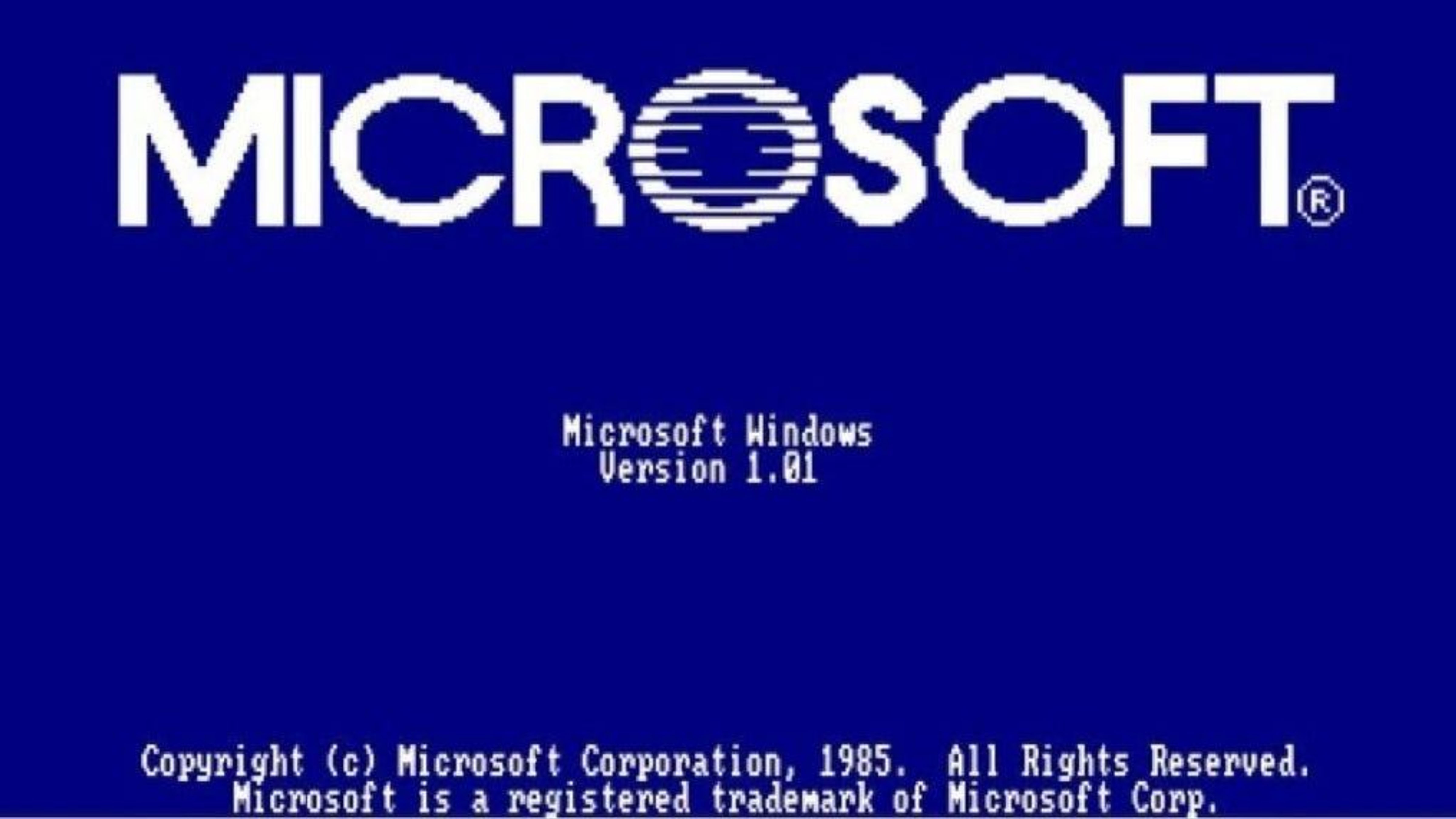
An ambitious new approach to personal computing promised to replace complicated commands with a visual interface, beginning a transformation that would take years to achieve.
Brad Socha | November 10, 2026 | 9:08 AM EST
On November 10, 1983, Microsoft introduced Windows, a new graphical computing environment designed to make personal computers easier to operate. Announced by company co-founder Bill Gates in New York City, the software promised a different way of working with computers, replacing many typed commands with visual menus, windows and mouse-controlled navigation.
Although Windows would not become commercially available until November 20, 1985, its announcement marked the beginning of one of the most influential software product families in computing history.
At the time, personal computers were becoming increasingly common in businesses and homes, but operating them often required users to memorize commands and understand unfamiliar technical procedures.
Microsoft believed graphical interfaces could help make computers more accessible to a wider audience. The idea was not entirely new, but the company’s approach would eventually bring it to millions of compatible personal computers.
The Race to Make Computers Easier to Use
During the early 1980s, personal computing was expanding rapidly.
The IBM Personal Computer, introduced in August 1981, helped establish a hardware platform that numerous manufacturers would eventually adopt or reproduce through compatible systems.
Microsoft supplied the operating system commonly known as MS-DOS, which provided the underlying software environment for many of these machines.
MS-DOS was primarily operated through text commands. Users typically entered instructions to open programs, manage files or perform other tasks.
For experienced operators, this approach was functional and efficient. For newcomers, however, learning the necessary commands could be difficult.
Meanwhile, researchers and technology companies had been developing graphical user interfaces that allowed people to interact with computers through visual elements.
Important earlier work had taken place at Xerox’s Palo Alto Research Center, where researchers explored windows, icons, pointing devices and other concepts that influenced later computer systems.
Apple introduced the Lisa computer in January 1983, offering a commercially available graphical interface with a mouse. Although expensive and not commercially successful, Lisa demonstrated how visual interaction could change the experience of using a computer.
Other companies were also developing graphical software for personal computers, including VisiCorp, whose Visi On environment competed for attention in the emerging market.
Microsoft recognized that the future of personal computing might depend not only on processing power or software compatibility but also on how easily people could interact with their machines.
Development of Microsoft’s graphical environment had begun before the public announcement. Initially known by the working name Interface Manager, the project evolved toward a system built around multiple rectangular areas on the screen.
The name Windows was eventually selected to describe these visual workspaces.
On November 10, 1983, Microsoft publicly unveiled the project, presenting it as an extension of MS-DOS rather than an entirely independent operating system.
The planned environment would allow users to work with several applications, move information between programs and navigate through menus using a mouse.
The announcement reflected an ambitious vision for software that could make existing personal computers more approachable without requiring users to abandon the growing MS-DOS ecosystem.
However, turning that vision into a reliable commercial product proved more difficult than expected.
Windows Arrives Two Years Later
Microsoft originally expected Windows to reach customers in 1984.
Development delays repeatedly pushed back its release, raising questions about whether the company could deliver the features it had promised.
By the time Windows 1.0 became available on November 20, 1985, the personal computing industry had already changed significantly.
Apple had introduced the Macintosh in January 1984, bringing another influential mouse-driven graphical interface to consumers.
When Windows finally arrived, it provided an environment in which users could interact with programs through menus, scroll bars, icons and dialogue boxes.
Applications appeared in separate areas of the screen, allowing users to switch between tasks without repeatedly closing and reopening programs.
Unlike the overlapping windows familiar to modern computer users, the main application windows in Windows 1.0 were generally arranged in a tiled layout.
The software also included basic applications such as Paint, Notepad, Calculator, Calendar, Clock and a simple game called Reversi.
These programs demonstrated how everyday tasks could be performed through a graphical interface.
However, Windows 1.0 was limited by the hardware available at the time. Personal computers generally had modest processing capabilities, restricted memory and relatively simple graphics.
The software also faced competition from other graphical systems and had relatively few applications specifically designed to take advantage of its interface.
Consequently, the first version did not achieve widespread adoption.
Microsoft continued developing the product, releasing Windows 2.0 in 1987 and Windows 3.0 in 1990.
Windows 3.0 represented an important commercial breakthrough, offering improved performance, a more capable graphical environment and broader support from software developers.
The success of Windows 3.0 and its successors helped establish Microsoft’s graphical platform as a leading environment for IBM-compatible personal computers.
In 1995, Windows 95 introduced a redesigned interface featuring the Start button and taskbar, elements that became closely associated with personal computing.
Later versions expanded Windows into increasingly sophisticated operating systems supporting networking, multimedia, internet access and a broad range of hardware.
The influence of the original announcement extended beyond Microsoft’s products.
Graphical interfaces became central to how people interacted with computers, helping reduce the technical knowledge required for many everyday tasks.
Windows did not invent graphical computing, nor was its early success guaranteed. It emerged from a period of intense experimentation and competition in which several companies contributed important ideas.
Nevertheless, Microsoft’s decision to introduce Windows in 1983 began a development effort that would help reshape the personal computer industry.
More than four decades later, the fundamental concept remains familiar: users organize information, open applications and navigate digital environments through visual controls rather than relying entirely on typed commands.
The announcement of November 10, 1983, was therefore not the arrival of a finished revolution. It was the beginning of a long transition toward making personal computing more accessible, practical and widely adopted.
About the Author Brad Socha is the founder of The Universal Record, focused on sourced, factual global reporting. Coverage includes international news, geopolitics, technology, and major developments.