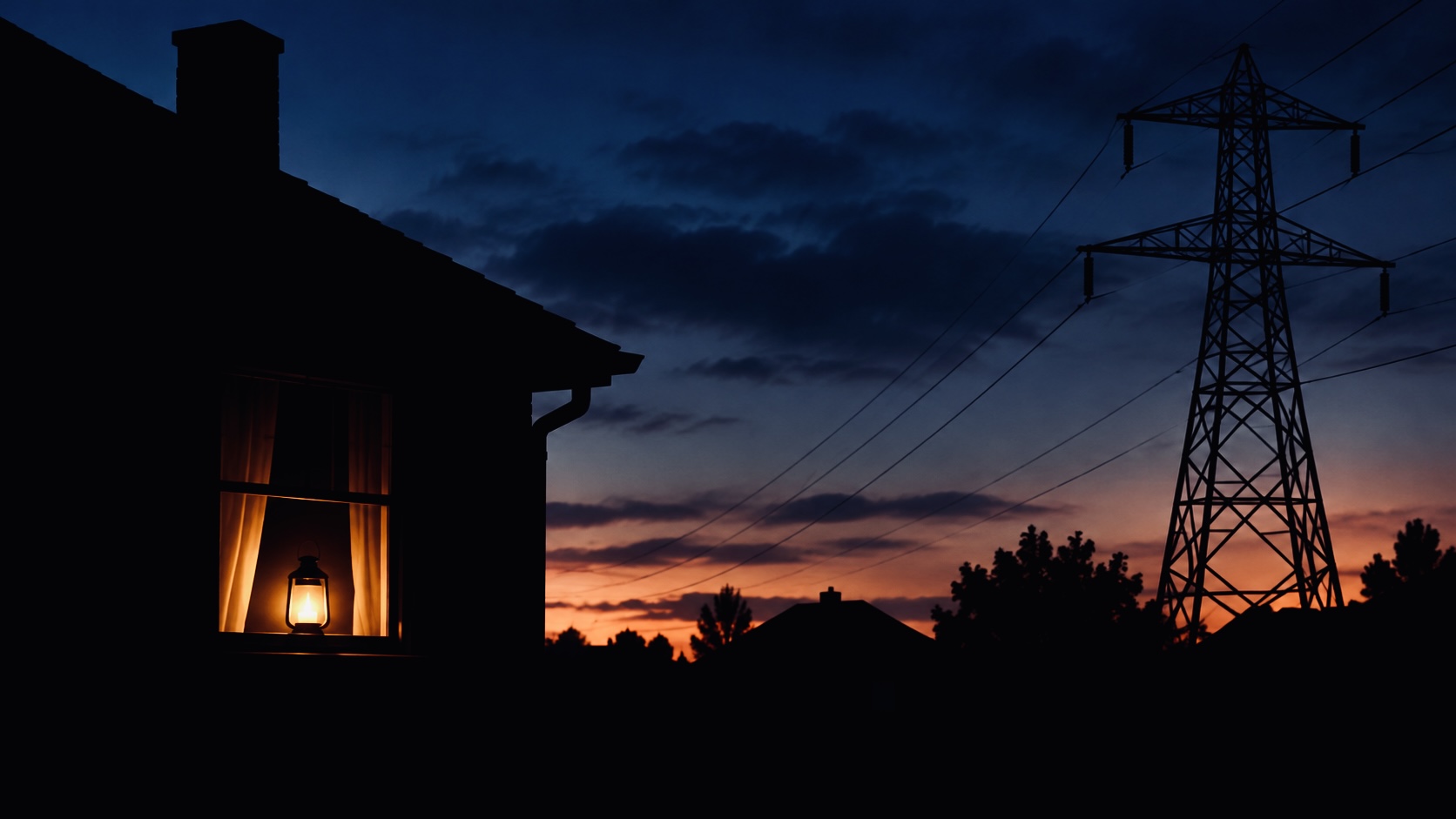
Electricity keeps modern civilization running. If a widespread blackout lasted weeks or months, how long could essential services continue, and how prepared are we?
Electricity powers far more than lights and household appliances. It keeps drinking water flowing, food refrigerated, hospitals operating, fuel pumps running and communications networks connected. A widespread blackout lasting weeks or months could therefore become a crisis extending well beyond the electrical grid.
Most power outages are temporary. Utilities repair damaged equipment, reroute electricity and reconnect customers as conditions permit. But when failures affect major transmission networks or critical infrastructure across a large region, recovery becomes considerably more complicated.
Potential causes include extreme weather, equipment failures, cyberattacks, solar storms and other disruptions. Each presents different risks, and none automatically means that electricity would disappear everywhere.
The central question is what happens when an outage lasts longer than the backup systems designed to withstand it.
How a Blackout Could Spread Beyond the Grid
Electrical networks must continuously balance electricity generation and consumption. When major equipment fails, protective systems may disconnect transmission lines or generators to prevent damage. Under certain conditions, those disconnections can spread through interconnected networks.
Another major outage occurred on August 14, 2003, affecting an estimated 50 million people in Ontario and the northeastern and midwestern United States.
A joint U.S.–Canada investigation identified transmission lines contacting trees, inadequate situational awareness and failures in reliability coordination among the contributing factors. The incident demonstrated how problems originating in one area could escalate across a much larger electrical network.
Natural disasters present another threat. Hurricanes, floods, wildfires and ice storms can damage substations, transmission towers and distribution equipment, making repairs difficult even after the immediate danger has passed.
Extreme solar storms can also interfere with electrical infrastructure. In March 1989, a geomagnetic storm caused Hydro-Québec’s transmission system to collapse, leaving approximately six million customers without electricity for about nine hours.
Cyberattacks are another documented concern. In December 2015, attackers disrupted electricity distribution in Ukraine, demonstrating that malicious interference with grid-control systems can cause real outages.
Electromagnetic pulses are also examined in infrastructure risk assessments. A high-altitude nuclear detonation could generate electromagnetic effects capable of damaging some electrical and electronic systems, although the consequences would depend on the event and the resilience of exposed infrastructure.
These threats differ considerably. A storm that destroys transmission equipment creates different recovery challenges from a cyberattack that temporarily disables control systems.
A permanent worldwide blackout is far less plausible than a prolonged regional failure. Electrical networks are not one unified global system, and electricity can be generated independently in many locations.
What Happens After 24 Hours, 72 Hours and 30 Days?
During the first 24 hours, traffic signals could stop functioning, elevators could become unusable and businesses might lose electronic payment services. Mobile networks and internet connections could continue temporarily through backup batteries and generators.
Refrigeration would quickly become a concern. Food safety guidance generally recommends discarding refrigerated perishable food after approximately four hours without electricity if safe temperatures have not been maintained. A full, unopened freezer may preserve food for approximately 48 hours.
After 72 hours, additional challenges could emerge. Water pumping and treatment facilities might depend increasingly on emergency generators. Fuel stations without backup electricity could struggle to dispense gasoline or diesel.
Hospitals generally have emergency power systems, but generators require fuel, maintenance and functioning supply chains. Pharmacies, medical refrigeration and people using electrically powered medical equipment could also be affected.
After one week, food distribution, transportation and communications could become increasingly difficult in areas without reliable backup systems. Businesses might remain closed, while emergency services could face growing demands.
Water and wastewater infrastructure would be particularly important. Without functioning pumps and treatment equipment, some communities could experience reduced water pressure, interruptions in drinking-water distribution or sanitation problems.
After 30 days, a large region still without electricity could face an exceptional infrastructure emergency.
Authorities might need to establish emergency shelters, arrange temporary power generation, distribute drinking water and relocate vulnerable residents. Healthcare services could require additional support, while businesses and households would face mounting financial pressures.
If restoration extended into several months, the consequences could include prolonged economic disruption, interrupted education, damaged supply chains and extensive infrastructure rebuilding.
However, these outcomes are not inevitable. The severity would depend on the affected population, available backup systems, emergency supplies, neighbouring infrastructure and the extent of physical damage.
A community with functioning generators, local water supplies and outside assistance could cope differently from one where roads, communications and electrical equipment were simultaneously damaged.
How Families and Communities Can Prepare
Emergency preparedness guidance in Canada recommends that households have enough essential supplies to manage for at least 72 hours without normal services.
For an extended outage, additional supplies and a plan for obtaining assistance would become increasingly valuable.
Ontario recommends approximately four litres of emergency water per person per day for drinking and basic sanitation. Households should also consider non-perishable food, a manual can opener, flashlights, batteries, first-aid supplies and a battery-powered or hand-cranked radio.
A two-week preparedness plan may be useful for households with sufficient storage space and resources, although the appropriate amount of supplies depends on individual circumstances.
Medications deserve particular attention. People who rely on refrigerated medicine, electrically powered medical devices or regular medical treatment should discuss emergency arrangements with healthcare professionals.
Keeping important documents, emergency contacts and some cash accessible can help when electronic systems are unavailable.
Backup batteries and generators can provide temporary electricity, but their limitations must be understood. Fuel-powered generators must never operate indoors, in garages or near openings where exhaust could enter occupied spaces because of the risk of carbon monoxide poisoning.
Portable generators must also be connected safely to prevent dangerous electrical backfeeding.
Community cooperation can make a significant difference. Checking on vulnerable neighbours, sharing reliable emergency information and coordinating access to supplies can help people whose needs exceed their household preparations.
Governments and utilities are working to strengthen electrical infrastructure through improved monitoring, vegetation management, protective standards, emergency planning and investments in grid resilience.
Microgrids and distributed energy systems may allow certain facilities to operate independently during wider network failures. However, ordinary rooftop solar installations do not automatically supply electricity during a blackout unless they include equipment designed for that purpose.
Historical blackouts demonstrate that major electrical failures can spread quickly and disrupt millions of lives. They also demonstrate that electricity can be restored, even following extensive regional failures.
A prolonged blackout remains a credible infrastructure risk, particularly where severe damage complicates repairs. A permanent worldwide loss of electricity, however, would require an extraordinary combination of failures across largely independent systems.
The greatest challenge would not necessarily be generating electricity again. It would be maintaining essential services while damaged infrastructure is repaired, supplies are restored and communities work toward recovery.
About the Author Brad Socha is the founder of The Universal Record, focused on sourced, factual global reporting. Coverage includes international news, geopolitics, technology, and major developments.