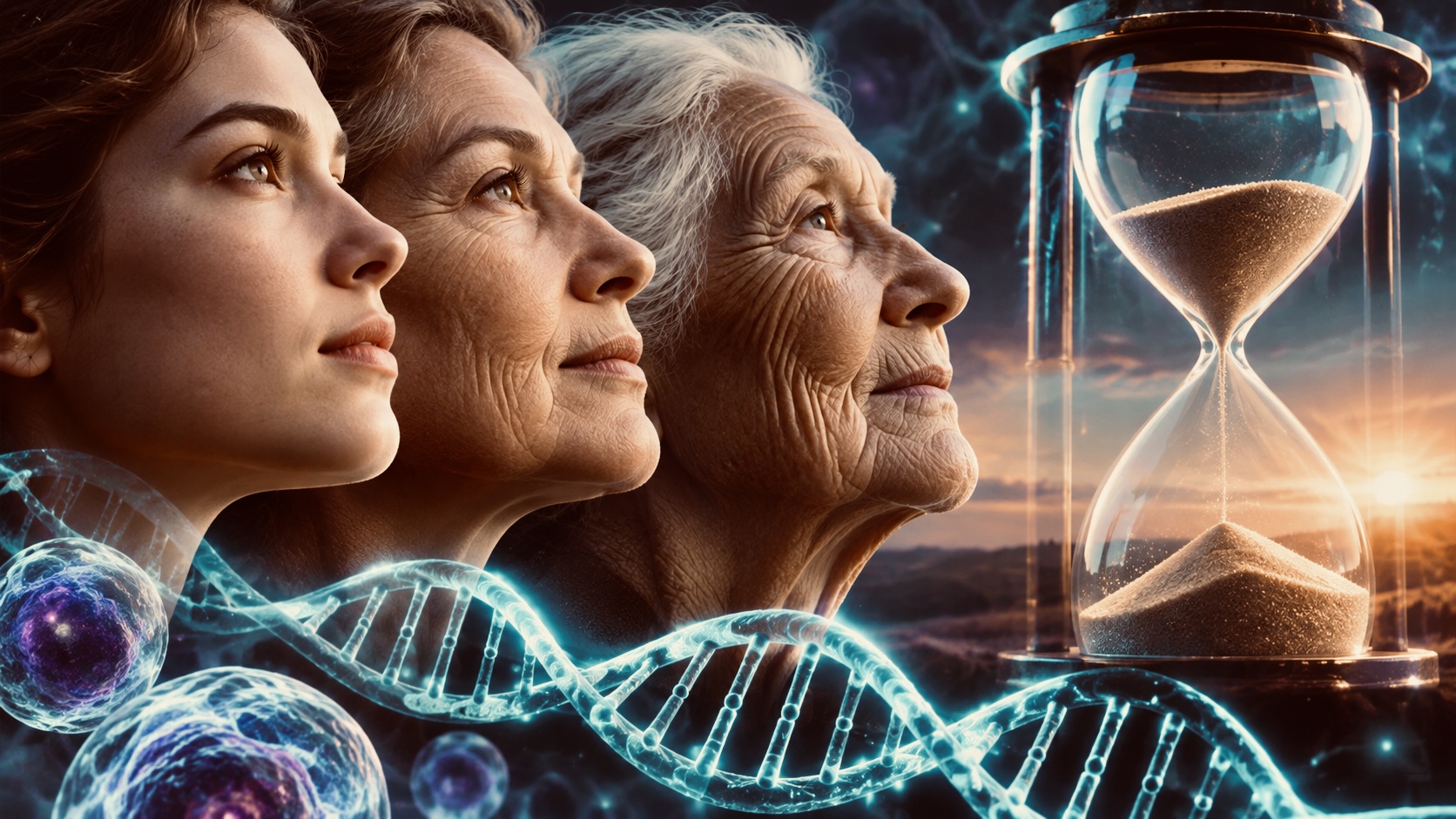
The longest verified human life lasted 122 years. Advances in genetics and longevity research are raising new questions about how far medicine could extend our lives.
The longest reliably documented human lifespan belongs to Jeanne Calment of France, who died in 1997 at the age of 122 years and 164 days. Nearly three decades later, her record remains unbroken, despite improvements in medicine, nutrition and life expectancy.
That raises a fundamental question: is there a biological limit to how long humans can live, or could future treatments allow people to remain healthy well beyond today’s longevity records?
Researchers have identified numerous biological processes associated with aging, including accumulated DNA damage, cellular senescence, mitochondrial dysfunction and changes in how cells regulate their genes. Experiments have shown that some of these processes can be modified in laboratory organisms.
Yet extending the lives of mice or restoring youthful characteristics in isolated cells is not the same as demonstrating that humans can live to 130, 150 or beyond.
The evidence suggests that aging is biologically complex and potentially modifiable. Whether human lifespan has a fixed upper boundary remains unresolved.
What Longevity Records Reveal
Life expectancy and maximum lifespan measure different things.
Life expectancy describes how long people are expected to live, on average, under a particular set of mortality conditions. Maximum lifespan concerns the greatest age an individual can reach.
Improvements in sanitation, vaccination, nutrition and medical treatment have dramatically increased average life expectancy over the past century. However, these advances have not produced a comparable increase in the oldest verified human age.
Jeanne Calment’s record, recognized by Guinness World Records and longevity researchers, illustrates the difficulty of reaching extreme ages.
At 100, a person has already survived numerous risks associated with disease and aging. Reaching 110 is substantially rarer, while verified survival beyond 115 remains exceptional.
Scientists disagree about what these patterns reveal.
A 2016 study published in Nature argued that gains in maximum reported age had slowed and suggested a natural limit to human lifespan, with survival beyond approximately 125 years appearing exceptionally unlikely.
Other researchers challenged that interpretation, arguing that the available records were too limited to establish a fixed biological ceiling.
A 2021 study in Royal Society Open Science examined mortality patterns at extreme ages and found that the statistical evidence did not establish a finite upper lifespan limit.
That does not mean humans can live indefinitely. It means available mortality data cannot conclusively identify an absolute maximum age.
The number of people reaching extreme ages remains small, making statistical conclusions difficult.
A separate question is whether future generations will continue experiencing substantial gains in life expectancy.
A 2024 analysis published in Nature Aging examined populations with some of the world’s highest life expectancies. The researchers concluded that gains had slowed and that radical life extension was unlikely during this century without major advances in slowing biological aging.
Their findings concern observed demographic trends, not proof of an unchangeable biological limit.
Can Science Slow Biological Aging?
Aging involves more than the gradual deterioration of individual organs. It also reflects changes occurring within cells and the systems that maintain them.
A major scientific review published in Cell in 2023 identified 12 interconnected hallmarks of aging. These include genomic instability, telomere attrition, mitochondrial dysfunction, cellular senescence, chronic inflammation and altered communication between cells.
Telomeres, protective structures at the ends of chromosomes, often shorten as cells divide. Senescent cells stop dividing but may remain in tissues, sometimes releasing inflammatory substances that affect neighbouring cells.
Genes influence these processes, but longevity is not controlled by a single genetic switch. Inherited differences interact with environmental exposures, disease, behaviour and chance.
Researchers are investigating whether modifying these mechanisms could delay multiple age-related conditions simultaneously.
One approach involves senolytics, experimental treatments intended to remove certain senescent cells. Studies in mice have reported improvements in aspects of health and survival, although the National Institutes of Health cautions that these cells also serve useful functions, including helping prevent uncontrolled cell growth.
Another area involves drugs such as rapamycin, which affects a cellular pathway involved in nutrient sensing and growth. Rapamycin has extended lifespan in mice, but its potential benefits for healthy human aging remain unproven, and the drug can cause adverse effects.
Scientists are also exploring cellular reprogramming, which attempts to change some molecular features associated with aging. Experiments in mice have reported improvements in age-related cellular characteristics, but translating these findings into safe human treatments presents substantial challenges.
The central concern is that biological mechanisms are interconnected. A treatment that improves one aspect of cellular aging might disrupt another, potentially increasing risks such as abnormal cell growth.
No intervention has yet been conclusively demonstrated to substantially extend maximum human lifespan.
The more achievable near-term objective may be extending healthspan: the years people live without significant disease or disability.
That could mean delaying cardiovascular disease, dementia, frailty and other conditions associated with aging, even if the maximum possible lifespan changes relatively little.
Scientists have yet to identify a definitive biological limit to human lifespan, but there is also no scientific evidence that humans could live indefinitely.
The question is whether future medicine can do more than treat the diseases that accompany aging. If researchers can safely slow the underlying biological processes, the limits observed in today’s population may not necessarily define those of future generations.
The challenge is determining whether future medical advances can extend not only how long people live, but how long they remain healthy.
About the Author Brad Socha is the founder of The Universal Record, focused on sourced, factual global reporting. Coverage includes international news, geopolitics, technology, and major developments.