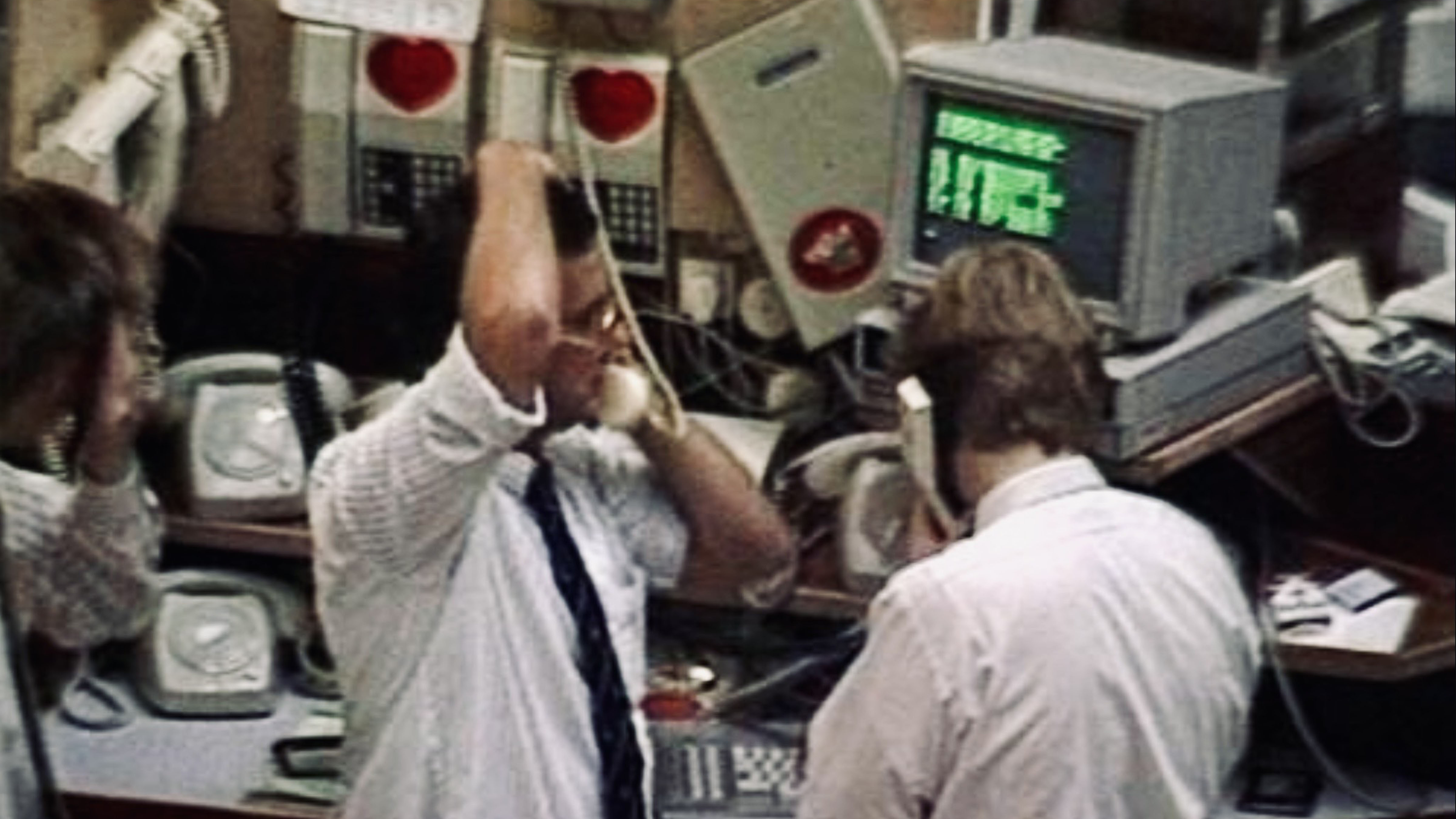
On October 19, 1987, the Dow Jones Industrial Average plunged 22.6% in a single trading session, marking the largest one-day percentage decline in the index’s history. The collapse, remembered as Black Monday, spread fear through financial markets worldwide and exposed serious vulnerabilities in the rapidly changing systems used to trade stocks.
The Dow fell 508 points, closing at 1,738.74. Although the point loss has since been exceeded, the percentage decline remains unmatched in the Dow’s history.
The crash unfolded without a single triggering event that could fully explain its extraordinary scale. Instead, economic uncertainty, falling investor confidence, computerized trading strategies, and limited market liquidity combined to accelerate the selling.
Its consequences extended beyond the immediate financial losses. Black Monday prompted investigations into how markets functioned under extreme pressure and contributed to safeguards that remain central to modern trading.
The Conditions Behind Black Monday
American stock prices had risen sharply during the first eight months of 1987. The Dow reached a then-record closing high of 2,722.42 on August 25, reflecting years of economic expansion and growing investor enthusiasm.
By autumn, however, the financial environment had become less stable.
Concerns about inflation, rising interest rates, international trade imbalances, and the value of the U.S. dollar were weighing on investor confidence. Tensions between the United States and its major trading partners added to uncertainty.
The market began declining before October 19. On Wednesday, October 14, the Dow fell sharply, and further losses followed on Thursday and Friday.
By the close of trading on October 16, the index had dropped more than 17% from its August peak.
International markets were also under pressure. Because major financial centres operated in different time zones, selling could move from one exchange to another, reinforcing anxiety before trading began elsewhere.
An important development was the increasing use of computerized investment strategies.
One widely discussed technique, known as portfolio insurance, attempted to limit investors’ losses by selling stock-index futures as markets declined. The strategy was intended to reduce exposure to falling prices, but widespread use could intensify downward pressure when many institutions attempted to sell simultaneously.
These strategies did not independently cause the crash. Financial researchers have identified a combination of market structure, investor expectations, trading behaviour, and economic conditions rather than a single definitive explanation.
A Historic Collapse on Wall Street
On Monday, October 19, stock markets in Asia and Europe experienced substantial declines before trading began in New York.
Selling pressure was already intense when the New York Stock Exchange opened.
Orders overwhelmed parts of the trading infrastructure. Delays in processing transactions made it difficult for investors to determine current prices, while the speed of the decline created uncertainty about where buyers could be found.
The Dow’s losses accelerated throughout the session.
As stock prices fell, some institutional investors sold futures contracts to protect their portfolios. Falling futures prices, in turn, contributed to pressure on the underlying stock market.
The interaction between futures markets and stock exchanges complicated efforts to establish stable prices.
By the closing bell, the Dow had lost 508 points, equivalent to 22.6% of its value.
The percentage decline was considerably larger than the Dow’s worst single-day fall during the 1929 Wall Street crash.
The impact was international. Hong Kong, Australia, Britain, Canada, and other markets suffered severe losses during the wider October collapse, although the timing and magnitude differed across exchanges.
The episode demonstrated how financial distress could travel rapidly between markets linked by international investment flows and trading activity.
It also exposed the limitations of systems that had been designed for more orderly conditions. Computerized strategies could generate selling signals quickly, but exchanges and market participants struggled to absorb the resulting volume.
The Response and Lasting Changes
The immediate priority after the crash was preventing a financial-market breakdown from becoming a broader banking and economic crisis.
On October 20, the Federal Reserve publicly affirmed its readiness to provide liquidity to support the economic and financial system.
Under Chairman Alan Greenspan, the central bank worked to maintain confidence and ensure that financial institutions could continue functioning.
The response helped ease fears that problems in the stock market would spread uncontrollably through the banking system.
Although share prices remained volatile, the American economy did not enter a recession immediately following Black Monday.
The Dow recovered part of its losses in the following months, but rebuilding investor confidence took considerably longer. The index did not return to its August 1987 closing peak until 1989.
Investigations followed the crash.
A presidential task force chaired by Nicholas Brady examined the market collapse and the relationship between stocks, futures, and options. Its findings highlighted weaknesses in trading coordination, information systems, and market mechanisms during periods of extreme volatility.
One of the most consequential developments was the introduction of market-wide circuit breakers.
These mechanisms allow trading to pause temporarily after sufficiently large market declines, giving participants time to assess information and reducing the risk of disorderly trading.
The New York Stock Exchange and other U.S. markets adopted initial circuit-breaker rules in 1988. The system has subsequently been revised to reflect changing market conditions.
Modern safeguards also include improved coordination between exchanges, stronger monitoring of trading activity, and more sophisticated risk-management practices.
Black Monday did not end market crashes or eliminate the possibility of sudden losses. Later episodes, including the 2008 financial crisis and the market turmoil of March 2020, demonstrated that financial systems remain vulnerable to shocks.
Nevertheless, October 19, 1987, fundamentally changed the understanding of how rapidly selling pressure could escalate across interconnected markets.
The crash showed that financial instability could emerge not only from economic developments but also from the mechanisms investors used to respond to them. Nearly four decades later, that lesson remains relevant wherever technology, investor behaviour, and global financial markets intersect.
About the Author Brad Socha is the founder of The Universal Record, focused on sourced, factual global reporting. Coverage includes international news, geopolitics, technology, and major developments.