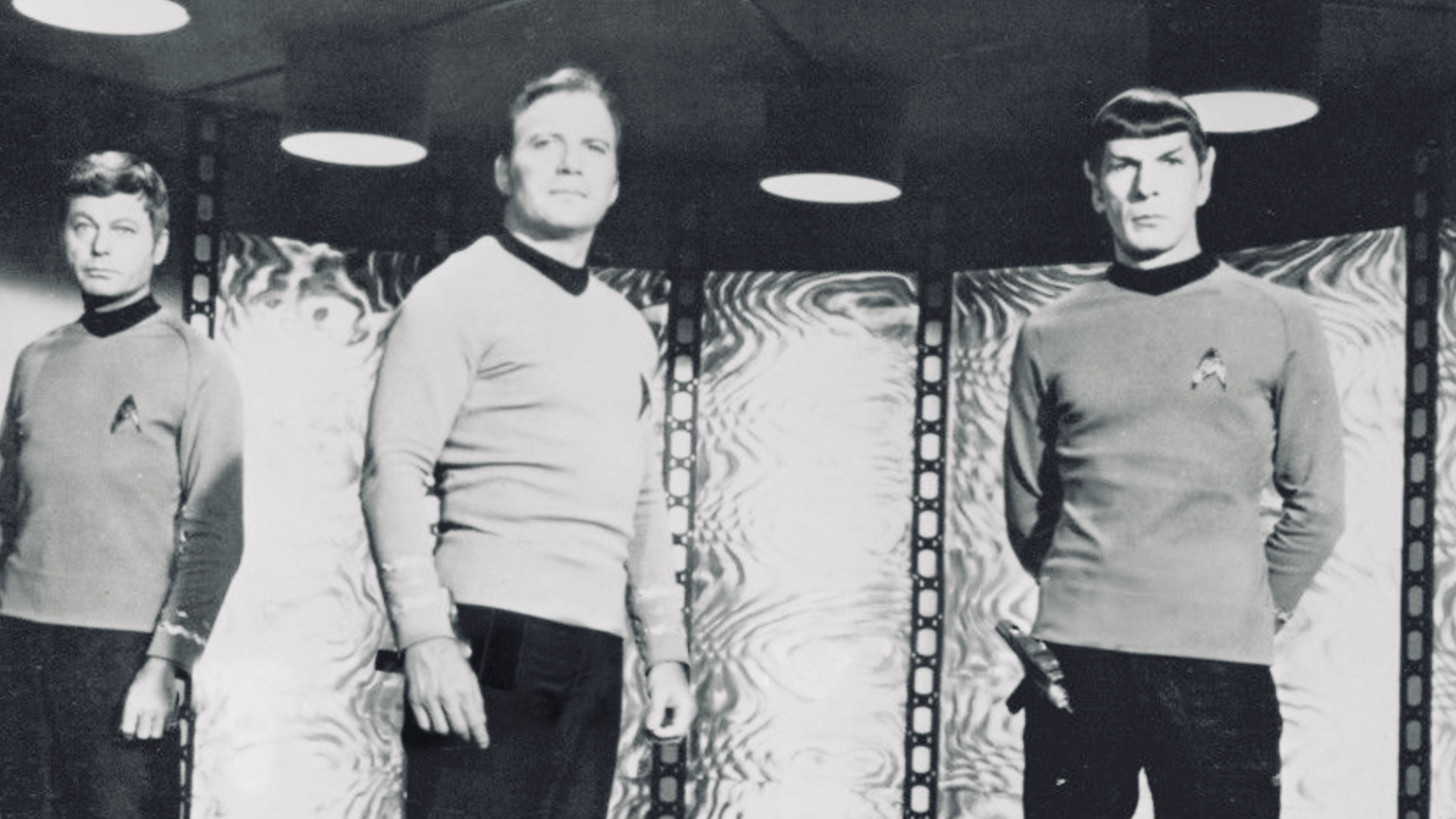
Sixty years ago, a new science-fiction series sent the Enterprise into American homes. Three seasons later it was cancelled, but its journey was only beginning.
On September 8, 1966, Star Trek made its American television debut on NBC. The first episode broadcast, “The Man Trap,” introduced viewers to Captain James T. Kirk, Mr. Spock, Dr. Leonard McCoy and the crew of the USS Enterprise as they travelled through a future in which humanity had reached the stars.
The series would survive for only three seasons.
Yet cancellation did not end Star Trek. Reruns helped it find new audiences, an organized fan culture grew around it, and the television series eventually expanded into movies, additional series, books, games and other media.
September 8, 2026, marks exactly 60 years since that first NBC broadcast. Paramount is commemorating the anniversary internationally with theatrical screenings, television programming, fan events and even a tribute aboard the International Space Station.
What began as an uncertain television experiment in 1966 has become one of science fiction’s most enduring cultural institutions.
A Different Vision of the Future
Created by Gene Roddenberry, Star Trek was built around the voyages of the Enterprise, a starship exploring space in the 23rd century.
“The Man Trap” was not actually the first Star Trek episode produced. NBC selected it as the first regular episode to air, broadcasting it on the evening of September 8, 1966.
The original series presented audiences with technologies that seemed futuristic: handheld communicators, powerful computers, automatic doors, medical scanners and devices capable of instantly translating languages. Some ideas remained firmly in science fiction, while others anticipated technologies that would later become familiar.
More important was the society depicted aboard the Enterprise.
The bridge crew included characters of different nationalities and backgrounds working together. Nichelle Nichols portrayed communications officer Nyota Uhura, George Takei played helmsman Hikaru Sulu, Leonard Nimoy portrayed the half-human, half-Vulcan Spock, and William Shatner starred as Kirk.
At a time marked by the Cold War, the civil rights movement and the Vietnam War, the series imagined humanity surviving its divisions and participating in a larger interstellar community.
Its stories frequently used alien civilizations and distant planets to explore recognizable human questions involving prejudice, war, technology, authority and individual freedom.
But Star Trek was not initially a ratings phenomenon.
NBC cancelled the series after its third season. Its final original episode aired in June 1969, apparently ending the Enterprise’s television mission far earlier than Roddenberry had imagined.
Instead, something unusual happened.
How Star Trek Survived
Syndicated reruns brought the cancelled series to audiences who had missed it during its original network run. Fans organized conventions, wrote newsletters and campaigned for more Star Trek.
The growing audience demonstrated that a television series could acquire enormous cultural value after its original broadcast had ended.
The franchise returned in animated form in 1973. Then, in 1979, Star Trek: The Motion Picture brought the Enterprise to movie theatres. Further films followed, and in 1987 Star Trek: The Next Generation introduced a new Enterprise and a new captain, Jean-Luc Picard.
More television series and movies expanded the fictional universe across subsequent decades.
Its influence also reached beyond entertainment.
NASA named its first Space Shuttle orbiter Enterprise after a sustained campaign by Star Trek fans. Members of the original cast and Roddenberry attended the shuttle’s rollout ceremony in 1976. The Smithsonian’s National Air and Space Museum later displayed the original 11-foot Enterprise studio model, preserving an object created for television alongside artifacts documenting the real history of aviation and spaceflight.
The relationship between imagined and real exploration became part of the franchise’s legacy.
Engineers, scientists and astronauts have described Star Trek as an inspiration, while technologies depicted by the series have repeatedly been compared with later developments in computing, communications and medicine. The parallels should not be overstated, Star Trek did not invent those technologies, but the program helped generations imagine how technological advances might become part of everyday life.
That ability to imagine the future may be one reason the franchise endured.
Sixty years after “The Man Trap,” Paramount says Star Trek has grown to encompass 11 television series, 14 films and more than 900 episodes.
For the 2026 anniversary, restored classic films are being shown in more than 750 U.S. theatres alongside original-series episodes. London’s Science Museum is hosting a gathering connected with an attempt to set a Guinness World Record for the most people simultaneously performing the Vulcan salute. European Space Agency astronaut Sophie Adenot is also scheduled to mark the anniversary aboard the International Space Station by wearing a Starfleet delta badge.
Those celebrations underline an extraordinary reversal.
In 1969, Star Trek was a cancelled television program whose original run had lasted just three seasons. On September 8, 2026, its 60th anniversary is being marked around the world, and above it.
The Enterprise’s original five-year mission never reached five seasons.
About the Author Brad Socha is the founder of The Universal Record, focused on sourced, factual global reporting. Coverage includes international news, geopolitics, technology, and major developments.