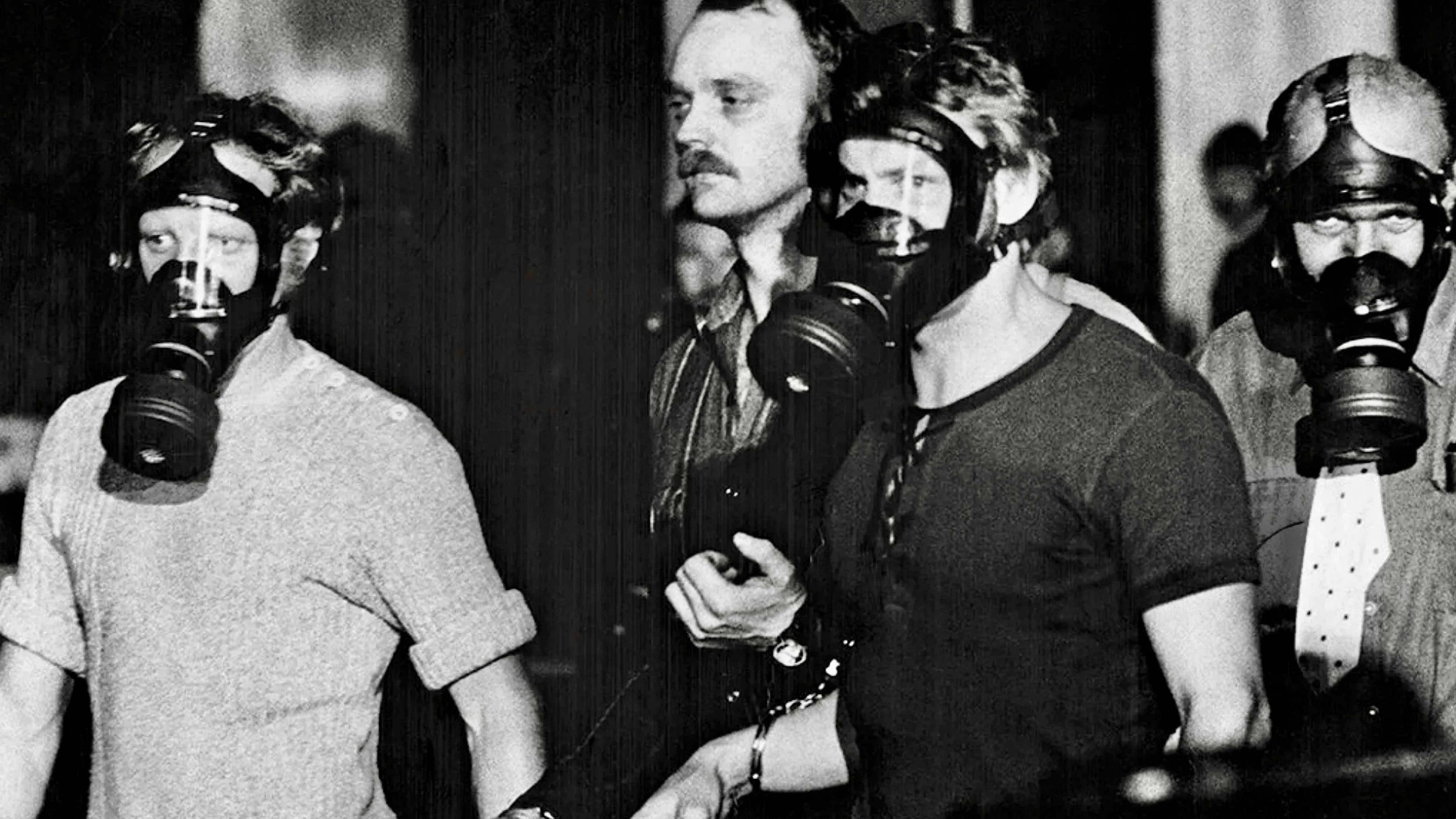
On August 23, 1973, an armed man entered Kreditbanken at Norrmalmstorg in central Stockholm, fired his weapon and took four bank employees hostage. The confrontation would last six days and give rise to the term Stockholm syndrome, describing an apparent emotional bond between some captives and their captors.
The phrase eventually became known around the world, appearing in discussions of hostage-taking, kidnapping, abusive relationships and popular culture. Yet more than half a century after the event that inspired it, Stockholm syndrome remains controversial. It is not a formally recognized psychiatric diagnosis, and researchers have questioned whether the behaviour observed during the original crisis was accurately interpreted at all.
What began as a bank robbery had become something much larger: a case that would influence public ideas about how people behave when trapped, frightened and dependent on those threatening them.
Six Days Inside the Bank
Shortly after 10 a.m., Jan-Erik Olsson entered the bank armed with a submachine gun. Police were alerted almost immediately, and one officer was wounded when Olsson opened fire.
Olsson demanded three million Swedish kronor, weapons, a getaway car and the release of Clark Olofsson, a well-known criminal then imprisoned in Sweden. Authorities agreed to bring Olofsson to the bank, hoping his presence could help calm the situation.
Olsson held three women and one man, all bank employees, as hostages. As police surrounded the building and journalists gathered outside, the crisis became a national spectacle followed closely through television, radio and newspapers.
The confrontation soon shifted into the bank vault, where Olsson, Olofsson and the hostages were confined together. The Swedish Police Museum’s historical account records that Olsson threatened to kill a hostage if authorities refused to allow the group to leave with the captives. Police instead pursued a strategy of containment and negotiation.
The situation became increasingly dangerous. Police began drilling through the vault’s reinforced concrete ceiling to observe what was happening and prepare an intervention. Olsson responded by threatening the hostages and placing nooses around their necks, attaching them to fixtures in the vault so that a sudden police action could put them at greater risk.
One police officer was later shot through one of the holes drilled into the vault.
During the ordeal, however, authorities and the public encountered a reaction they found difficult to understand. Some of the hostages appeared increasingly distrustful of the police while showing sympathy toward their captors.
Hostage Kristin Enmark even spoke by telephone with Swedish Prime Minister Olof Palme during the crisis, arguing that she feared what police intervention might cause and wanted authorities to allow the captors and hostages to leave.
On August 28, police finally pumped tear gas into the vault. Olsson and Olofsson surrendered, and all four hostages emerged without serious physical injuries.
How Stockholm Syndrome Became a Global Idea
The hostages’ behaviour attracted enormous attention after their release. Swedish psychiatrist and criminologist Nils Bejerot, who advised police during the crisis, became closely associated with an explanation of the captives’ apparent identification with their captors. The phenomenon subsequently became internationally known as Stockholm syndrome.
The idea was compelling: under extreme conditions, a captive might develop positive feelings toward the person controlling or threatening them, particularly when small acts of restraint or kindness assume extraordinary importance.
But transforming that observation into a psychological syndrome has proved far more difficult.
A 2008 peer-reviewed examination of the scientific literature found little academic research supporting Stockholm syndrome as a clearly defined psychiatric condition. The researchers found no validated diagnostic criteria and noted that the term does not appear as a diagnosis in international psychiatric classification systems.
That distinction matters. Stockholm syndrome is widely recognized as a cultural and psychological concept, but it should not be presented as an established clinical disorder comparable with formally defined psychiatric diagnoses.
The interpretation of the Norrmalmstorg hostages has also been challenged. Their distrust of police can be viewed within the circumstances they faced: they were trapped in a vault with armed men while authorities contemplated potentially dangerous methods of ending the siege. Behaviour that outsiders interpreted as irrational attachment may also have involved attempts to survive, reduce conflict and retain some influence over an extraordinarily dangerous situation.
Modern research has explored hostage responses through concepts including traumatic entrapment, appeasement and survival behaviour rather than assuming that captives who appear sympathetic toward captors necessarily suffer from a distinct syndrome.
The original crisis nevertheless left a lasting imprint on language and popular understanding of hostage psychology. “Stockholm syndrome” became shorthand for an apparently paradoxical attachment to someone exercising coercive control, spreading far beyond the circumstances of the 1973 robbery.
That popularity has sometimes exceeded the strength of the scientific evidence behind it.
More than 50 years later, the Norrmalmstorg crisis remains historically important for two reasons. It was an extraordinary hostage confrontation followed in real time across Sweden, and it produced a term that became far more famous than the robbery itself.
Its legacy has also changed. What was once commonly presented as a straightforward psychological phenomenon is now approached with greater caution. The events of August 1973 remain real; whether the label created from them adequately explains how people respond to captivity remains an open and debated question.
U.S. National Library of Medicine / PubMed — “Traumatic entrapment, appeasement and complex post-traumatic stress disorder” — https://pubmed.ncbi.nlm.nih.gov/17464728/
About the Author Brad Socha is the founder of The Universal Record, focused on sourced, factual global reporting. Coverage includes international news, geopolitics, technology, and major developments.