Memory is not a perfect recording of the past. The brain continually encodes, strengthens, retrieves and sometimes reshapes information, a flexible system that explains both our remarkable ability to remember and why forgetting is a normal part of being human.
Human memory is less like a permanent archive and more like a living biological process. Experiences must first be encoded, some are stabilized into longer-lasting memories, and later they must be successfully retrieved. At every stage, information can be strengthened, altered, mixed with other experiences or lost from easy access.
This flexibility is one reason people can learn throughout life, connect new information with old knowledge and adapt to changing circumstances. It also helps explain something nearly everyone experiences: remembering an event vividly while forgetting a name heard only minutes earlier.
Scientists do not regard memory as a single system located in one part of the brain. Different forms of memory depend on interacting neural networks, and distinctions such as short-term, working and long-term memory describe different ways information is maintained and used.
Working memory allows the brain to temporarily hold and manipulate information needed for a current task, such as remembering a number long enough to enter it, following several steps in a set of instructions or keeping part of a sentence in mind while reading the rest. Its capacity is limited, and distraction or competing information can interfere with it.
Long-term memory can persist far longer, from hours to decades. It includes conscious memories of facts and personal experiences as well as forms of learning that can influence skills and behaviour without requiring the same type of conscious recollection.
How Memory Reaches Long-Term Storage
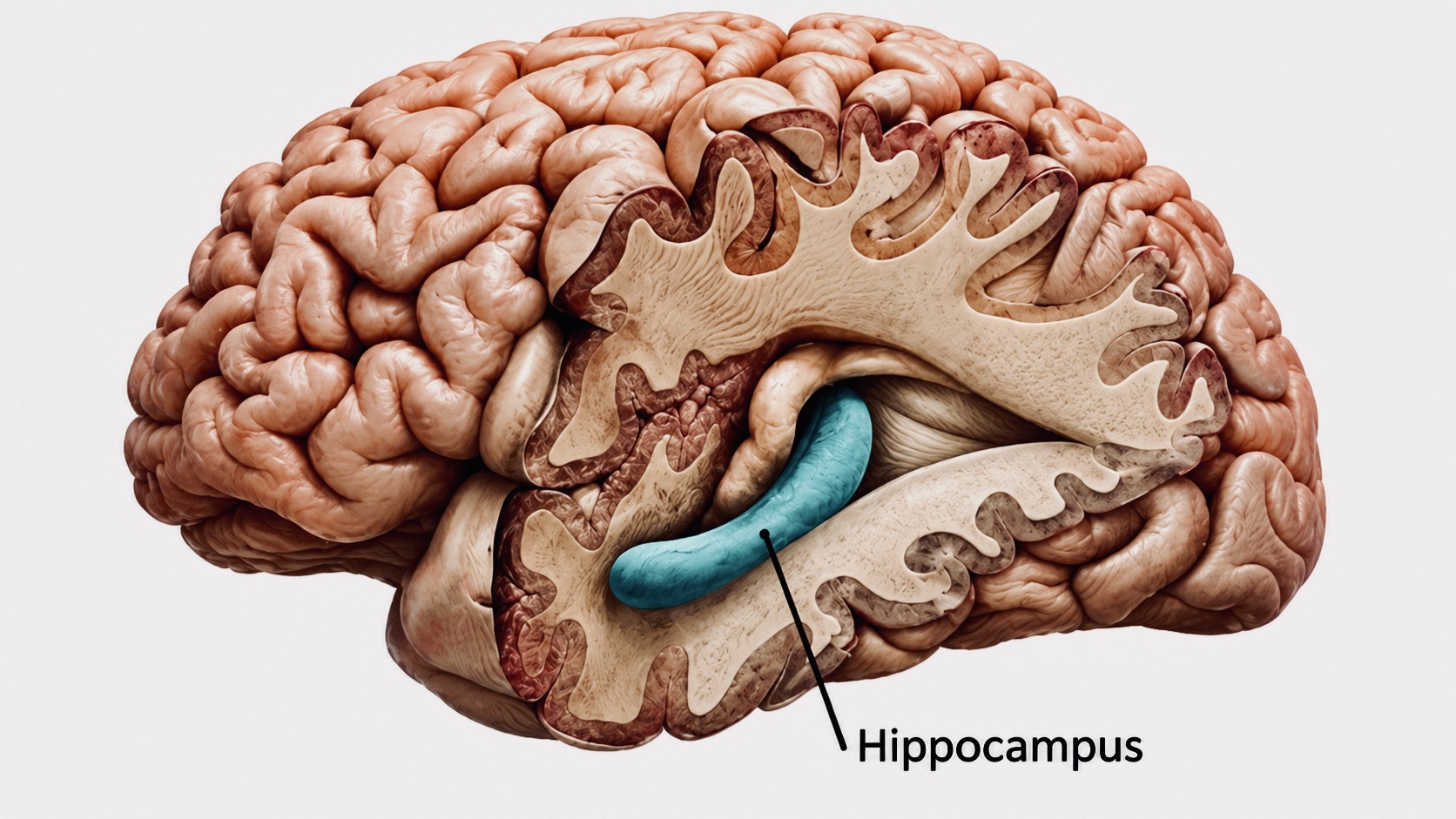
One brain structure especially important to the formation of many long-term memories is the hippocampus, located within the medial temporal lobe. Research involving people with damage to this region has established its central role in forming declarative memories, the memories that allow us to consciously recall facts and events.
The hippocampus should not be thought of as a hard drive where every experience is permanently stored. Memory depends on networks distributed across the brain, and the hippocampus plays an important role in organizing and establishing memories that can later be retrieved.
A newly formed memory is also not necessarily stable. Through consolidation, initially fragile memory representations undergo biological changes that can make them more durable.
Sleep appears to contribute to this process. Research has shown that the sleeping brain remains active and that sleep supports the processing and consolidation of at least some types of memory. Different forms of learning may depend on sleep in different ways, so the simple claim that every short-term memory is transferred into permanent storage during sleep would go beyond the evidence.
Sleep nevertheless illustrates an important principle: remembering is not limited to what happens at the instant an experience occurs. What happens afterward can affect whether that information remains accessible.
Why We Forget and Why Memories Can Change
Forgetting can occur for several reasons. Information may never have been strongly encoded in the first place. Memories can also become difficult to retrieve when appropriate cues are missing, while newer and older information can interfere with one another.
This helps explain familiar experiences such as struggling to remember a name and then recalling it unexpectedly when encountering a related person or place. A temporary failure to retrieve information does not necessarily mean that every trace of the memory has disappeared.
Memory also has another important characteristic: it is reconstructive.
When people remember an experience, the brain does not necessarily reproduce an untouched recording. Research on false memories shows that errors can arise during encoding, consolidation and retrieval. Information encountered after an event, expectations, associations and other memories can influence what a person later recalls.
Scientists have also studied reconsolidation, the possibility that retrieving an established memory can under some circumstances make aspects of it temporarily susceptible to modification before it is stabilized again. Evidence for reconsolidation is strong in animal research, while the mechanisms and conditions under which it occurs in human memory remain an active area of investigation.
This does not mean that memories are generally false. It means confidence and accuracy are not identical, and even sincere recollections can contain errors or change over time. The distinction has important implications for eyewitness testimony, personal disagreements and other situations in which people may genuinely remember the same event differently.
Memory Across a Lifetime
Memory commonly changes with age, but ordinary age-related forgetfulness is not the same as dementia.
The U.S. National Institute on Aging notes that older adults may take longer to learn new information or retrieve something they already know. Occasionally misplacing an object, forgetting a word and remembering it later, or making an occasional mistake can occur during normal aging.
More serious and persistent changes that interfere with everyday activities can indicate a medical problem and deserve evaluation. Dementia is not considered a normal consequence of aging.
There is no single proven method that guarantees a strong memory throughout life, and claims that particular supplements or products can prevent memory decline should be treated cautiously. Evidence instead supports a broader approach to cognitive health.
Physical activity provides extensive overall health benefits and may help maintain aspects of cognitive function. The National Institute on Aging also points to healthy eating, mentally stimulating activities and social engagement as factors associated with cognitive health. Adequate sleep matters as well, both for general brain function and because sleep participates in memory processing.
Learning strategies can also take advantage of how memory operates. Paying close attention when information is first encountered, connecting new material with existing knowledge, revisiting information over time and actively trying to retrieve it can strengthen learning more effectively than simply assuming exposure will produce a lasting memory.
Forgetting, then, is not evidence that the human memory system has failed. A brain capable of preserving every detail with equal strength would face an enormous amount of competing information. Human memory instead prioritizes, organizes and reconstructs experience.
That system is imperfect, but its flexibility is also part of what makes learning possible. We remember enough of the past to use it, while continually updating those memories as new experiences arrive.
About the Author Brad Socha is the founder of The Universal Record, focused on sourced, factual global reporting. Coverage includes international news, geopolitics, technology, and major developments.