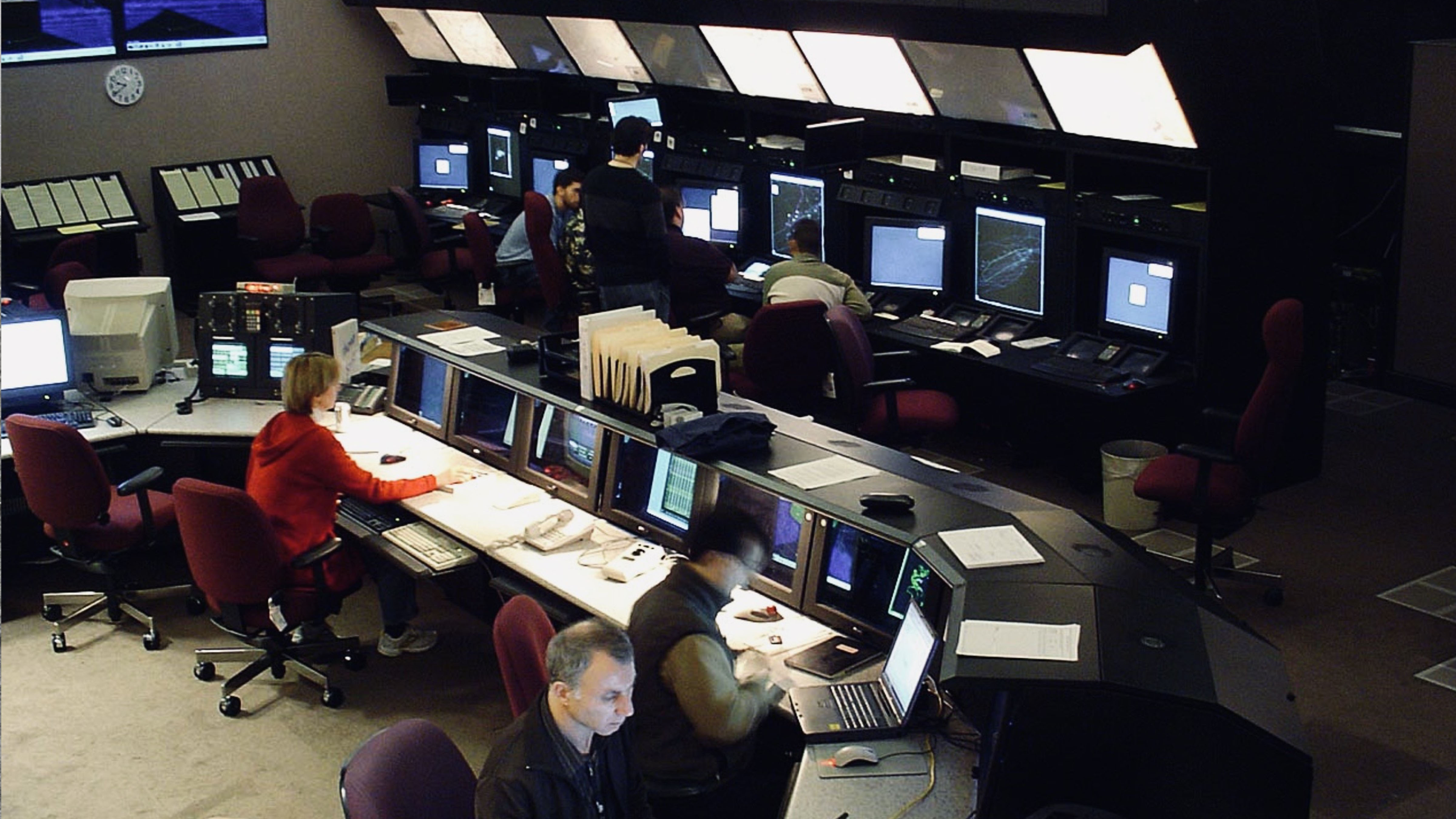
New systems can predict congestion, identify developing conflicts and improve runway awareness, but controllers remain responsible for safety-critical decisions.
Artificial intelligence is beginning to change how aircraft are managed from the gate to the runway and through crowded airspace. As flight demand grows and air traffic systems process increasing amounts of surveillance, weather and operational data, AI is being developed to help controllers anticipate problems earlier, compare possible solutions and manage complexity more efficiently.
The technology is not replacing air traffic controllers. Most current applications are decision-support tools, research systems or limited operational services designed to strengthen human performance. Aviation authorities remain cautious because an incorrect recommendation in a safety-critical environment can carry serious consequences. Before AI can assume a larger role, systems must be explainable, reliable, secure and rigorously validated under real operating conditions.
Predicting Congestion and Improving Flight Efficiency
Air traffic management depends heavily on prediction. Controllers and network managers must anticipate where aircraft will be, how weather will affect routes and when airports or sectors may exceed their available capacity.
Traditional systems already process flight plans, radar data and weather information. AI can extend those capabilities by identifying patterns across much larger datasets and updating forecasts as conditions change.
In Europe, EUROCONTROL and the SESAR Joint Undertaking are developing AI-assisted tools for traffic-flow and capacity management. One objective is to recognize emerging congestion before it forces widespread delays. Instead of responding after too many aircraft are directed toward the same airspace, a system could warn traffic managers earlier and suggest measures such as adjusted departure times, alternative routes or temporary changes in sector capacity.
The SESAR ASTRA project is developing an algorithm intended to help flow-management personnel predict and manage congestion further in advance. Other initiatives are examining how machine learning could balance demand across local airspace and the wider European network.
AI may also improve individual flight trajectories. Aircraft rarely follow one permanently fixed route from departure to arrival. Their paths can change because of thunderstorms, restricted airspace, traffic volume, runway availability and wind conditions.
A decision-support system can rapidly compare possible routes and identify options that reduce flying time, fuel use or exposure to congestion while maintaining required separation. Controllers would still evaluate the operational situation and decide whether a recommendation is safe and practical.
NASA has studied AI and machine-learning applications for air traffic management, including trajectory prediction, airspace optimization and natural-language processing. Its research reflects a broader transition toward trajectory-based operations, in which aircraft paths are managed more precisely across an entire flight rather than through a series of isolated instructions.
Better predictions could also reduce the costly pattern of aircraft leaving gates only to wait in long departure queues. Coordinating pushback times with runway demand can keep aircraft at the gate until a more efficient departure window becomes available, reducing unnecessary taxiing, fuel consumption and emissions.
The potential gains are meaningful, but they depend on accurate information. Weather can change quickly, airlines may revise schedules, and unexpected events can disrupt even the strongest forecast. AI recommendations must therefore be continually updated rather than treated as fixed solutions.
Strengthening Safety Without Removing Human Control
Safety applications may become the most important use of AI in air traffic management.
Controllers monitor multiple aircraft while listening to radio communications, reviewing weather, coordinating with neighbouring sectors and responding to changing conditions. AI can help by continuously examining data for patterns that may indicate a developing conflict, unusual aircraft behaviour or an emerging operational risk.
EUROCONTROL has described systems capable of forecasting traffic patterns and identifying potential conflicts earlier, giving controllers more time to assess the situation. SESAR researchers are also testing digital assistants that could support controllers during demanding periods while keeping humans firmly responsible for safety-critical decisions.
Projects such as NATS’ Bluebird initiative in the United Kingdom are examining whether AI can safely manage a section of simulated airspace alongside professional controllers. The research uses machine learning and digital twins while placing significant emphasis on regulation, trust and verification. Live trials would be intended to test human–AI cooperation, not to remove controllers from the system.
Runways are another major focus. An incursion occurs when an aircraft, vehicle or person enters a protected runway area without proper authorization. Surveillance systems already use radar, cameras and aircraft position broadcasts to warn controllers about dangerous situations.
AI could strengthen those systems by analyzing video and sensor information, distinguishing aircraft from vehicles, identifying incorrect movements and issuing earlier alerts. SESAR projects are studying AI-supported digital towers, airport safety nets and automated detection of taxiway or runway conflicts.
These applications should not be confused with fully autonomous air traffic control. AI may highlight an occupied runway or predict that two paths could conflict, but controllers must understand why an alert was generated and determine the appropriate response.
Explainability is especially important. A system that produces an answer without revealing the information or reasoning behind it may be difficult to trust during an emergency. Researchers are therefore developing explainable AI that can present its recommendation alongside the factors that influenced it.
Cybersecurity presents another challenge. Air traffic systems are part of critical national infrastructure. Introducing more connected software, cloud services and machine-learning tools can create new vulnerabilities if security is not designed into every layer.
There is also the risk of automation bias, in which people become too willing to accept a computer recommendation. Training must ensure that controllers remain prepared to challenge AI outputs, recognize failures and continue operating safely when automated assistance is unavailable.
Modernization efforts are advancing differently across regions. The FAA is replacing aging infrastructure and has discussed integrating AI into aviation safety-data analysis, while NASA continues research into future airspace management. Europe has one of the largest coordinated portfolios of AI-related air traffic projects through EUROCONTROL and SESAR. The United Kingdom’s NATS is testing digital towers and human–AI collaboration, while similar research is underway in Canada and other aviation markets.
The direction is clear, but deployment will remain gradual. Air traffic control has developed around redundant systems, standardized procedures and conservative certification because safety must take priority over speed of adoption.
AI is most likely to enter the system first as an assistant: predicting congestion, organizing information, detecting anomalies and presenting controllers with better options. More advanced automation may follow only after years of testing demonstrate that it performs safely under ordinary conditions, unusual disruptions and equipment failures.
The future air traffic control centre may process far more information automatically than it does today. Yet the controller’s role will remain central, not simply issuing instructions, but supervising increasingly complex systems, applying judgment and taking responsibility when conditions do not match what an algorithm expected.
About the Author Brad Socha is the founder of The Universal Record, focused on sourced, factual global reporting. Coverage includes international news, geopolitics, technology, and major developments.