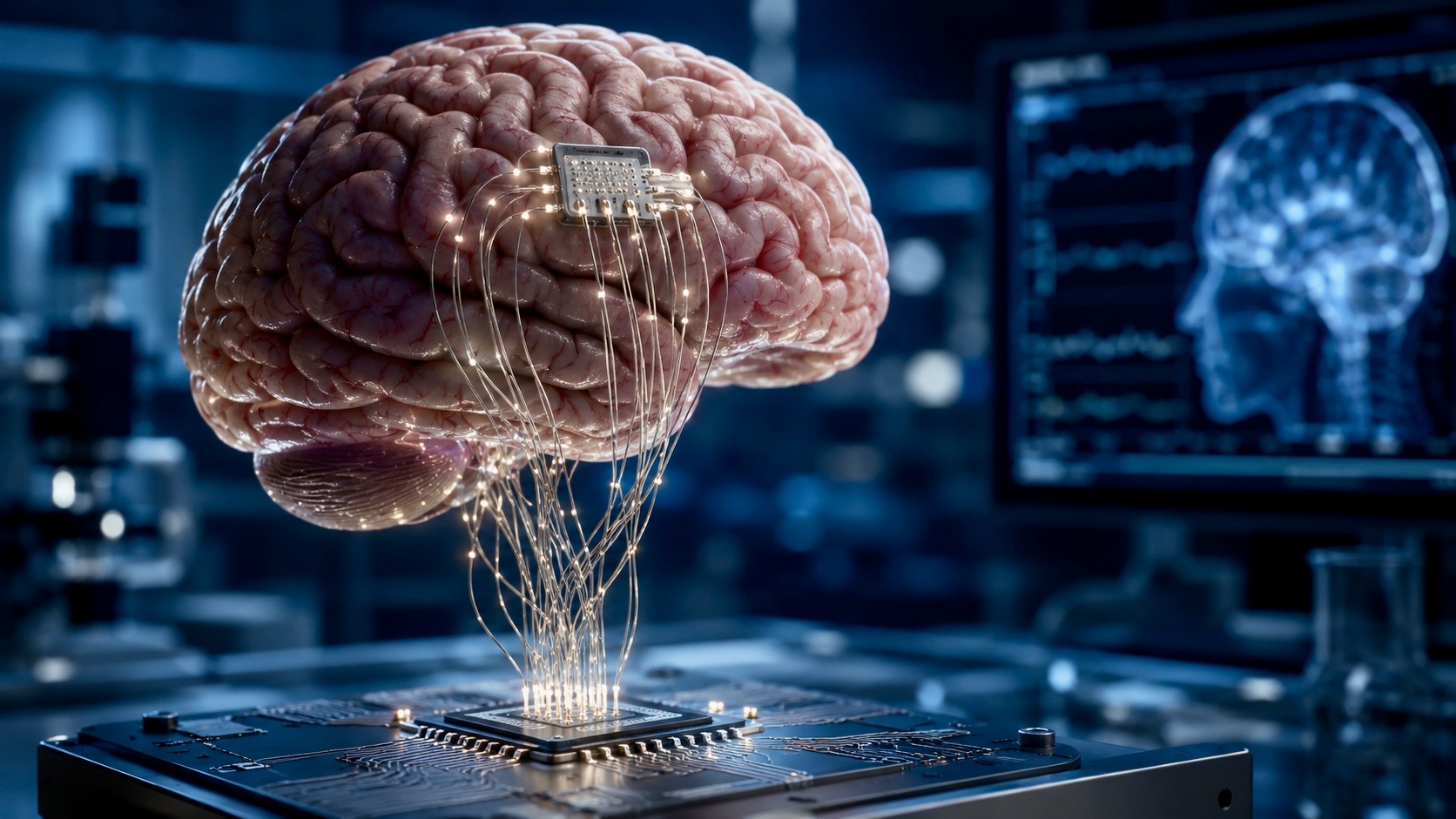
Brain-computer interfaces are rapidly advancing from experimental research to clinical reality, with companies including Neuralink and Synchron developing technologies that could restore communication, movement, and independence for people living with paralysis and severe neurological disorders.
For decades, brain-computer interfaces (BCIs) belonged largely to the realm of science fiction. Today, they are becoming one of the fastest-moving fields in medicine and neuroscience. Recent advances have enabled people with paralysis to control computers using only their thoughts, while experimental systems are beginning to restore speech for individuals who have lost the ability to communicate.
Although widespread clinical use remains years away, the pace of development has accelerated significantly. Companies such as Neuralink and Synchron, along with university researchers and medical institutions around the world, are pushing brain-computer technology beyond laboratory demonstrations and into real-world patient care.
What Is a Brain-Computer Interface?
A brain-computer interface creates a direct communication pathway between the brain and an external device. Instead of relying on muscles to move a keyboard, mouse, or voice box, a BCI interprets electrical activity generated by neurons and converts those signals into digital commands.
Some systems are non-invasive, using electroencephalography (EEG) sensors placed on the scalp. Others, including Neuralink’s N1 implant and Synchron’s Stentrode, are implanted inside or near the brain to capture higher-quality neural signals.
The goal is not to read thoughts in a general sense, but to detect specific patterns associated with intended movements or speech.
Restoring Communication
One of the most promising applications is restoring communication for people who can no longer speak because of conditions such as amyotrophic lateral sclerosis (ALS), stroke, spinal cord injuries, or other neurological diseases.
In recent clinical research, scientists demonstrated that implanted BCIs could translate attempted speech into text or synthesized voice with increasing speed and accuracy. In 2026, researchers reported that a participant successfully used a speech-decoding brain-computer interface independently at home, marking an important step toward practical daily use rather than laboratory demonstrations alone.
Neuralink has also expanded its clinical research into speech restoration, investigating whether its implanted device can convert intended speech directly into text or computer-generated voice for people with severe speech impairment.
Helping People Living With Paralysis
Another major focus is restoring independence for people with paralysis.
Brain-computer interfaces can allow users to move a computer cursor, operate digital devices, and potentially control robotic assistive equipment using neural signals alone.
Neuralink’s Telepathy program is designed to help people with spinal cord injuries and ALS interact with computers without using their hands. Trial participants have demonstrated activities such as browsing the internet, creating artwork, communicating online, and controlling assistive devices through thought alone.
Synchron has taken a different engineering approach. Rather than placing electrodes directly into brain tissue, its Stentrode device is delivered through a blood vessel via the jugular vein, reducing the need for open-brain surgery. Long-term participants have used the technology for years to control digital devices while contributing to improvements in the system.
Different Approaches, Same Goal
While Neuralink often receives the most public attention, it is only one participant in a rapidly expanding field.
Synchron, Paradromics, university research teams, and several international companies are pursuing different hardware designs and decoding methods. Some focus on restoring movement, while others prioritize restoring speech or communication.
Researchers continue to explore trade-offs between invasive implants, which generally provide higher-quality neural signals, and less invasive systems that may reduce surgical risks but currently offer lower resolution.
The field is evolving quickly, with no clear consensus yet on which technological approach will ultimately prove most effective across different medical conditions.
Medical Benefits Come First
Despite public discussion about futuristic concepts such as memory enhancement or direct human-AI interaction, today’s clinical work remains firmly focused on medical applications.
The primary objective is improving quality of life for people living with severe neurological disabilities.
Potential near-term applications include:
Restoring speech after paralysis
Controlling computers without physical movement
Operating powered wheelchairs
Controlling robotic assistive arms
Increasing independence for patients with ALS and spinal cord injuries
These developments remain experimental, and most devices are still undergoing clinical evaluation before broader regulatory approval.
Challenges Still Ahead
Significant technical and ethical challenges remain before BCIs become common medical treatments.
Researchers continue to work on improving long-term reliability, reducing surgical risks, increasing decoding accuracy, minimizing calibration requirements, and ensuring implants remain stable for many years.
Privacy is another important consideration. Because BCIs process neural activity, future regulatory frameworks will likely need to address questions surrounding data security, informed consent, ownership of neural data, and responsible clinical use.
Cost and accessibility also remain major obstacles. Early implanted systems are expected to be expensive and initially available only through specialized medical centers.
Looking Toward the Future
Brain-computer interfaces are advancing from proof-of-concept experiments toward technologies that may eventually become part of standard neurological care.
For patients who have lost the ability to speak or move independently, even modest improvements in communication or computer access can dramatically improve daily life.
While many of the broader visions surrounding BCIs, including cognitive enhancement and seamless interaction with artificial intelligence, remain speculative, today’s research is already delivering measurable medical progress.
The next decade is likely to determine whether brain-computer interfaces transition from specialized clinical trials into widely available medical therapies. For millions of people living with paralysis and severe neurological disorders, that transition could represent one of the most important technological advances in modern medicine.
About the Author Brad Socha is the founder of The Universal Record, focused on sourced, factual global reporting. Coverage includes international news, geopolitics, technology, and major developments.