THE UNIVERSAL RECORD
Sourced reporting. No opinions.
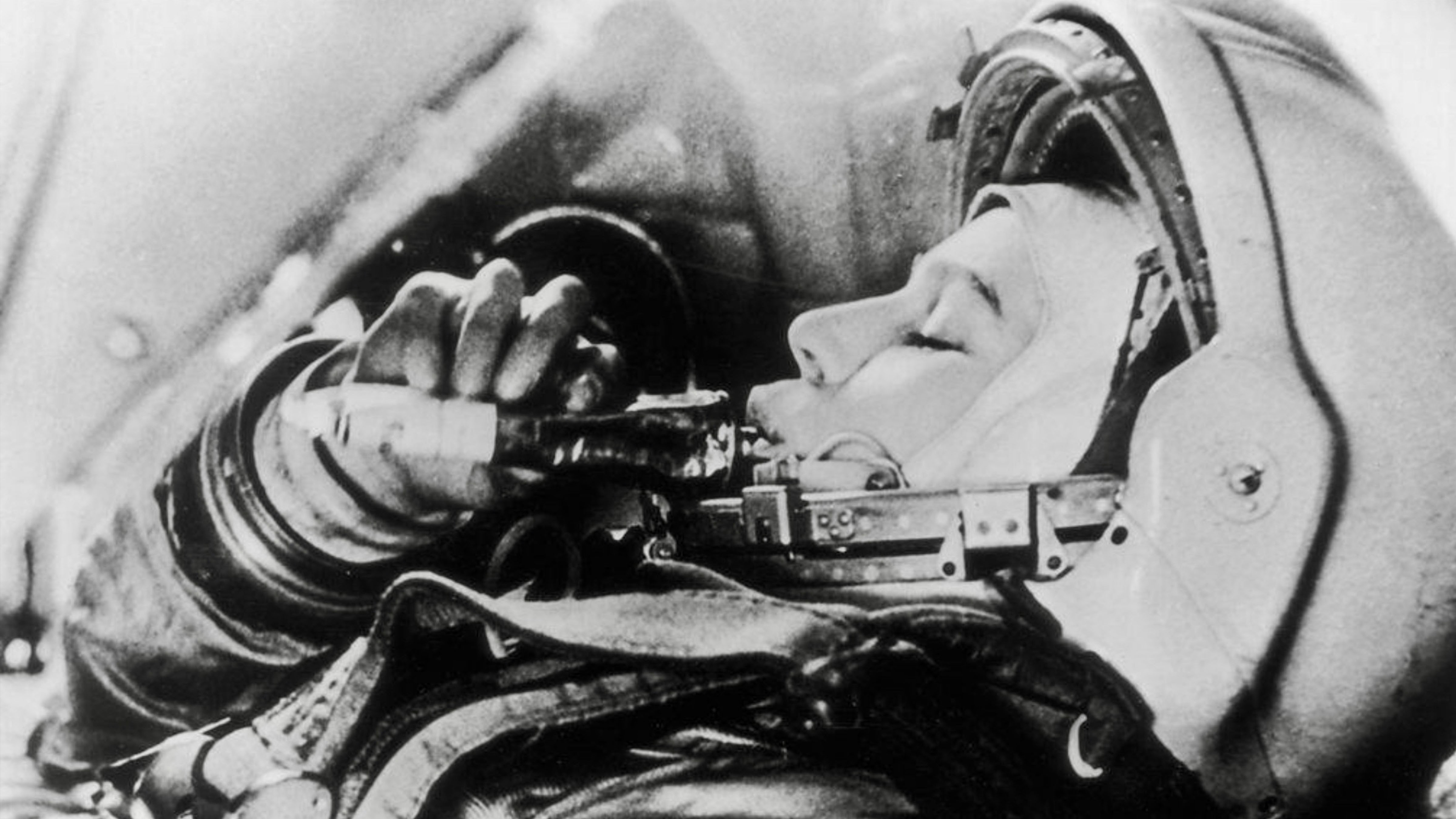
Valentina Tereshkova’s historic Vostok 6 mission shattered barriers in human spaceflight, opening new possibilities for women in exploration and leaving a legacy that continues to influence missions to the Moon and beyond.
By Brad Socha | June 16, 2026 | 5:11 AM EST
More than sixty years after her launch into orbit, Valentina Tereshkova remains one of the most influential figures in the history of space exploration. On June 16, 1963, she became the first woman to travel into space, a milestone that transformed perceptions of who could participate in humanity’s journey beyond Earth.
Her mission aboard Vostok 6 occurred during the height of the Space Race between the Soviet Union and the United States. Yet its significance extended far beyond geopolitics. Tereshkova’s flight demonstrated that women could successfully endure the physical and psychological demands of spaceflight, helping pave the way for future generations of astronauts and cosmonauts.
From Factory Worker to Cosmonaut
Born on March 6, 1937, in the Yaroslavl region of the Soviet Union, Tereshkova worked in a textile factory while pursuing parachuting as a hobby. Her experience as a parachutist attracted the attention of Soviet space officials searching for female candidates for an ambitious new mission.
After a highly competitive selection process, she entered the Soviet cosmonaut training program. Candidates underwent extensive physical conditioning, technical education, survival training, and medical testing. Tereshkova excelled and was ultimately chosen to fly aboard Vostok 6.
At just 26 years old, she was preparing to enter a realm no woman had ever experienced.
Three Days That Changed Space History
On June 16, 1963, Vostok 6 launched from Baikonur Cosmodrome in present-day Kazakhstan. Using the call sign “Chaika,” meaning “Seagull,” Tereshkova became the first woman to leave Earth.
The mission lasted nearly three days. During that time she completed 48 orbits of Earth and traveled roughly two million kilometers. At one point, her spacecraft came within a few kilometers of Vostok 5, piloted by fellow Soviet cosmonaut Valery Bykovsky.
The flight was not without difficulties. Tereshkova later revealed that she experienced severe fatigue and space sickness. Engineers also discovered a programming issue that could have affected the planned reentry trajectory. Working with ground controllers, the problem was corrected and the mission proceeded safely.
Despite the challenges, the flight delivered valuable scientific data about the effects of prolonged space travel on the human body. The success of Vostok 6 represented another major Soviet achievement in the early Space Age and captured global attention.
A Legacy Beyond the Space Race
Tereshkova returned to Earth as an international icon. Her achievement inspired millions and became one of the most recognizable moments in the history of women’s advancement in science and technology.
Yet it would be nearly twenty years before another woman traveled into space. Soviet cosmonaut Svetlana Savitskaya followed in 1982, while Sally Ride became the first American woman in space in 1983. Since then, women have served as commanders, scientists, engineers, pilots, and leaders aboard spacecraft and space stations around the world.
The path toward greater representation in space exploration can be traced directly to Tereshkova’s groundbreaking mission.
The Connection to Today’s Moon Missions
The significance of June 16, 1963, remains visible in modern space programs. NASA’s Artemis program plans to land the first woman on the Moon, while international partners continue expanding opportunities for women throughout the aerospace sector.
What was once considered extraordinary is now an expected part of human spaceflight. Female astronauts regularly command missions, conduct spacewalks, and contribute to scientific research aboard the International Space Station.
As agencies prepare for future journeys to the Moon and Mars, Tereshkova’s flight stands as a reminder that exploration advances when barriers are removed and opportunities expand.
More than six decades later, the first woman in space remains one of the defining pioneers of the Space Age. Her mission lasted only a few days, but its impact continues to shape humanity’s future among the stars.
Sources:
Britannica — https://www.britannica.com/biography/Valentina-Tereshkova
NASA History Office — https://history.nasa.gov/SP-4225/nasa1/ch1.htm
European Space Agency — https://www.esa.int/About_Us/ESA_history/Valentina_Tereshkova
Smithsonian National Air and Space Museum — https://airandspace.si.edu/stories/editorial/valentina-tereshkova-first-woman-space
History.com — https://www.history.com/this-day-in-history/first-woman-in-space
Wikimedia Commons (Public Domain Image Collection) — https://commons.wikimedia.org/wiki/Category:Valentina_Tereshkova
About the Author
Brad Socha is the founder of The Universal Record, focused on sourced, factual global reporting. Coverage includes international news, geopolitics, technology, and major developments.