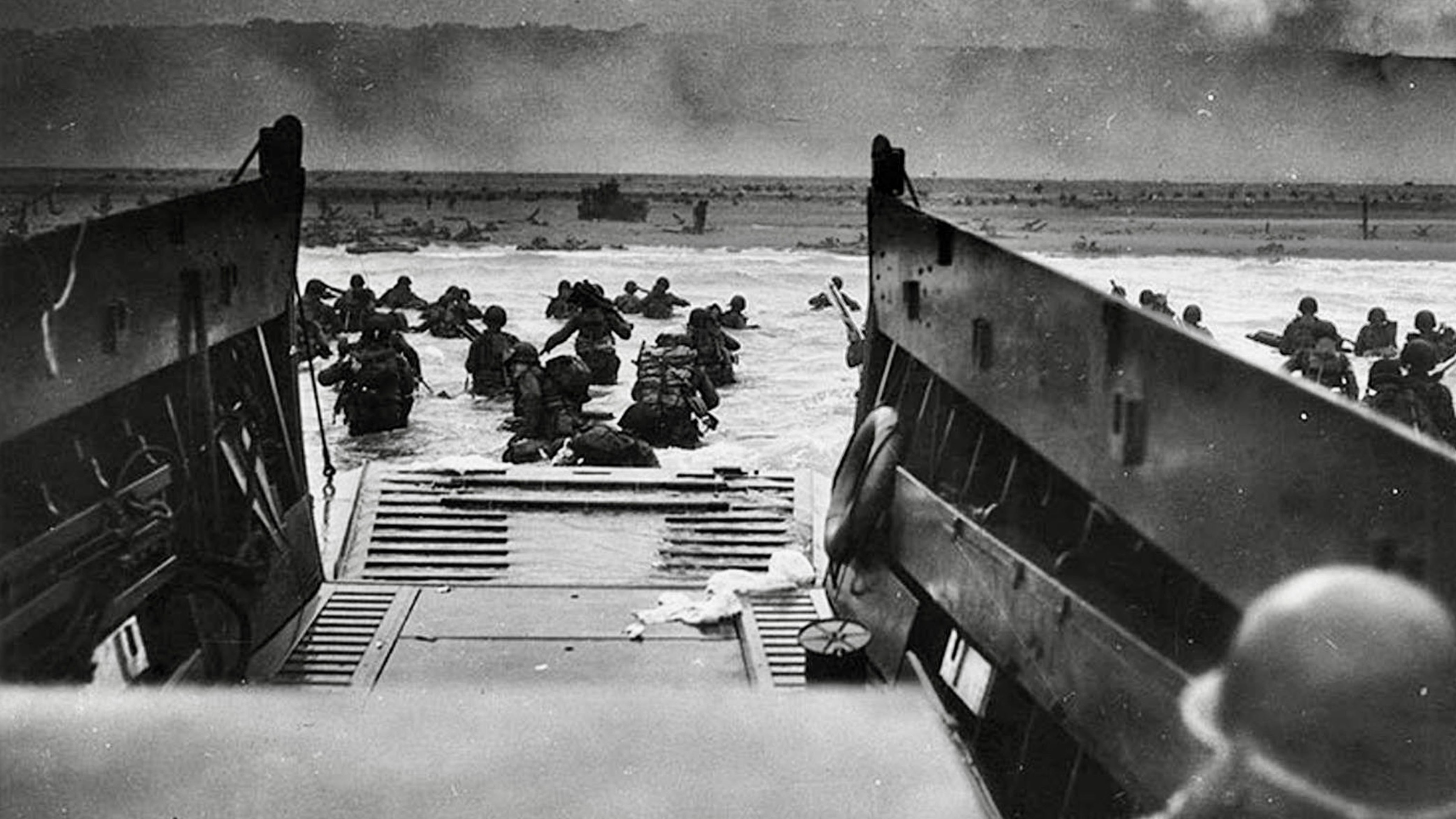
More than eight decades later, D-Day remains one of the defining moments of the twentieth century. The Allied landings in Normandy on June 6, 1944, marked the beginning of the campaign that would help liberate Western Europe from Nazi occupation and accelerate the defeat of Adolf Hitler’s regime. The operation demonstrated an unprecedented level of international cooperation, military planning, and logistical coordination, and its legacy continues to shape military strategy, diplomacy, and historical remembrance around the world.
By the summer of 1944, World War II had entered a critical phase. Nazi Germany still occupied much of Western Europe, while Soviet forces were advancing from the east. Allied leaders understood that opening a major front in Western Europe was necessary to relieve pressure on the Soviet Union and begin the liberation of territories under German control.
The operation, codenamed Operation Overlord, had been in planning for months. Under the command of General Dwight D. Eisenhower, Allied forces assembled one of the largest invasion forces ever created. Troops from the United States, the United Kingdom, Canada, and several other Allied nations gathered in southern England in preparation for a cross-Channel assault that would test years of planning and preparation.
Originally scheduled for June 5, the invasion was delayed by 24 hours because of poor weather conditions in the English Channel. Meteorologists identified a brief improvement in the forecast, giving Eisenhower a narrow opportunity to proceed. The decision would become one of the most consequential military choices of the war.
On the evening of June 5 and into the early hours of June 6, thousands of Allied paratroopers descended behind German lines in Normandy. Their mission was to capture bridges, disrupt communications, secure roadways, and prevent German reinforcements from reaching the beaches. At the same time, an enormous invasion fleet crossed the English Channel carrying troops, vehicles, artillery, and supplies.
As dawn broke on June 6, Allied forces began landing on five designated beaches along the Normandy coast. The Americans assaulted Utah and Omaha beaches. British forces landed at Gold and Sword beaches, while Canadian troops stormed Juno Beach. Together, these landings formed the largest seaborne invasion in history.
Conditions varied dramatically across the landing zones. At Utah Beach, American forces achieved many of their objectives relatively quickly. Omaha Beach, however, became one of the most difficult and costly sectors of the invasion. Strong German defenses positioned on elevated terrain inflicted heavy casualties on troops attempting to cross open stretches of sand under intense machine-gun and artillery fire. Despite these obstacles, American forces gradually pushed inland and secured their foothold.
Throughout the day, Allied naval vessels bombarded coastal defenses while thousands of aircraft provided support from the air. The invasion represented a massive coordination effort involving soldiers, sailors, pilots, engineers, and resistance fighters. Allied deception campaigns, including Operation Fortitude, had successfully convinced many German commanders that the primary invasion would occur elsewhere, particularly near the Pas-de-Calais region. This strategic deception delayed German responses during the crucial early stages of the operation.
By the end of D-Day, approximately 156,000 Allied troops had landed in Normandy by sea or air. Casualties were substantial on all sides. Historical estimates indicate that Allied forces suffered roughly 10,000 casualties, including thousands killed, wounded, or missing during the first day of fighting. Nevertheless, the Allies had succeeded in establishing beachheads along the French coast, ensuring that additional troops and equipment could continue arriving in the days and weeks ahead.
The scale of the operation was extraordinary. Nearly 7,000 ships and landing craft participated, while thousands of aircraft supported the invasion. Within weeks, hundreds of thousands of troops, vehicles, and tons of supplies had crossed into France, creating the foundation for the liberation of Western Europe.
The battle for Normandy did not end on D-Day. Fierce fighting continued throughout the summer as Allied forces pushed inland against determined German resistance. Towns and villages became battlegrounds, and progress was often measured in miles rather than hundreds of kilometres. However, the success of the landings gave the Allies a permanent foothold on the continent.
By late August 1944, Paris had been liberated, and German forces were retreating across France. The Normandy campaign transformed the strategic situation in Europe. Germany now faced powerful Allied armies advancing from both east and west, a reality that significantly contributed to the collapse of the Third Reich less than a year later.
D-Day’s significance extends beyond its military achievements. The operation showcased cooperation among nations with different cultures, languages, and military traditions united by a common objective. It also highlighted the immense human cost of war. Thousands of young soldiers crossed the Channel knowing the risks they faced, and many never returned home.
Today, the beaches of Normandy have become places of remembrance visited by millions each year. Memorials, museums, and military cemeteries preserve the stories of those who participated in the operation. Veterans, historians, and world leaders continue to view D-Day as a symbol of sacrifice, determination, and international cooperation in the face of tyranny.
Few events in military history have matched its scale, complexity, or impact. The success of the Normandy landings altered the course of World War II and helped shape the modern world. More than eighty years later, D-Day remains one of history’s most studied and remembered operations, a moment when planning, courage, and sacrifice converged on the beaches of northern France.
About the Author Brad Socha is the founder of The Universal Record, focused on sourced, factual global reporting. Coverage includes international news, geopolitics, technology, and major developments.