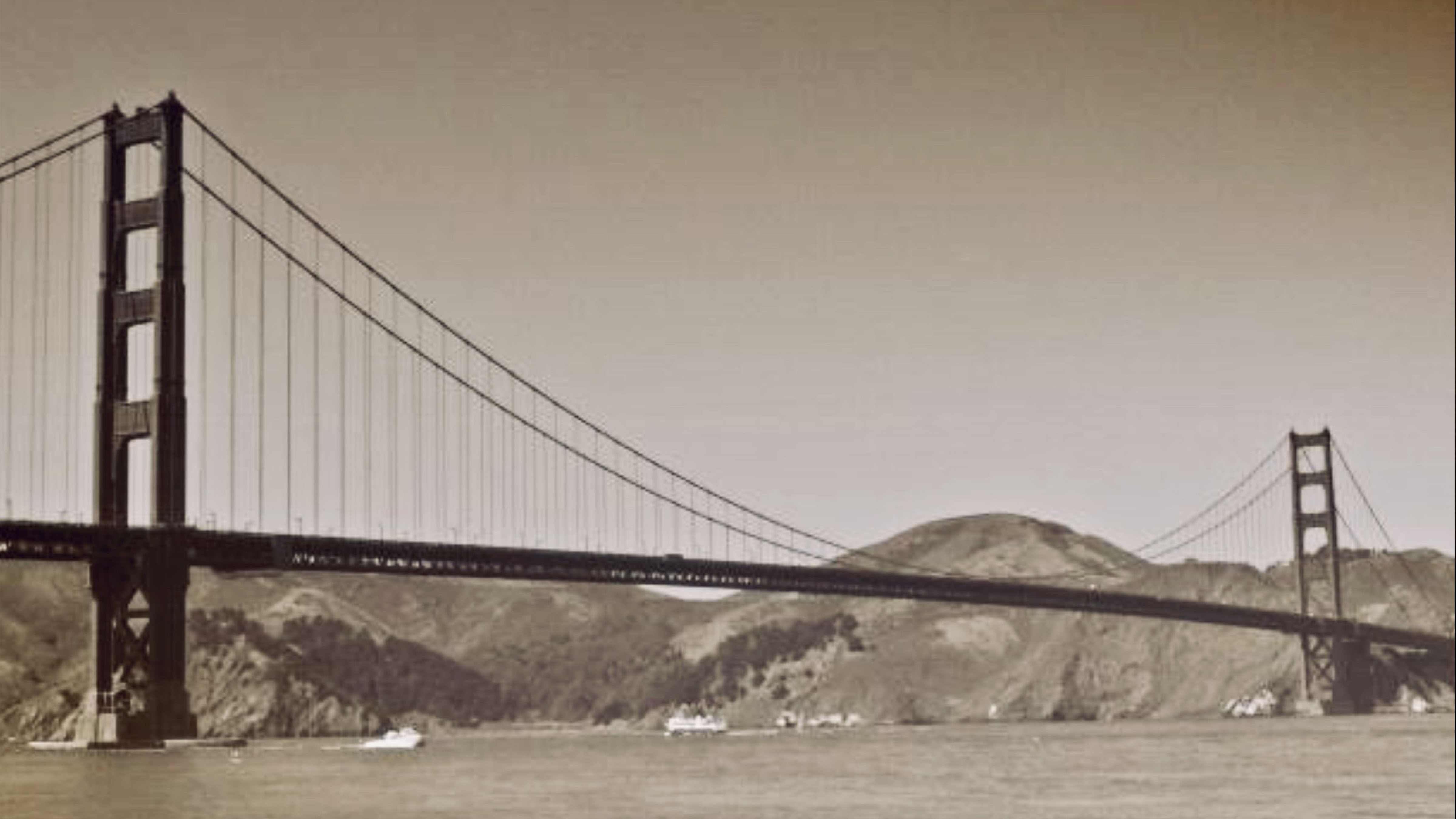
The opening of San Francisco’s Golden Gate Bridge became one of the most celebrated engineering achievements of the twentieth century and permanently transformed transportation, architecture, and American culture
Nearly nine decades after it first opened to the public, the Golden Gate Bridge remains one of the most recognizable structures in the world. Stretching across the entrance to San Francisco Bay, the massive suspension bridge quickly became a symbol of American engineering ambition, economic resilience, and modern design after opening on May 27, 1937.
What began as an extraordinarily risky infrastructure project during the Great Depression evolved into one of the defining landmarks of the twentieth century. The bridge reshaped transportation throughout Northern California, accelerated regional growth, and established new global standards for large-scale suspension bridge construction.
Before the bridge existed, travel between San Francisco and Marin County depended almost entirely on ferry systems crossing the often dangerous waters of the Golden Gate Strait. Strong currents, thick fog, high winds, and deep water made bridge construction appear nearly impossible for decades.
Many engineering experts initially believed a suspension bridge spanning the strait could not safely be built.
The challenge involved constructing a structure capable of withstanding powerful Pacific Ocean winds, corrosive saltwater conditions, seismic activity, and heavy maritime traffic. At the time, the proposed bridge would require the longest suspension span ever attempted anywhere in the world.
Despite skepticism, engineer Joseph Strauss emerged as the leading force behind the project during the 1920s. Strauss originally proposed a more industrial-looking hybrid cantilever design, but the bridge’s final appearance evolved substantially through contributions from several prominent engineers and architects.
Leon Moisseiff contributed advanced suspension engineering concepts, while Charles Alton Ellis carried out critical structural calculations that helped make the final design feasible. Architect Irving Morrow played a major role in shaping the bridge’s now-famous Art Deco styling and distinctive International Orange colour scheme.
Building an Engineering Giant
Construction officially began on January 5, 1933, during one of the most economically difficult periods in American history.
The Great Depression had devastated employment across the United States, and large public works projects increasingly became central to economic recovery efforts. Financing the bridge itself proved controversial and difficult. Local counties backing the project took on enormous financial risk by approving bonds worth more than $35 million, a massive sum at the time.
Building conditions were extremely hazardous.
Workers operated hundreds of feet above open water while battling intense winds, fog, slippery steel, and constant danger. Industrial safety standards during the early twentieth century were far less developed than modern construction practices, and major bridge projects often resulted in extremely high death tolls.
Joseph Strauss introduced several unprecedented safety measures for the era, including mandatory hard hats and a giant safety net suspended beneath portions of the bridge deck. The net reportedly saved the lives of nineteen workers during construction. Those survivors later became informally known as members of the “Halfway to Hell Club.”
Even with those precautions, eleven workers died during construction, including ten killed in a tragic scaffolding collapse near the end of the project in February 1937.
The bridge itself pushed engineering capabilities to new extremes.
Its central span measured approximately 4,200 feet, making it the longest suspension bridge span in the world at the time of completion. Massive steel towers rose more than 700 feet above the water, while enormous suspension cables containing thousands of miles of steel wire supported the roadway below.
The bridge’s famous International Orange paint colour was originally intended as a protective primer coat. However, architects and designers ultimately embraced the colour because it improved visibility within heavy fog conditions and complemented the surrounding natural landscape.
A Global Symbol Is Born
On May 27, 1937, the Golden Gate Bridge officially opened to pedestrians before vehicle traffic began the following day.
An estimated 200,000 people crossed the bridge during opening celebrations. Citizens walked, danced, roller-skated, and gathered across the span in what became one of the largest public celebrations in California history.
The bridge immediately transformed transportation throughout the Bay Area.
Travel times between San Francisco and surrounding northern communities dropped dramatically, encouraging economic growth, suburban expansion, tourism, and regional integration. Ferry traffic rapidly declined as automobiles increasingly dominated transportation throughout California.
Beyond transportation, the Golden Gate Bridge soon evolved into an international cultural icon.
Its striking visual appearance made it one of the most photographed structures in the world. The bridge appeared in films, television programs, artwork, advertisements, literature, and tourism campaigns, becoming closely associated with both San Francisco and American innovation itself.
The bridge also became internationally respected within engineering communities.
Its construction demonstrated how large-scale infrastructure could overcome severe environmental and geographic obstacles through advances in structural engineering, materials science, and coordinated industrial planning. Many later suspension bridges around the world drew inspiration from techniques developed during the Golden Gate project.
Over time, the bridge required constant maintenance and modernization.
Exposure to ocean air and saltwater creates continuous corrosion challenges, requiring extensive repainting and steel preservation efforts. Engineers have also invested heavily in seismic retrofitting projects to strengthen the structure against major earthquakes in one of North America’s most active seismic regions.
The Golden Gate Bridge remains fully operational today and continues carrying tens of millions of vehicles annually.
Its endurance reflects not only engineering skill but also the long-term vision behind the project itself. Built during a period of economic hardship and uncertainty, the bridge became proof that ambitious infrastructure projects could reshape entire regions for generations.
Nearly ninety years after its opening, the Golden Gate Bridge continues to symbolize far more than transportation alone.
It represents technological ambition, architectural beauty, economic resilience, and the ability of engineering to permanently alter how people connect with cities, landscapes, and one another. Few structures anywhere in the world have combined practical utility and global cultural recognition as successfully as the Golden Gate Bridge.
About the Author Brad Socha is the founder of The Universal Record, focused on sourced, factual global reporting. Coverage includes international news, geopolitics, technology, and major developments.