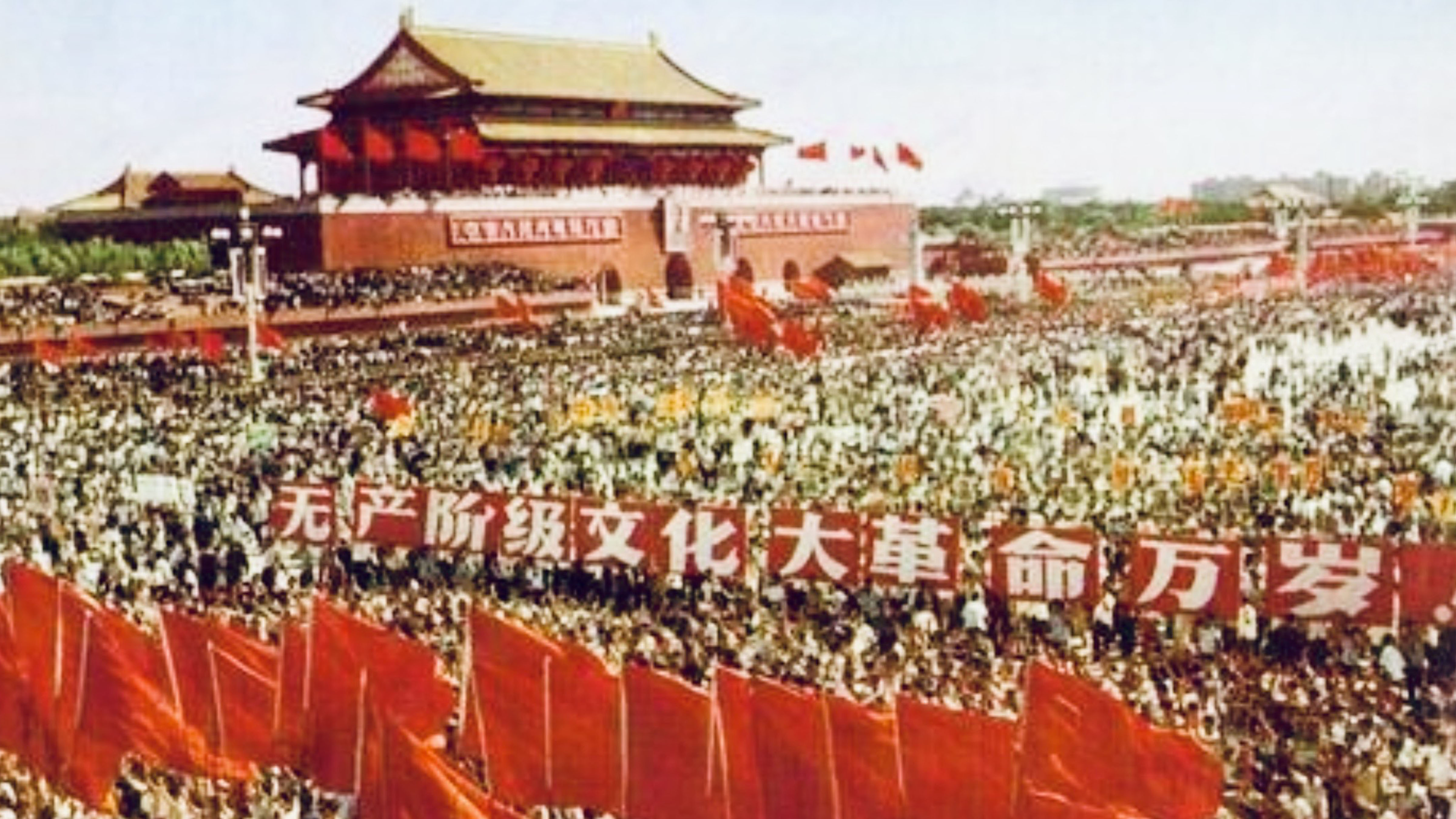
One of the most transformative and devastating political movements of the 20th century began on May 16, 1966, when Chinese Communist Party Chairman Mao Zedong launched what became known as the Cultural Revolution. Decades later, historians continue to examine the movement’s massive impact on Chinese society, politics, education, culture, and global Cold War dynamics.
The anniversary remains highly significant today because the Cultural Revolution permanently altered modern China and continues to influence how governments, historians, and political analysts understand mass political movements, propaganda, ideological extremism, and centralized power.
The Cultural Revolution officially began after the Chinese Communist Party issued the “May 16 Notification,” a document warning of alleged counterrevolutionary elements within the government and society. Mao used the campaign to reassert political control after internal criticism following the failures of the Great Leap Forward, a previous economic campaign that contributed to widespread famine and economic collapse.
What followed was a decade of political chaos that affected nearly every aspect of Chinese life.
Mao encouraged students and supporters to challenge traditional authority structures and remove individuals viewed as politically disloyal or ideologically impure. Millions of young people joined Red Guard groups, which became one of the defining symbols of the Cultural Revolution.
Schools and universities across China were disrupted or shut down entirely. Intellectuals, teachers, writers, government officials, and cultural figures were publicly denounced, imprisoned, assaulted, or sent to rural labour camps for “re-education.” Historical artifacts, religious sites, books, artwork, and cultural landmarks were destroyed during aggressive campaigns against what authorities called the “Four Olds”, old customs, old culture, old habits, and old ideas.
Historians estimate that millions of people were persecuted during the movement, with large numbers killed, imprisoned, displaced, or subjected to forced labour and political violence. Exact figures remain debated due to incomplete records and the political sensitivity of the topic within China.
The Cultural Revolution also created deep instability within the Chinese government itself. Rival factions within the Communist Party struggled for influence as Mao consolidated authority. Senior officials, including future Chinese leader Deng Xiaoping, were removed from power during portions of the campaign.
Internationally, the Cultural Revolution drew widespread attention during a tense period of the Cold War. Western governments closely monitored developments in China as political instability and ideological extremism intensified inside one of the world’s largest nations. Relations between China and the Soviet Union also deteriorated further during this period, contributing to the broader geopolitical divide between communist powers.
Economically, the movement caused severe disruption across industry, agriculture, education, and scientific research. Many universities lost years of academic activity, while economic production slowed significantly in multiple sectors.
Despite the widespread upheaval, Mao’s public image remained heavily promoted throughout the campaign. Portraits, slogans, revolutionary songs, and quotations from Mao’s “Little Red Book” became central features of daily life. Political loyalty and ideological conformity increasingly shaped employment, education, and social standing across the country.
The Cultural Revolution gradually lost momentum in the 1970s as political divisions intensified and economic challenges mounted. Following Mao’s death in 1976, the Chinese government officially moved to end the movement. Authorities later described the Cultural Revolution as a “serious setback” for the country and acknowledged the extensive damage caused during the decade-long campaign.
In the years that followed, China shifted toward economic modernization under Deng Xiaoping, moving away from many of the radical policies associated with the Cultural Revolution.
Today, discussion of the Cultural Revolution remains tightly controlled within mainland China, where the subject continues to carry political sensitivity. However, globally, the period is widely studied by historians, political scientists, educators, and human rights researchers as one of the defining political upheavals of the modern era.
The anniversary also arrives during renewed global debates surrounding propaganda, political polarization, censorship, nationalism, and the role of state power in shaping public thought. Many historians believe the Cultural Revolution serves as a cautionary example of how rapidly political movements can reshape institutions, education systems, and societies when ideological loyalty becomes dominant.
Nearly six decades later, the Cultural Revolution remains one of the most consequential chapters in modern Chinese history and a defining event in understanding the political history of the 20th century.
About the Author Brad Socha is the founder of The Universal Record, focused on sourced, factual global reporting. Coverage includes international news, geopolitics, technology, and major developments.