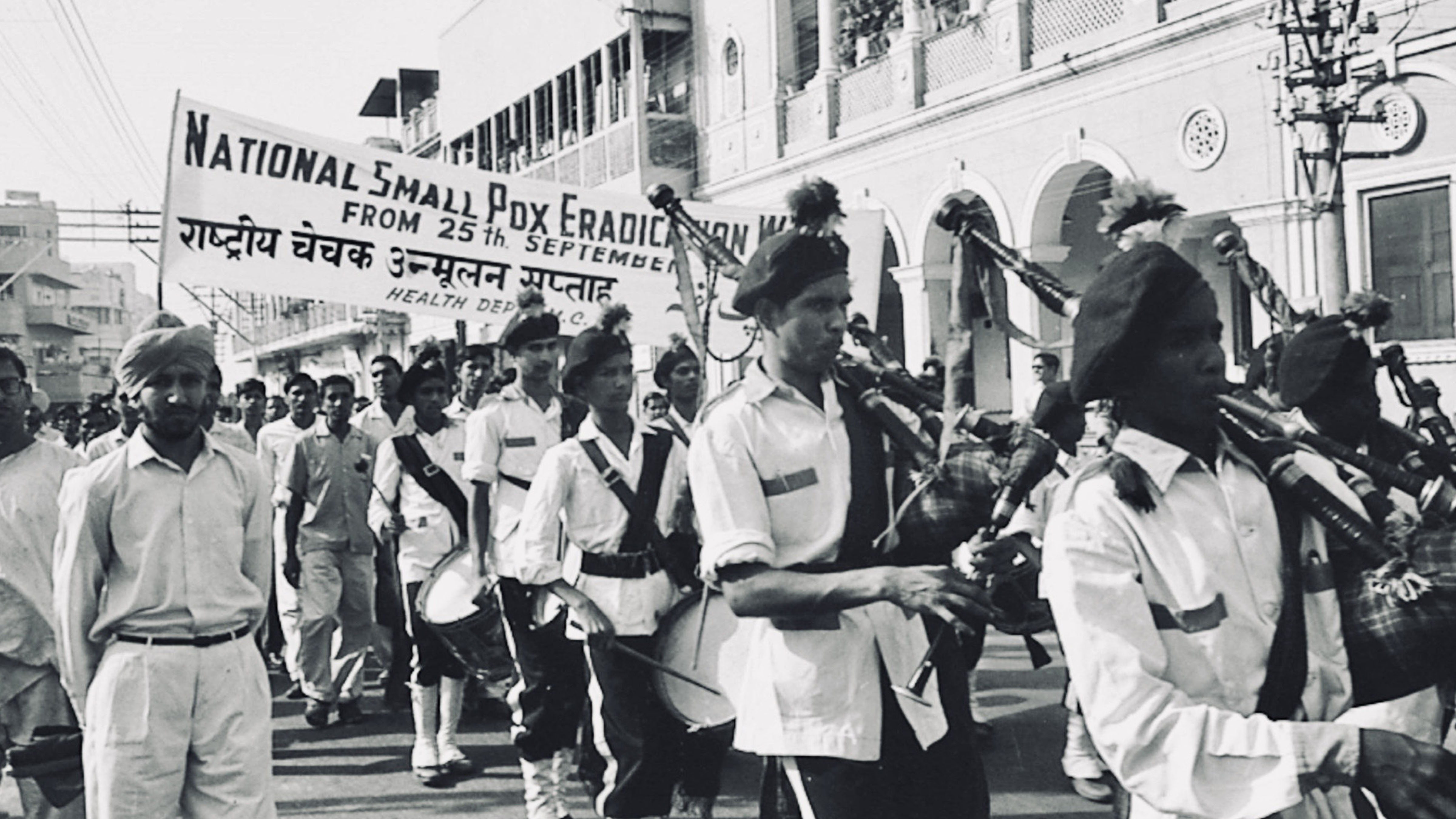
On May 8, 1980, the World Health Organization officially declared smallpox eradicated after one of the largest global public health campaigns in history
The official eradication of smallpox remains one of the greatest medical achievements in human history and continues to influence modern global health strategy today. More than four decades after the World Health Organization formally declared the disease eliminated on May 8, 1980, the success of the campaign is still referenced during discussions about pandemic preparedness, vaccine distribution, disease surveillance, and international medical cooperation. At a time when the world continues to face concerns over emerging viruses and future outbreaks, the eradication of smallpox stands as one of the clearest examples of coordinated global science successfully eliminating a deadly human disease.
The declaration came after years of aggressive international vaccination campaigns, surveillance programs, rapid containment efforts, and unprecedented cooperation between governments, scientists, and healthcare workers across multiple continents. The World Health Assembly officially approved the declaration following extensive verification that naturally occurring smallpox transmission had been stopped worldwide.
Smallpox had existed for thousands of years and was one of the deadliest infectious diseases ever faced by humanity. Caused by the variola virus, the disease spread through close contact and respiratory transmission, often leaving survivors permanently scarred or blind. Historical estimates suggest smallpox killed hundreds of millions of people throughout history, including significant numbers during the twentieth century alone before vaccines became widespread.
The disease produced fever, severe body pain, and a distinctive rash that developed into fluid-filled lesions covering large portions of the body. Mortality rates varied depending on the strain, but some outbreaks killed roughly one in three infected individuals. Entire communities and populations were repeatedly devastated during epidemics before effective immunization programs existed.
The breakthrough that eventually led to eradication originated with vaccination efforts that began centuries earlier. English physician Edward Jenner’s work in the late eighteenth century helped establish the concept of vaccination after observing that exposure to cowpox could provide protection against smallpox. Over time, scientific advances improved vaccine production and distribution, but global eradication remained an enormous challenge because the virus had spread across much of the world.
In 1967, the World Health Organization launched an intensified global eradication campaign aimed at eliminating the disease entirely. Rather than relying solely on mass vaccination, health authorities increasingly used targeted containment strategies that focused on identifying outbreaks quickly and vaccinating individuals who had been exposed. This “ring vaccination” approach became one of the most important tools in stopping transmission chains.
Health workers traveled into remote villages, densely populated cities, conflict zones, and isolated rural regions searching for new infections. Surveillance teams investigated suspected outbreaks while governments coordinated vaccine shipments, laboratory analysis, and emergency response efforts. The campaign involved thousands of doctors, nurses, epidemiologists, field workers, and volunteers operating under difficult conditions in some of the world’s poorest and most inaccessible areas.
The final naturally occurring case of variola major, the more severe form of smallpox, was recorded in Bangladesh in 1975. The last naturally occurring case of variola minor occurred in Somalia in 1977. Following years of continued monitoring and investigation, global health officials concluded the disease had been eliminated from natural transmission.
On May 8, 1980, the World Health Assembly officially declared that “the world and all its peoples have won freedom from smallpox.” The announcement marked the first and so far only complete eradication of a human infectious disease in history.
The eradication had enormous global consequences. Governments no longer needed routine mass smallpox vaccination programs, saving billions of dollars in long-term healthcare costs. Countless future deaths were prevented, and healthcare systems were able to redirect resources toward other diseases and public health priorities. The campaign also demonstrated that large-scale international health coordination could succeed despite political divisions during the Cold War era.
The achievement helped shape later public health programs targeting diseases such as polio, measles, guinea worm disease, and malaria. Many of the surveillance systems, outbreak tracking methods, vaccination logistics, and emergency response strategies used today trace part of their origins to the smallpox eradication effort.
Smallpox also remains a subject of modern biosecurity concern because official virus samples still exist in highly secured laboratories in the United States and Russia. Some experts argue the remaining samples are necessary for scientific research and vaccine preparedness, while others believe all known stocks should eventually be destroyed to eliminate any possibility of accidental release or misuse.
The story of smallpox eradication continues to be taught globally because it represents a rare example of humanity permanently defeating a major infectious disease through science, coordination, and sustained international effort. Public health historians often point to the campaign as proof that global cooperation can achieve long-term medical breakthroughs even during periods of geopolitical tension.
As the world continues facing new health threats, including emerging viruses and evolving pandemic risks, the eradication of smallpox remains both a historical milestone and a benchmark for future public health ambitions. More than forty years later, May 8, 1980 continues to symbolize one of the most significant victories ever achieved in medicine.
About the Author Brad Socha is the founder of The Universal Record, focused on sourced, factual global reporting. Coverage includes international news, geopolitics, technology, and major developments.