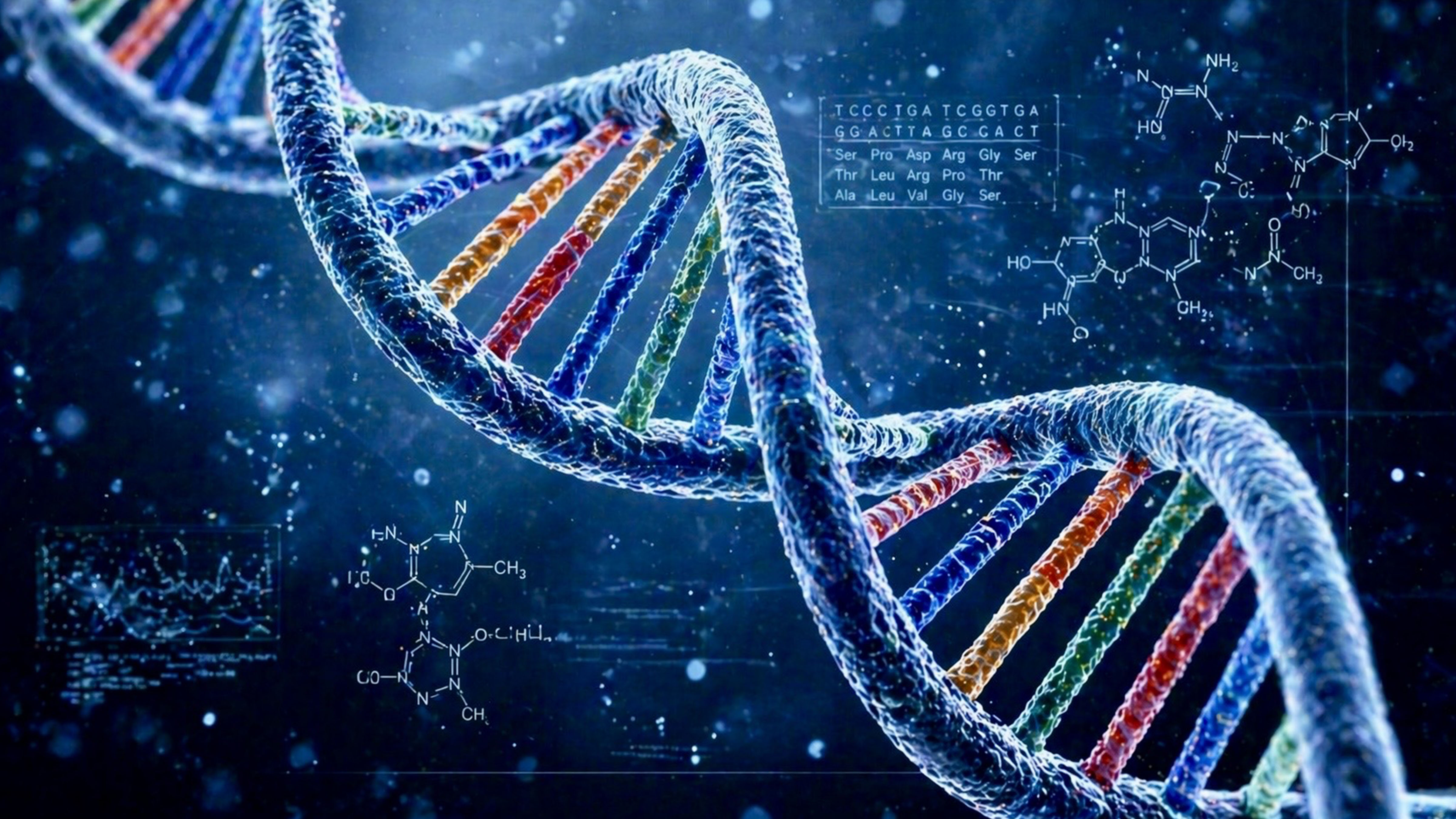
The DNA double helix structure was publicly announced on April 25, 1953, marking one of the most significant scientific breakthroughs in modern history. The discovery provided the first clear explanation of how genetic information is stored and transmitted in living organisms, fundamentally transforming biology, medicine, and genetics.
The announcement came through a landmark scientific paper published in the journal Nature by James Watson and Francis Crick. Their work described DNA as a double helix, two intertwined strands forming a spiral structure, which immediately became the defining model for understanding heredity and biological function.
The DNA double helix structure explained how genetic instructions are encoded using sequences of chemical bases and how these instructions can be copied during cell division. This insight resolved longstanding questions about inheritance and opened the door to modern molecular biology.
DNA double helix structure explained genetic replication
At the core of the discovery was the realization that DNA consists of paired bases arranged in a specific pattern. This pairing mechanism allows the molecule to replicate itself accurately, ensuring that genetic information is passed from one generation to the next.
The DNA double helix structure consists of two strands connected by base pairs, adenine pairing with thymine, and cytosine pairing with guanine. This predictable structure enables cells to “read” and duplicate genetic information with high precision.
The model also explained how mutations can occur, providing a scientific basis for understanding evolution, genetic variation, and disease. This was a major turning point, shifting biology from observation to a molecular-level science.
Contributions from Rosalind Franklin and Maurice Wilkins
The DNA double helix discovery was built on critical experimental work, particularly X-ray diffraction images produced by Rosalind Franklin. Her famous “Photo 51” provided essential evidence of DNA’s helical structure.
Maurice Wilkins also contributed to the research, helping to interpret the structural data that supported the double helix model. While Watson and Crick proposed the theoretical framework, the discovery relied heavily on this experimental foundation.
The contributions of Franklin, in particular, have gained increasing recognition over time, highlighting the collaborative and complex nature of scientific discovery.
DNA double helix discovery transformed science and medicine
The announcement of the DNA double helix structure immediately reshaped scientific research. It provided a unifying framework for genetics and laid the foundation for entire fields, including genomics, biotechnology, and genetic engineering.
In medicine, the discovery enabled researchers to identify the genetic causes of diseases, leading to advances in diagnostics, targeted therapies, and personalized medicine. The ability to analyze and manipulate DNA has become central to modern healthcare.
The DNA double helix structure also paved the way for major scientific milestones, including the Human Genome Project and the development of gene-editing technologies such as CRISPR.
Long-term impact of the DNA double helix structure
More than seven decades after its announcement, the DNA double helix structure remains one of the most important discoveries in science. It continues to influence research across biology, medicine, agriculture, and technology.
The discovery fundamentally changed humanity’s understanding of life itself, revealing that all living organisms share a common molecular language. It also raised important ethical questions about genetic manipulation, privacy, and the future of biotechnology.
Today, the DNA double helix structure stands as a cornerstone of modern science, demonstrating how a single breakthrough can reshape entire fields and drive innovation for generations.
About the Author Brad Socha is the founder of The Universal Record, focused on sourced, factual global reporting. Coverage includes international news, geopolitics, technology, and major developments.