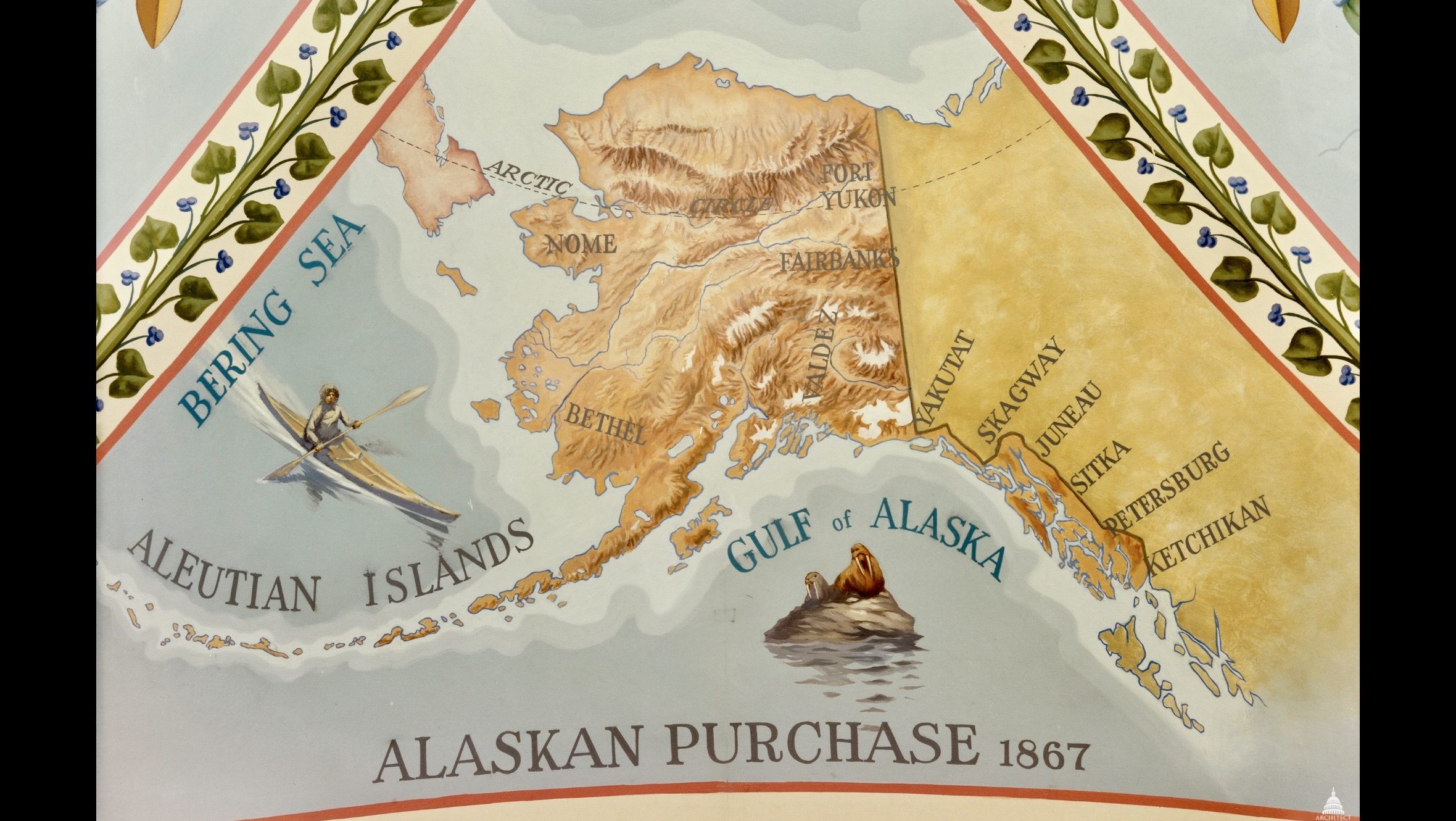
On March 30, 1867, the United States agreed to purchase Alaska from Russia in a deal that would significantly expand American territory. The agreement, negotiated by U.S. Secretary of State William H. Seward, transferred more than 586,000 square miles of land for $7.2 million.
At the time, the acquisition was widely criticized by some Americans, who referred to it as “Seward’s Folly” or “Seward’s Icebox,” questioning the value of what appeared to be a remote and largely undeveloped region. However, Russia was motivated to sell due to financial pressures and concerns about defending the territory from potential British expansion.
The purchase added vast natural resources and strategic geographic positioning to the United States. Over time, Alaska proved to be rich in gold, oil, and other valuable resources, contributing significantly to the U.S. economy.
Alaska’s location also became increasingly important for military and geopolitical strategy, particularly during the 20th century. Its proximity to Russia during the Cold War elevated its role in national defense and global security considerations.
Today, the Alaska Purchase is widely regarded as one of the most successful land acquisitions in U.S. history. What was once viewed with skepticism ultimately strengthened the country’s economic and strategic position.
About the Author Brad Socha is the founder of The Universal Record, focused on sourced, factual global reporting. Coverage includes international news, geopolitics, technology, and major developments.