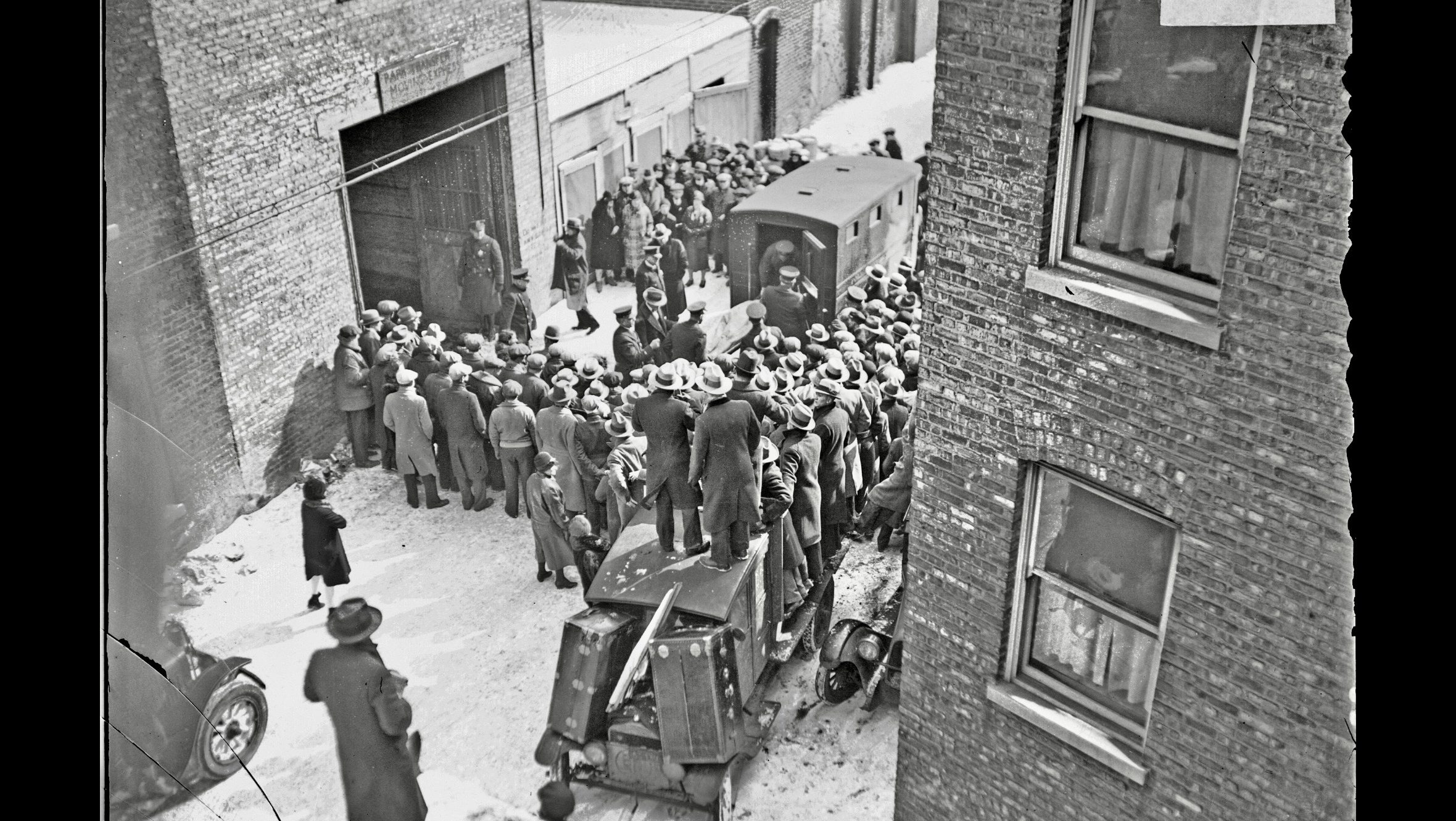
On February 14, 1929, seven men associated with Chicago’s North Side Gang were murdered inside a garage on North Clark Street in Chicago. The killings, later known as the St. Valentine’s Day Massacre, became one of the most infamous crimes in American history and highlighted the violent rivalries that emerged during Prohibition.
The victims were gathered inside the garage when armed men, some reportedly disguised as police officers, entered the building. Witness accounts and subsequent investigations suggested the attackers staged what appeared to be a routine police raid before opening fire. The attack was carried out with military-style precision, leaving seven people dead and shocking the nation.
At the time, organized crime groups were competing for control of lucrative bootlegging operations created by the nationwide ban on alcohol. Chicago had become a focal point of these conflicts, with rival gangs battling for territory, influence, and profits. The massacre was widely linked to the ongoing feud between the organizations led by Al Capone and George “Bugs” Moran, although no court ever established responsibility for planning the attack.
Public reaction was immediate. Newspaper coverage spread across the United States, and photographs from the crime scene became some of the most widely circulated images of the era. The incident intensified concerns about organized crime and the ability of criminal organizations to operate with relative impunity despite growing law enforcement efforts.
Federal authorities increased investigations into organized crime networks in the years that followed. While the massacre itself remained unsolved, the public pressure generated by the killings contributed to broader efforts targeting criminal enterprises. Investigators eventually focused on financial crimes and tax violations, leading to Al Capone’s conviction for tax evasion in 1931.
Historians continue to view the St. Valentine’s Day Massacre as a turning point in public attitudes toward organized crime. The event exposed the scale of gang violence during Prohibition and remains one of the most studied criminal incidents in United States history. Nearly a century later, it is still remembered as a symbol of the era’s lawlessness and the deadly consequences of organized criminal competition.
About the Author Brad Socha is the founder of The Universal Record, focused on sourced, factual global reporting. Coverage includes international news, geopolitics, technology, and major developments.