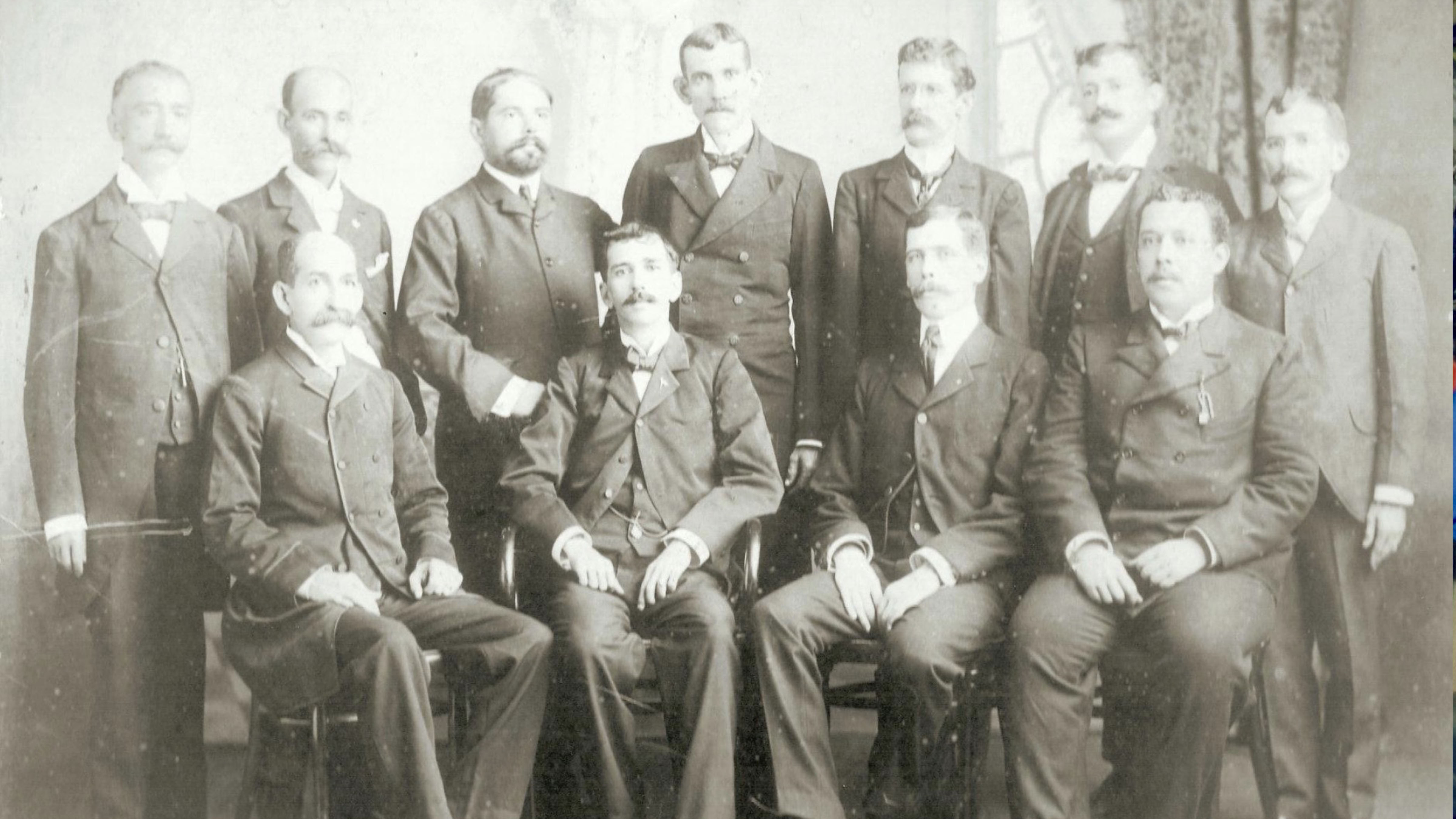
On November 3, 1903, Panama’s separation from Colombia reshaped the political future of Central America and cleared the way for a canal that would transform global shipping.
THE UNIVERSAL RECORD
Sourced reporting. No opinions.
Brad Socha | November 3, 2026 | 5:13 AM EST
On November 3, 1903, Panama declared independence from Colombia, establishing a new republic at one of the world’s most strategically important geographical crossroads. The separation followed decades of political tensions, unsuccessful independence movements and growing international interest in constructing a canal between the Atlantic and Pacific oceans.
The United States played a decisive role in the events surrounding independence, supporting the separatist movement and using naval forces to prevent Colombian troops from suppressing it.
Within weeks, the new Panamanian government would enter an agreement granting the United States extensive rights over a proposed canal zone. The resulting waterway would eventually transform international commerce, while the conditions under which it was established would shape relations between Panama and the United States for much of the twentieth century.
Panama’s Struggle for Independence
Panama’s political history had long been shaped by its location on the narrow isthmus connecting North and South America.
In 1821, the territory declared independence from Spain and voluntarily joined Gran Colombia, the republic associated with independence leader Simón Bolívar. Following the dissolution of that federation in 1830–1831, Panama remained connected to the state that eventually became modern Colombia.
Geographical separation from Bogotá, disputes over political authority and competing economic interests contributed to repeated tensions.
Throughout the nineteenth century, Panama experienced separatist movements and periods of political instability. Its strategic position also attracted foreign investment and diplomatic attention.
The discovery of gold in California in 1848 increased the importance of transit across the isthmus. Travellers and commercial shipments used the route between the Caribbean and Pacific coasts, and the Panama Railroad, completed in 1855, became a vital transportation connection.
Plans for an interoceanic canal were already under consideration.
In the 1880s, a French enterprise led by Ferdinand de Lesseps, who had overseen construction of the Suez Canal, began attempting to build a sea-level canal through Panama.
The project encountered formidable difficulties, including challenging terrain, landslides, tropical diseases and financial mismanagement. The original company collapsed in 1889, leaving extensive unfinished works.
By the beginning of the twentieth century, the United States had become increasingly interested in completing a canal. Such a passage promised to shorten shipping routes between the Atlantic and Pacific, benefiting both commercial transportation and naval operations.
President Theodore Roosevelt’s administration negotiated the Hay–Herrán Treaty with Colombia in 1903, seeking permission to construct and operate the canal.
Although the United States Senate approved the agreement, the Colombian Senate rejected it in August 1903 amid concerns over sovereignty and the proposed terms.
The rejection intensified tensions between Washington and Bogotá and created an opportunity for Panamanian separatists who believed independence could advance the canal project.
American Intervention and the Panama Canal
On November 3, 1903, separatist leaders in Panama City moved against Colombian authority and proclaimed independence.
Among the principal civilian organizers was José Agustín Arango, who helped coordinate the movement that established the new republic.
Colombian military forces were present on the isthmus, but the separatists succeeded in securing control of Panama City.
The United States had already positioned naval vessels in the region. American officials directed forces to prevent Colombian troops from moving across the isthmus in ways that might interfere with transit or threaten the developing separation.
The USS Nashville, stationed near Colón on the Caribbean coast, became part of the American military presence supporting the conditions under which the rebellion succeeded.
Contemporary diplomatic records show that Washington instructed its representatives to prevent Colombian troops from proceeding toward Panama City.
The independence movement therefore combined local political organization with decisive foreign involvement.
On November 6, the United States recognized the new Republic of Panama.
The speed of recognition reflected Washington’s strategic interest in securing an agreement for canal construction. For Colombian authorities, the separation represented the loss of a territory whose future had become closely tied to American commercial and military ambitions.
Just twelve days later, on November 18, American Secretary of State John Hay and French engineer Philippe Bunau-Varilla signed the Hay–Bunau-Varilla Treaty.
Bunau-Varilla represented the new Panamanian government in Washington, although he was not Panamanian and the treaty was negotiated without direct participation by Panama’s governing leaders.
The agreement granted the United States extensive authority over a canal zone approximately 16 kilometres (10 miles) wide, together with rights to construct, administer and defend the waterway.
These rights were granted in perpetuity under the original treaty.
In exchange, the United States agreed to pay Panama $10 million and an annual payment of $250,000 beginning nine years after ratification.
The agreement enabled construction to proceed, but it also created a lasting dispute over national sovereignty.
Many Panamanians objected to the extent of American control, viewing the treaty as an unequal arrangement made during the republic’s earliest days.
American-led canal construction began in 1904. Engineers confronted major excavation challenges, while public health programmes targeting mosquitoes helped control yellow fever and malaria.
After a decade of construction, the Panama Canal officially opened on August 15, 1914, providing a new maritime connection between the Atlantic and Pacific oceans.
The canal substantially reduced the distance ships needed to travel between the two oceans, eliminating the need for many voyages around Cape Horn at the southern tip of South America.
Its economic and strategic importance continued to grow, but so did demands for greater Panamanian control.
Disputes over the Canal Zone became a recurring source of tension, particularly during the twentieth century.
In 1977, Panama and the United States signed treaties establishing a process for transferring control of the canal and ending the earlier Canal Zone arrangement.
On December 31, 1999, Panama assumed full responsibility for the waterway.
The independence declared on November 3, 1903, thus produced two closely connected historical developments: the creation of a sovereign republic and the establishment of an international transportation route whose control remained contested for generations.
Today, Panama’s independence is commemorated as a defining national event. Its history also illustrates how local movements for self-government can become intertwined with the strategic interests of more powerful nations.
The republic founded in 1903 ultimately gained control of the canal that had helped shape the circumstances of its birth.
Sources:
U.S. Department of State — Building the Panama Canal, 1903–1914
https://history.state.gov/milestones/1899-1913/panama-canal
Library of Congress — The Independence of the Isthmus of Panama: Its Antecedents, Causes and Justification
https://www.loc.gov/item/17019946/
U.S. Department of State — Foreign Relations of the United States, 1903: Papers Relating to Panama
https://history.state.gov/historicaldocuments/frus1903/papers
U.S. Department of State — Hay–Bunau-Varilla Treaty, 1903 (Historical Document)
https://history.state.gov/historicaldocuments/frus1904/d542
Yale Law School, Avalon Project — Convention for the Construction of a Ship Canal, November 18, 1903
https://avalon.law.yale.edu/20th_century/pan001.asp
U.S. Department of State — The Panama Canal and the Torrijos–Carter Treaties
https://history.state.gov/milestones/1977-1980/panama-canal
National Archives — The Panama Canal: Riots, Treaties, Elections, and Military Conflict, 1959–1973
https://www.archives.gov/research/foreign-policy/panama-canal
U.S. House of Representatives — Panama Canal Presidential Message
https://history.house.gov/Records-and-Research/Listing/c_082/
About the Author
Brad Socha is the founder of The Universal Record, focused on sourced, factual global reporting. Coverage includes international news, geopolitics, technology, and major developments.