
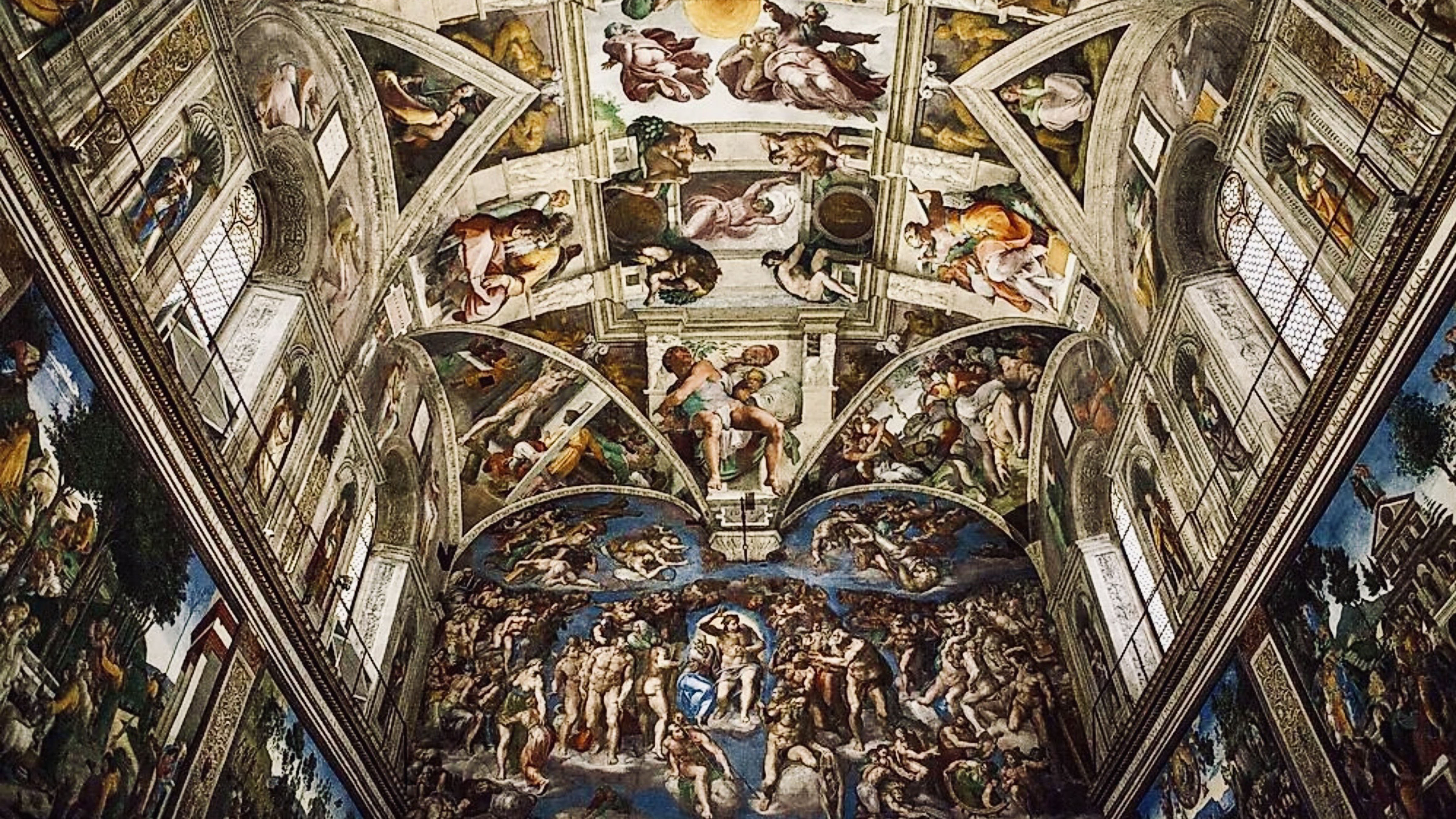
After four years of extraordinary artistic work, a chapel ceiling in Vatican City emerged as one of the defining achievements of the Renaissance.
THE UNIVERSAL RECORD
Sourced reporting. No opinions.
Brad Socha | November 1, 2026 | 9:03 AM EST
On November 1, 1512, the newly completed ceiling of the Sistine Chapel in Rome was seen during a papal Mass celebrated by Pope Julius II. Painted by Michelangelo Buonarroti, the vast fresco cycle transformed an existing chapel into one of the most celebrated artistic spaces in the world.
The unveiling followed approximately four years of demanding work, during which Michelangelo created an ambitious visual interpretation of biblical history across the chapel’s vaulted ceiling.
More than five centuries later, the frescoes remain among the most influential achievements of Renaissance art, attracting visitors from around the world and shaping generations of painters, sculptors and art historians.
The date also carries a historical distinction. October 31, 1512, is frequently associated with the completion or unveiling of the ceiling, while November 1 marks the papal liturgical celebration at which the finished work was seen.
Michelangelo Takes on the Sistine Chapel
The Sistine Chapel had been constructed during the pontificate of Pope Sixtus IV, from whom it takes its name. Completed in the late fifteenth century, the chapel served important ceremonial and religious functions within the Vatican.
Its walls already featured frescoes by prominent Renaissance artists, including Sandro Botticelli, Pietro Perugino, Domenico Ghirlandaio and Cosimo Rosselli.
The ceiling, however, had originally been decorated with a relatively simple painted starry sky.
In 1508, Pope Julius II commissioned Michelangelo to replace that decoration with a new fresco programme.
Michelangelo was already an accomplished sculptor, celebrated for works including the Pietà and David. Although he had experience with painting, the Sistine Chapel commission presented challenges on a much larger scale.
The original proposal was comparatively limited, involving figures of the twelve apostles and decorative elements. The project subsequently developed into an extensive biblical narrative incorporating hundreds of figures.
Michelangelo worked on a specially constructed scaffold high above the chapel floor. Contrary to a persistent popular misconception, he did not paint the ceiling while lying flat on his back. He worked largely standing, with his head tilted upward.
The technique of buon fresco required pigments to be applied to freshly laid wet plaster. Because the plaster dried relatively quickly, each section had to be planned and completed within a limited working period.
Mistakes could require sections of plaster to be removed and repainted.
The physical demands were considerable. Michelangelo experienced discomfort from the awkward working position, and surviving correspondence and poetry reflect the strain of the commission.
The work was also interrupted at times by practical difficulties, including problems with the plaster and the pressures of papal patronage.
Nevertheless, Michelangelo gradually developed a monumental composition that combined biblical storytelling with an unprecedented treatment of the human figure.
The Creation of Adam and a Renaissance Masterpiece
The completed ceiling covers approximately 500 square metres and centres on nine scenes from the Book of Genesis.
These scenes depict episodes from the creation of the world, the creation and fall of humanity, and the story of Noah.
Among them, The Creation of Adam became the ceiling’s most recognizable image.
The fresco depicts God extending his hand toward Adam, whose outstretched arm nearly meets the divine gesture. The narrow space separating their fingers has become one of the most familiar visual motifs in Western art.
The scene’s enduring influence comes partly from its economy of expression. Michelangelo conveyed the moment of humanity’s creation through the relationship between two figures, their gestures and the space between them.
Surrounding the central narratives are monumental representations of Old Testament prophets and classical sibyls, figures traditionally understood in Christian interpretation as anticipating the coming of Christ.
The ceiling also contains depictions of Christ’s ancestors, biblical episodes of deliverance and numerous other figures integrated into an elaborate architectural framework.
Much of that framework is itself painted.
Michelangelo used illusionistic architectural elements to organize the composition, creating the appearance of sculptural structures and decorative features that do not physically project from the ceiling.
His treatment of anatomy, movement and proportion reflected his extensive study of the human body.
Figures twist, reach, recline and turn within complex arrangements, demonstrating a command of physical form that influenced later Renaissance and Mannerist artists.
The frescoes also marked an important stage in Michelangelo’s artistic development.
Although he continued to identify strongly with sculpture, the Sistine Chapel ceiling established his reputation as one of the foremost painters of his age.
The completed work became an important expression of High Renaissance ideals, combining religious subject matter, classical influences, human anatomy and ambitious artistic design.
The ceiling was not Michelangelo’s final contribution to the chapel.
More than two decades later, he returned to paint The Last Judgment on the altar wall, working between 1536 and 1541 under different papal commissions.
That later fresco introduced another monumental biblical composition, depicting Christ’s final judgment of humanity.
Over the centuries, the Sistine Chapel’s paintings experienced the effects of candle smoke, dust, environmental conditions and earlier restoration efforts.
A major restoration of the ceiling, undertaken between 1980 and 1994, removed accumulated surface deposits and revealed colours that appeared considerably brighter than many viewers had expected.
The restoration also generated scholarly debate about cleaning methods and the interpretation of Michelangelo’s original techniques.
Today, the chapel remains an active religious space and the setting for papal conclaves, during which cardinals gather to elect a new pope.
It is also one of the Vatican Museums’ most visited attractions.
The unveiling of November 1, 1512, represented more than the completion of a demanding artistic commission. Michelangelo had transformed the chapel’s ceiling into a visual narrative that brought together theology, human experience and Renaissance artistic innovation.
More than 500 years later, the frescoes continue to demonstrate how an extraordinary artistic achievement can become part of humanity’s shared cultural heritage.
Sources:
Vatican Museums — Sistine Chapel: The Ceiling
https://www.museivaticani.va/content/museivaticani/en/collezioni/musei/cappella-sistina/volta.html
Vatican Museums — History of the Sistine Chapel
https://www.museivaticani.va/content/museivaticani/en/collezioni/musei/cappella-sistina/storia-cappella-sistina.html
Vatican Museums — The Sistine Chapel Twenty Years Later: Historical Chronology
https://www.museivaticani.va/content/dam/museivaticani/pdf/eventi_novita/iniziative/eventi/2014/convegno_sistina_guida_en.pdf
Holy See — Sistine Chapel: Architecture and History
https://www.vatican.va/content/vatican/en/ra/cappella-sistina.html
National Gallery, London — Sistine Chapel
https://www.nationalgallery.org.uk/paintings/glossary/sistine-chapel
Oxford University Press — Michelangelo’s Sistine Chapel Ceiling First Opens to Public
https://blog.oup.com/2011/11/sistine/
Pope Benedict XVI — 500th Anniversary of the Sistine Chapel Ceiling
https://www.vatican.va/content/benedict-xvi/en/speeches/2012/october/documents/hf_ben-xvi_spe_20121031_cappella-sistina.pdf
About the Author
Brad Socha is the founder of The Universal Record, focused on sourced, factual global reporting. Coverage includes international news, geopolitics, technology, and major developments.

