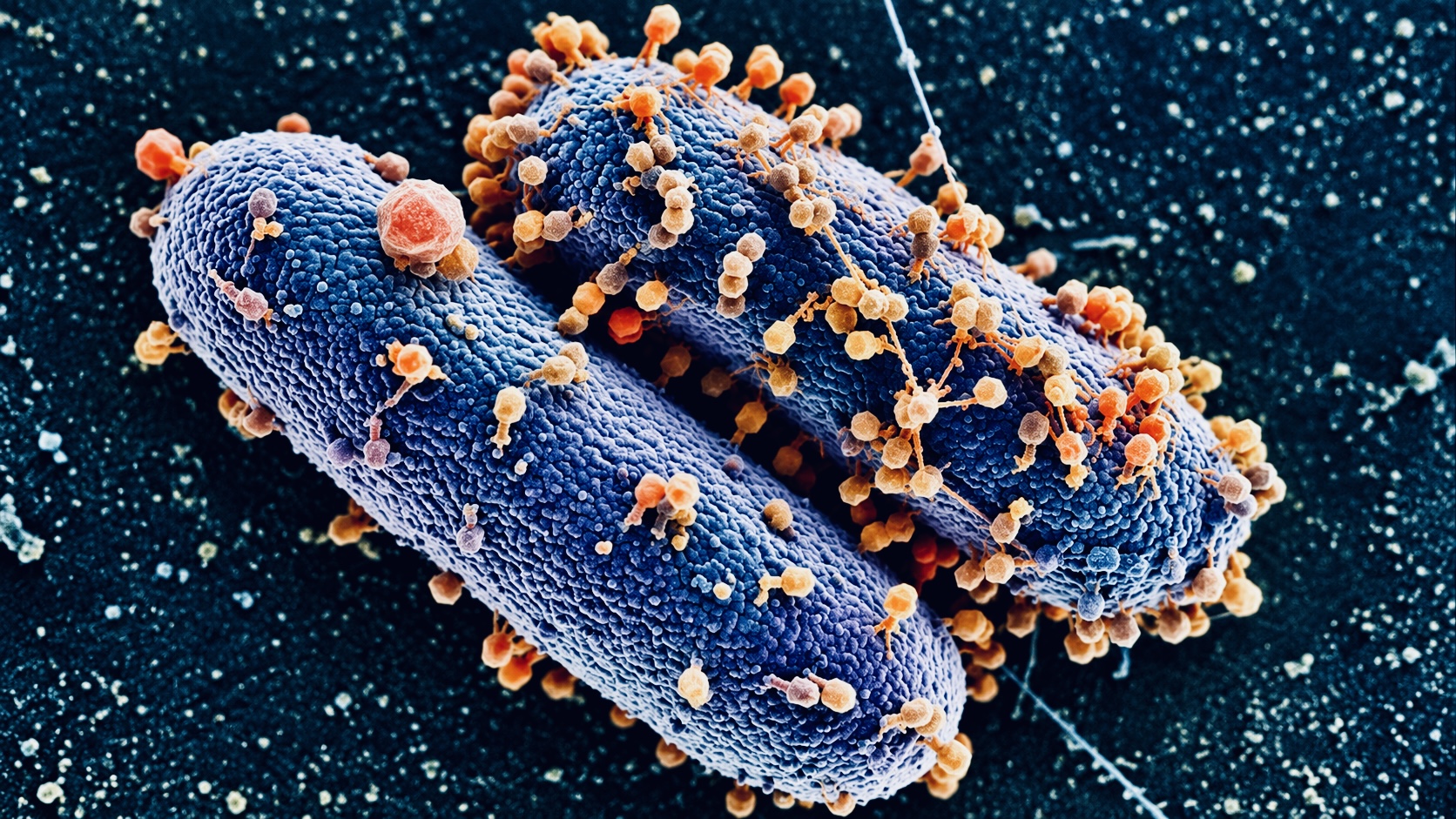
Bacteria-killing viruses are being investigated as treatments for drug-resistant infections. Clinical studies show encouraging results, but important questions remain about their effectiveness, safety and widespread use.
Viruses are usually associated with infections, but some could help treat bacterial diseases that antibiotics can no longer reliably control.
Known as bacteriophages, or simply phages, these naturally occurring viruses infect bacteria rather than human cells. Researchers are investigating whether they could become an important weapon against antibiotic resistance, one of the most serious challenges facing modern medicine.
The World Health Organization identifies phage therapy as a promising approach, particularly for infections that resist conventional treatment. However, clinical evidence remains limited, and bacteriophages are not yet a broadly established replacement for antibiotics.
Unlike most antibiotics, which can affect multiple bacterial species, phages often target particular bacteria with remarkable precision. That selectivity offers potential advantages but also creates practical difficulties.
How Bacteriophages Kill Bacteria
Bacteriophages exist wherever bacteria are found, including soil, oceans, wastewater and the human body. They have been studied as potential treatments for more than a century, although antibiotics eventually became the dominant approach in much of the world.
A bacteriophage typically attaches to a compatible bacterial cell and introduces its genetic material. Certain phages then use the bacterium’s machinery to produce new viral particles.
When the bacterial cell breaks apart, newly formed phages can spread to other susceptible bacteria.
Therapeutic research generally focuses on lytic phages, which destroy their bacterial hosts, rather than phages that can integrate their genetic material into bacterial genomes.
Because phages do not infect human cells, they offer a fundamentally different method of attacking bacterial infections.
Their specificity could also help preserve beneficial bacteria that broad-spectrum antibiotics sometimes disrupt, although the effects of phage treatment on the wider human microbiome require further investigation.
Researchers are examining phages against difficult-to-treat organisms including Pseudomonas aeruginosa, Staphylococcus aureus, Klebsiella pneumoniae and Acinetobacter baumannii.
Some of these bacteria can form biofilms, protective communities that attach to medical devices, wounds or tissues and make infections particularly difficult to eliminate.
Phages and certain phage-derived enzymes may help disrupt these bacterial communities. Researchers are also investigating combinations of phages and antibiotics, which could sometimes work more effectively together than either treatment alone.
However, bacteria can develop resistance to phages, just as they can develop resistance to antibiotics. One strategy involves combining several different phages into a treatment known as a phage cocktail, potentially reducing the chance that bacteria will escape treatment.
What Clinical Trials Reveal About Phage Therapy
Human studies have produced encouraging findings, but the strength of evidence varies considerably.
A randomized, placebo-controlled study published in Nature Communications in July 2025 investigated an inhaled mixture of three bacteriophages in nine adults with cystic fibrosis and chronic Pseudomonas aeruginosa lung infections.
The experimental treatment met its primary safety and tolerability objectives. Researchers also observed reductions in bacterial levels in respiratory samples, suggesting possible antibacterial activity.
However, the trial was small and was not designed to establish definitive clinical effectiveness. Larger studies are needed to determine whether such reductions consistently translate into better health outcomes.
A 2026 systematic review examining phage therapy in cystic fibrosis identified 19 studies involving 51 patients. Many reported improvements in bacterial burden or respiratory measurements, but the researchers emphasized that small samples, differing treatment methods and limited controlled evidence prevented firm conclusions.
The broader evidence remains similarly uncertain.
A 2026 consensus guideline published in Nature Medicine concluded that personalized phage therapy shows therapeutic promise and appears reasonably safe when appropriate quality standards are met. Nevertheless, it highlighted the shortage of sufficiently large randomized clinical trials.
The guideline recommends considering personalized treatment primarily when standard therapies have failed or cannot be used, with decisions made individually by specialized medical teams.
Treatment can require laboratories to identify the infecting bacterium, find phages capable of attacking it and confirm that the selected viruses remain effective against the patient’s bacterial strain.
That process is considerably more complicated than prescribing a routinely available antibiotic.
Phage preparations also require careful screening, purification and manufacturing controls. Potential problems include contamination, immune responses, uncertain dosing and the possibility that bacterial resistance will emerge during treatment.
Clinical studies must also establish which delivery methods work best. Depending on the infection, experimental phages may be administered through inhalation, directly onto affected tissue or intravenously.
Could Viruses Eventually Replace Antibiotics?
The most plausible near-term role for bacteriophages is as an additional treatment option, particularly when existing antibiotics are ineffective or unsuitable.
Their potential extends beyond replacing individual drugs. Some phages may help make resistant bacteria more susceptible to antibiotics, while carefully selected combinations could provide another approach to persistent infections.
Yet the benefits observed in laboratory experiments or individual patient cases cannot automatically be generalized to larger populations.
The WHO’s 2025 report on bacteriophage therapy emphasized the need for stronger clinical evidence and coordinated research. International efforts are examining how to standardize treatments, evaluate effectiveness and develop appropriate regulatory systems.
Personalization remains one of the largest challenges. A phage that destroys one strain of bacteria may have little effect on another strain of the same species.
Researchers must also determine how phages behave inside the human body, how the immune system responds and whether treatments can be manufactured reliably at scale.
Antibiotics retain important advantages: established clinical evidence, familiar prescribing practices and the ability of many drugs to treat infections before the exact bacterial strain has been identified.
For now, bacteriophages are better understood as potential partners to antibiotics than universal replacements.
Their future will depend on whether carefully controlled clinical trials can demonstrate consistent improvements in patient outcomes, not simply reductions in bacteria measured in laboratories.
The central scientific question is no longer whether viruses can destroy harmful bacteria. They clearly can. It is whether that biological ability can be turned into dependable, accessible medical treatment for patients facing infections that conventional medicines struggle to control.
PubMed — Clinical Application of Customized and Non-Customized Bacteriophage Therapy in Patients with Refractory/Resistant Bacterial Infections (2025) https://pubmed.ncbi.nlm.nih.gov/40633848/
About the Author Brad Socha is the founder of The Universal Record, focused on sourced, factual global reporting. Coverage includes international news, geopolitics, technology, and major developments.