1962: The Cuban Missile Crisis Reaches a Critical Turning Point
As an American naval quarantine took effect, Soviet ships approached a confrontation that could have escalated into nuclear war. The decisions made over the following days would determine how the crisis ended.
On October 24, 1962, the Cuban Missile Crisis entered a critical stage as the United States began enforcing a naval quarantine around Cuba. American warships were positioned to intercept vessels carrying prohibited offensive military equipment, while Soviet ships approached the Caribbean amid fears that a confrontation could trigger nuclear war.
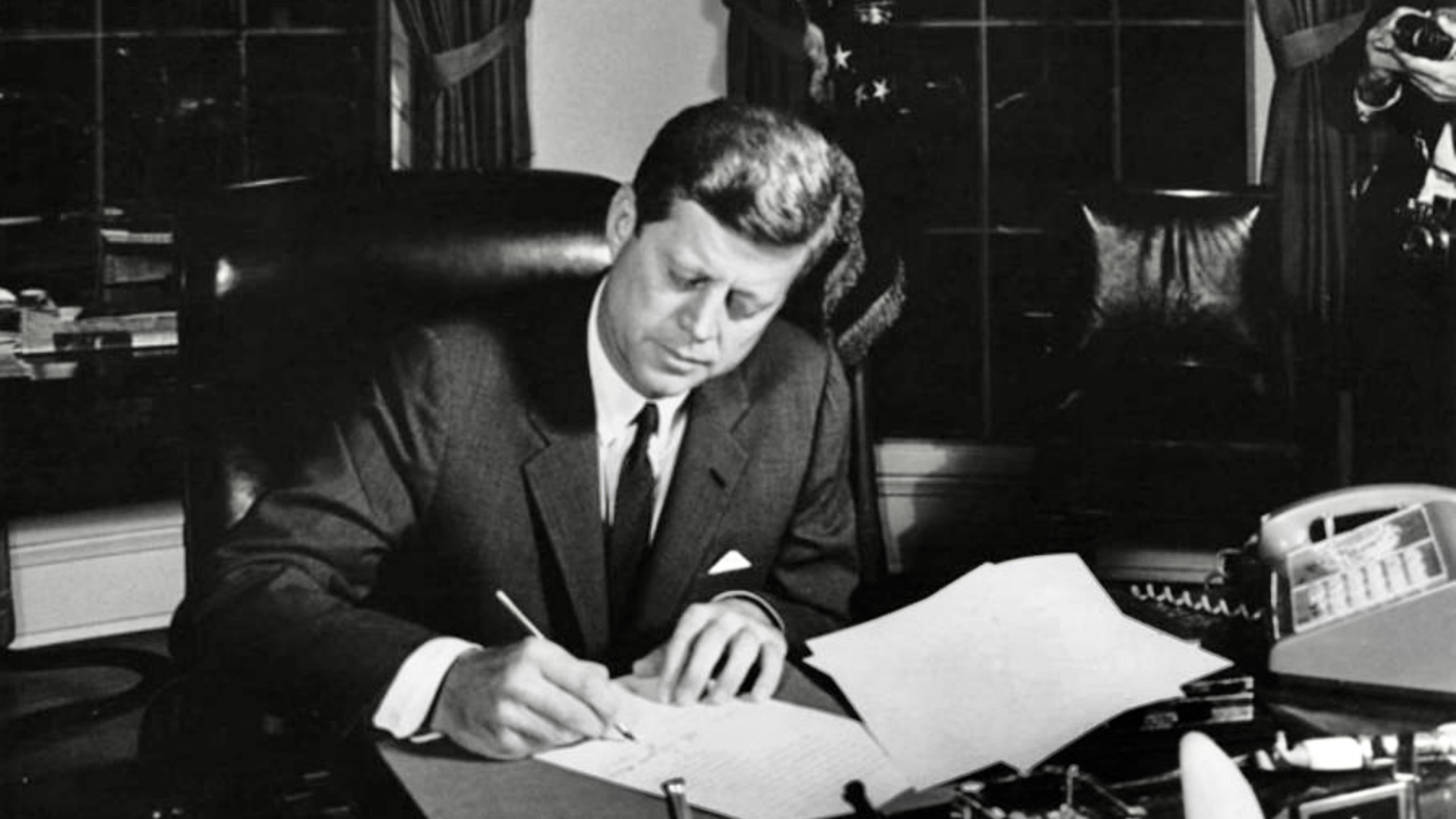
The standoff between President John F. Kennedy and Soviet Premier Nikita Khrushchev had become one of the most dangerous episodes of the Cold War. Both countries possessed nuclear weapons, and neither could be certain how the other would respond to a military confrontation.
Some Soviet vessels slowed, stopped or changed course rather than challenge the American quarantine. The immediate danger of a naval clash eased, but Soviet missiles remained in Cuba, and the crisis was far from resolved.
The events of October 24 would become an important turning point in a confrontation that brought the world’s two leading nuclear powers close to direct conflict.
How the Cuban Missile Crisis Began
The crisis developed against a background of deteriorating relations between Washington, Moscow and Havana.
After Fidel Castro’s revolutionary government came to power in Cuba in 1959, its relationship with the United States grew increasingly hostile. In April 1961, a U.S.-backed invasion by Cuban exiles at the Bay of Pigs failed, strengthening Cuba’s security relationship with the Soviet Union.
Khrushchev subsequently agreed to deploy Soviet nuclear missiles to Cuba. The operation was intended partly to protect the Cuban government from another American invasion and to strengthen the Soviet strategic position.
The missiles could threaten major American cities with comparatively little warning, dramatically increasing tensions between the superpowers.
On October 14, 1962, an American U-2 reconnaissance aircraft photographed Soviet missile installations under construction in Cuba. Analysts identified the sites, and Kennedy was informed two days later.
The discovery presented the administration with difficult choices.
Military advisers considered airstrikes against the missile installations and a possible invasion of Cuba. Kennedy and his advisers also examined diplomatic alternatives and measures intended to prevent further military deliveries.
An immediate attack carried serious risks. Soviet personnel were operating in Cuba, and military action could have provoked retaliation elsewhere, including in divided Berlin.
Kennedy ultimately chose a naval quarantine, designed to prevent additional offensive weapons from reaching the island while leaving room for negotiation.
The administration deliberately used the term quarantine rather than blockade, partly because a blockade could be interpreted as an act of war.
On October 22, Kennedy addressed the American public in a televised speech, revealing the missile installations and announcing the planned maritime restrictions.
He demanded the removal of Soviet offensive weapons from Cuba and warned that a nuclear missile launched from the island against any Western Hemisphere nation would be treated as an attack by the Soviet Union on the United States.
The announcement brought a previously secret confrontation into public view.
October 24: The Quarantine Takes Effect
At 10 a.m. Eastern Daylight Time on October 24, the American naval quarantine formally began.
U.S. Navy ships were deployed to identify and, if necessary, stop vessels suspected of carrying prohibited military equipment toward Cuba.
The restrictions did not apply to every shipment. Their stated purpose was to prevent the delivery of additional offensive weapons rather than halt all trade with the island.
For American and Soviet officials, the movements of ships approaching the quarantine area became an immediate concern.
Some Soviet vessels altered course or stopped. American officials interpreted these developments as signs that Moscow might avoid a direct naval confrontation.
However, the historical record requires an important distinction: not every Soviet ship approaching Cuba turned back, and not every vessel was carrying missiles.
The Soviet tanker Bucharest, for example, continued toward Cuba and was allowed to proceed after American forces determined that it was not carrying prohibited cargo.
The naval developments reduced the immediate likelihood of a clash at sea, but they did not remove the weapons already deployed on Cuban territory.
Construction continued at missile installations, and Washington remained uncertain about the readiness of Soviet forces on the island.
Kennedy also faced pressure from officials who believed the quarantine alone would not force the removal of the missiles.
Meanwhile, Khrushchev rejected the American restrictions and maintained that Soviet military assistance to Cuba was defensive.
Neither leader wanted to appear to surrender to the other’s demands, but both understood the danger of escalation.
The confrontation continued through diplomatic exchanges, military preparations and intelligence assessments.
On October 26, Khrushchev sent Kennedy a message proposing that the Soviet missiles be withdrawn in exchange for an American commitment not to invade Cuba.
A second Soviet message on October 27 introduced another demand: the removal of American Jupiter missiles from Turkey.
That same day, a Soviet surface-to-air missile shot down an American U-2 reconnaissance aircraft over Cuba, killing pilot Major Rudolf Anderson Jr.
The loss intensified fears that the crisis could move beyond political control.
Unknown to most American decision-makers at the time, Soviet forces in Cuba also possessed tactical nuclear weapons, adding another danger to any proposed invasion.
The confrontation began moving toward resolution on October 28, when Khrushchev publicly agreed to remove Soviet offensive missiles from Cuba under international verification arrangements.
Kennedy committed the United States not to invade Cuba. Separately, Washington privately agreed that American Jupiter missiles in Turkey would be withdrawn, although their removal was not publicly presented as part of the settlement.
The withdrawal of Soviet missiles was completed in November, and the American naval quarantine ended on November 20, 1962.
The Cuban Missile Crisis demonstrated how quickly military deployments, intelligence discoveries and political decisions could bring nuclear-armed countries into direct confrontation.
Its aftermath encouraged Washington and Moscow to establish more reliable communication. A direct communications link between the two governments was agreed upon in 1963, while the Limited Nuclear Test Ban Treaty marked another effort to reduce nuclear tensions.
October 24, 1962, remains significant not because the danger ended that day, but because both sides avoided an immediate naval clash while the wider crisis remained unresolved.
The decisions that followed showed how diplomacy, restraint and communication could help prevent a confrontation between nuclear powers from becoming a catastrophic war.
About the Author Brad Socha is the founder of The Universal Record, focused on sourced, factual global reporting. Coverage includes international news, geopolitics, technology, and major developments.