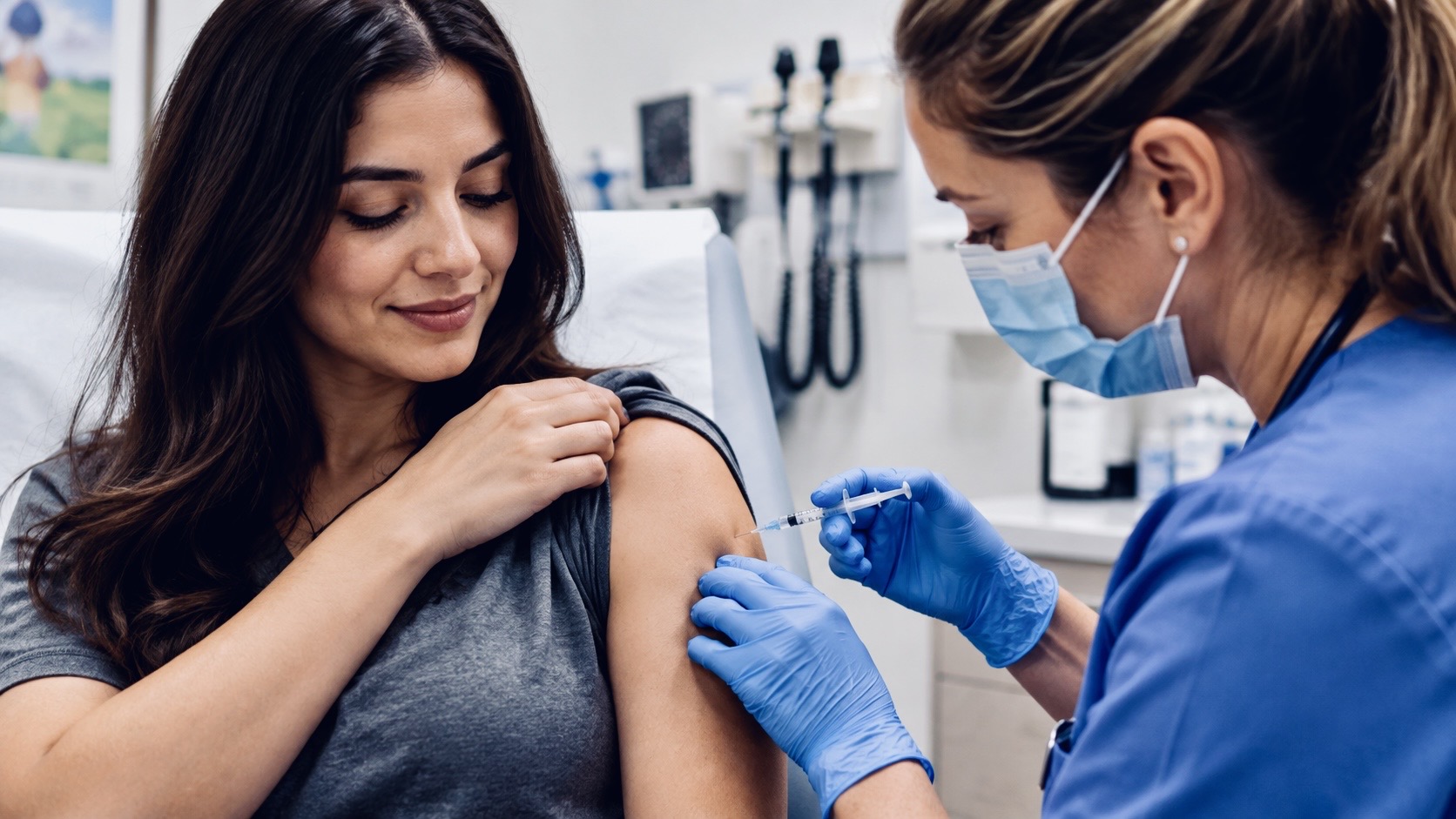
Vaccines already prevent some cancers and one therapeutic cancer vaccine is approved in the United States. Now a personalized mRNA treatment has succeeded in a Phase 3 melanoma trial, but there is still no universal cancer vaccine.
The idea of a cancer vaccine can sound like a future medical breakthrough. In reality, vaccines already prevent several cancers, and a vaccine-based treatment for advanced prostate cancer has been approved in the United States for more than a decade.
What does not exist is a single vaccine that prevents or cures cancer in general.
That distinction has become increasingly important as experimental personalized vaccines advance through clinical trials and claims circulate online that a universal cancer vaccine has already been developed. The strongest new evidence came in August 2026, when Moderna and Merck announced that their individualized mRNA therapy intismeran autogene, also known as V940 or mRNA-4157, met the main goals of a Phase 3 trial in people with surgically removed high-risk melanoma.
The result represents significant progress, but the treatment remains investigational. The companies released topline results rather than the complete Phase 3 dataset, and it is not a vaccine that prevents all cancers or an approved universal cancer cure.
Cancer Vaccines Already Exist
The term “cancer vaccine” covers two fundamentally different strategies.
Preventive vaccines stop infections that can eventually cause cancer. Human papillomavirus, or HPV, is responsible for cancers including cervical, anal, penile, vaginal, vulvar and some throat cancers. The HPV vaccine prevents infection with high-risk forms of the virus and can therefore prevent cancers before they develop. The U.S. National Cancer Institute estimates HPV vaccination can prevent up to 90% of cancers caused by HPV.
Hepatitis B vaccination provides another established example. Chronic hepatitis B infection increases the risk of hepatocellular carcinoma, the most common form of primary liver cancer. By preventing hepatitis B infection, vaccination reduces that pathway to cancer. The World Health Organization continues to identify hepatitis B vaccination as a safe and effective means of preventing infection and its consequences.
These vaccines do not attack an existing tumour. They prevent viral infections capable of causing cancer years later.
Therapeutic cancer vaccines work differently. They are given to people who already have cancer and attempt to train or strengthen the immune system’s ability to recognize malignant cells.
One is already approved in the United States. Sipuleucel-T, sold as Provenge, is a personalized cellular immunotherapy for certain patients with metastatic castration-resistant prostate cancer. A patient’s immune cells are collected, exposed in a laboratory to a protein associated with prostate cancer, and returned to the patient to stimulate an immune response. The U.S. Food and Drug Administration approved Provenge in 2010.
So the claim that scientists have created a cancer vaccine is true in a limited sense. The misleading part comes when very different preventive vaccines, approved cancer immunotherapies and experimental treatments are presented as though scientists have developed one injection capable of eliminating cancer.
Cancer is not one disease. It encompasses many diseases driven by different genetic alterations, tissues and biological processes.
Personalized mRNA Cancer Vaccines Move Forward
One of the most closely watched approaches attempts to exploit the mutations that make an individual tumour distinctive.
Cancer cells accumulate mutations, some of which produce abnormal proteins called neoantigens. Because these markers can differ from those found on healthy cells, and often differ from one patient’s tumour to another, they can potentially provide targets for the immune system.
Personalized mRNA vaccines begin by sequencing a patient’s tumour. Computational methods identify mutations expected to produce useful neoantigens, and an individualized mRNA treatment is manufactured containing instructions for selected targets. The goal is to teach immune cells to recognize cancer cells carrying them.
The most advanced example is intismeran autogene, jointly developed by Moderna and Merck.
In earlier randomized Phase 2b testing involving patients whose high-risk melanoma had been surgically removed, intismeran combined with the checkpoint inhibitor pembrolizumab, sold as Keytruda, reduced the risk of recurrence or death by 49% compared with pembrolizumab alone at a median five-year follow-up, according to results reported by the companies in 2026.
Then came the more consequential Phase 3 result.
In August 2026, Moderna and Merck announced that the INTerpath-001 trial had met its primary endpoint of recurrence-free survival and a key secondary endpoint measuring distant metastasis-free survival in patients with completely resected stage IIB-IV melanoma. Nature reported that it was the first personalized mRNA cancer treatment to produce a successful Phase 3 result.
There are important limits to what can currently be concluded. The companies had not yet released the complete Phase 3 results when the topline finding was announced, including detailed effect sizes and safety data. The therapy is also being tested with pembrolizumab, rather than establishing that the vaccine alone produces the observed clinical benefit.
Trials involving intismeran are expanding into cancers including non-small cell lung cancer, bladder cancer and renal cell carcinoma. Other research groups are testing different neoantigen, peptide, DNA and mRNA vaccine strategies.
What About Reports That a Cancer Vaccine Is Already Ready?
Some of the confusion has come from widely circulated claims about experimental Russian cancer vaccines.
One candidate, EnteroMix, has sometimes been portrayed online as an approved universal cancer vaccine or even a proven cure. That is not supported by the available evidence.
The registered EnteroMix study is a small Phase 1 trial of an enterovirus-based therapy in people with advanced solid tumours who have exhausted available treatment options. Phase 1 research primarily establishes safety, tolerability and appropriate dosing; it does not establish that a treatment is an effective universal cancer cure. The trial lists an estimated enrollment of 24 participants and an estimated primary completion in December 2026.
In July 2026, Russia’s National Medical Research Radiological Centre itself warned patients about fraudulent offers to sell EnteroMix, stating that the treatment remained in Phase 1 clinical testing and was not available for purchase. Separate Russian personalized mRNA cancer-vaccine projects have also generated headlines, adding to confusion between different technologies.
There is therefore no verified universal vaccine that currently prevents or treats every cancer.
But the underlying story is more substantial than the rumours suggest. Vaccination already prevents cancers caused by HPV and hepatitis B. Therapeutic vaccination is already part of treatment for selected prostate cancer patients. And personalized mRNA technology has now crossed an important threshold by producing positive topline results in a large late-stage melanoma trial.
The next question is whether those results withstand detailed scientific and regulatory scrutiny, and whether similar approaches work across other cancers.
The cancer vaccine is not one invention waiting to be discovered. It is becoming a collection of increasingly different strategies: some preventing the causes of cancer, others teaching the immune system to attack an existing tumour, and some being manufactured specifically for the genetic fingerprint of a single patient’s disease.
About the Author Brad Socha is the founder of The Universal Record, focused on sourced, factual global reporting. Coverage includes international news, geopolitics, technology, and major developments.