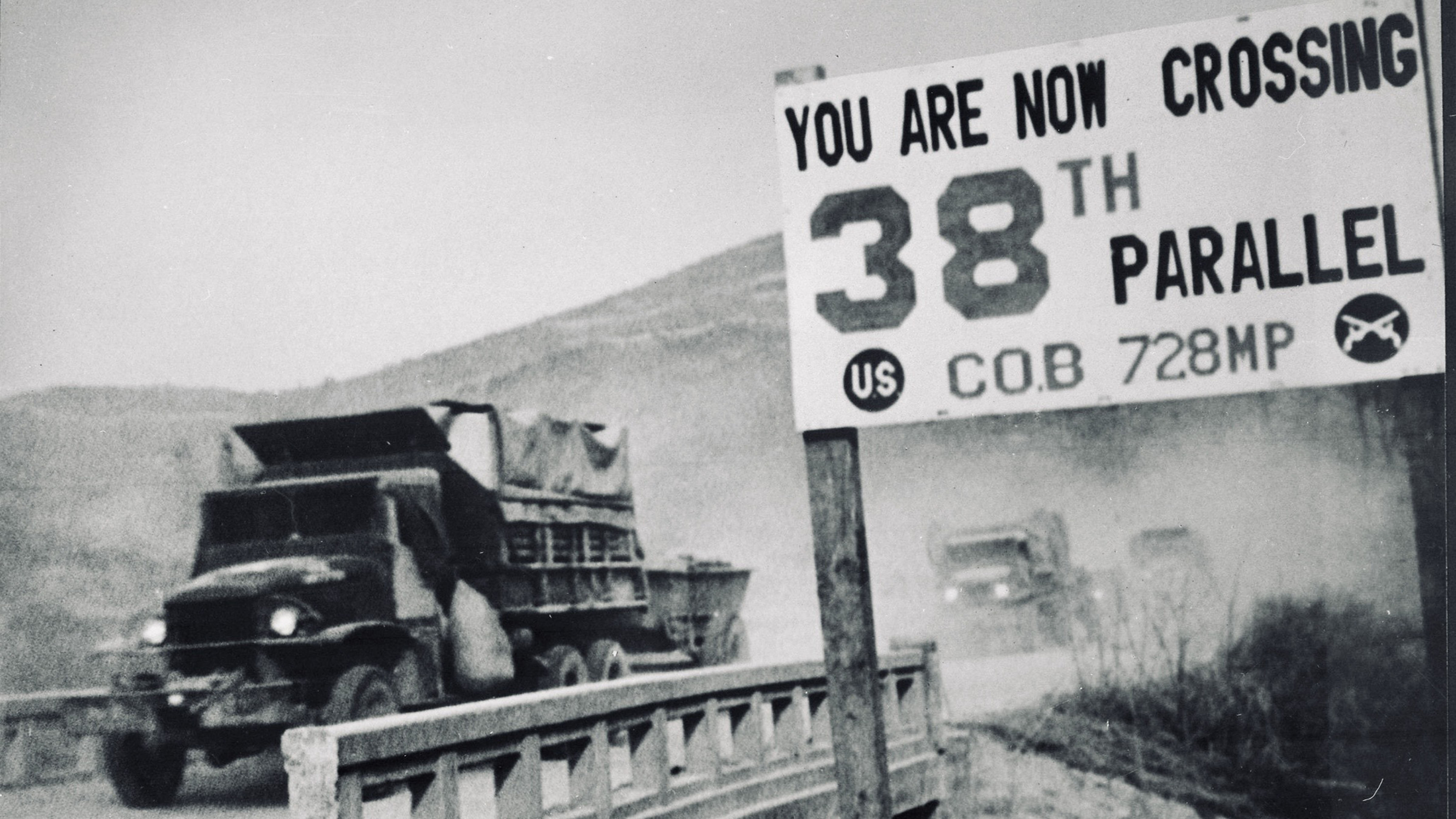
North Korea’s invasion across the 38th Parallel ignited one of the Cold War’s defining conflicts, drawing in a United Nations coalition, and leaving a legacy that still shapes security in Northeast Asia.
Seventy-six years after the first shots were fired, the Korean War remains one of the most consequential conflicts of the modern era. Although active fighting ended with an armistice in 1953, no formal peace treaty has ever been signed. The Korean Peninsula remains divided, heavily fortified, and central to international security discussions involving the United States, China, Japan, Russia, and South Korea. The war’s origins on June 25, 1950, continue to influence military strategy, diplomacy, and geopolitical tensions across the Indo-Pacific.
In the early hours of June 25, 1950, approximately 75,000 troops from the North Korean People’s Army crossed the 38th Parallel, launching a coordinated invasion of South Korea. Supported with Soviet-built tanks, artillery, and military planning, North Korean forces advanced rapidly toward Seoul, overwhelming many South Korean defensive positions.
The invasion marked the first major armed confrontation of the Cold War. Only five years had passed since the end of the Second World War, and Korea had already become a symbol of the growing rivalry between communist and Western-aligned governments. Following Japan’s surrender in 1945, the peninsula had been temporarily divided along the 38th Parallel, with Soviet forces occupying the north and American forces administering the south. That temporary arrangement soon hardened into two separate states with competing governments.
North Korea, led by Kim Il-sung, sought to reunify the peninsula under communist rule. South Korea, under President Syngman Rhee, pursued reunification under its own government. Border clashes had occurred before 1950, but the June invasion represented a full-scale military offensive that fundamentally changed the international landscape.
The United Nations responded with unusual speed. On the day of the invasion, the UN Security Council adopted Resolution 82, condemning the attack and demanding that North Korean forces withdraw. Two days later, Resolution 83 recommended that member states provide military assistance to South Korea. Because the Soviet Union was boycotting Security Council meetings at the time, it was unable to exercise its veto.
The United States quickly assumed leadership of a multinational United Nations Command. Ultimately, forces from 16 countries fought under the UN flag, while additional nations provided medical units, humanitarian assistance, and logistical support. It became one of the largest collective military operations ever organized by the United Nations.
Canada played a significant role throughout the conflict. More than 26,000 Canadians served in Korea between 1950 and 1953, participating in some of the war’s most difficult battles. Canadian troops distinguished themselves during engagements such as the Battle of Kapyong in April 1951, where United Nations forces successfully halted a major Chinese offensive. The battle remains one of Canada’s most recognized military achievements since the Second World War.
Within days of the invasion, North Korean forces captured Seoul and continued driving south toward the port city of Pusan. For a time, it appeared that South Korea might collapse entirely. United Nations forces eventually stabilized the front along the Pusan Perimeter before launching a bold amphibious landing at Inchon in September 1950 under General Douglas MacArthur. The operation dramatically reversed the course of the war and allowed UN forces to recapture Seoul.
As United Nations troops advanced north toward the Chinese border, the conflict expanded again. In late October 1950, hundreds of thousands of Chinese troops entered the war in support of North Korea. Their intervention pushed UN forces back toward the south and transformed what had appeared to be a rapid campaign into a prolonged and costly conflict.
For nearly two additional years, the fighting settled into a series of brutal battles along a relatively stable front. Heavy artillery duels, mountain warfare, and costly assaults replaced the rapid advances of the war’s opening months. Negotiations continued while combat persisted, with neither side able to achieve a decisive military victory.
The Korean War officially ceased active fighting on July 27, 1953, when an armistice agreement was signed at Panmunjom. The agreement established the Korean Demilitarized Zone (DMZ), which remains one of the most heavily fortified borders in the world. Because no permanent peace treaty followed, the two Koreas remain technically in a state of war.
The human cost was staggering. Historians estimate that at least 2.5 million people died during the conflict, including soldiers and civilians from both Koreas as well as forces from several participating nations. Entire cities were devastated, millions of families were permanently separated, and much of the peninsula’s infrastructure was destroyed.
The conflict also reshaped global politics. The Korean War accelerated military spending throughout the Western alliance, strengthened the North Atlantic Treaty Organization, reinforced the United States’ long-term military presence in East Asia, and intensified Cold War competition between Washington, Moscow, and Beijing. It also demonstrated that ideological rivalry between major powers could erupt into direct military confrontation through regional conflicts.
Today, the Korean Peninsula remains one of the world’s most strategically sensitive regions. North Korea continues developing nuclear weapons and ballistic missiles, while South Korea maintains one of the world’s most technologically advanced armed forces in partnership with the United States. Regular military exercises, diplomatic negotiations, sanctions, and regional security discussions all trace part of their origins to the conflict that began on June 25, 1950.
The Korean War is sometimes called the “Forgotten War,” particularly in comparison with the Second World War and the Vietnam War. Yet its consequences are anything but forgotten. The division of Korea, the continued existence of the DMZ, and the enduring military presence of multiple world powers on the peninsula all reflect decisions and events that began during those first days of fighting in June 1950.
More than seven decades later, the conflict remains a reminder that unresolved wars can continue influencing international affairs long after the guns fall silent.
About the Author Brad Socha is the founder of The Universal Record, focused on sourced, factual global reporting. Coverage includes international news, geopolitics, technology, and major developments.