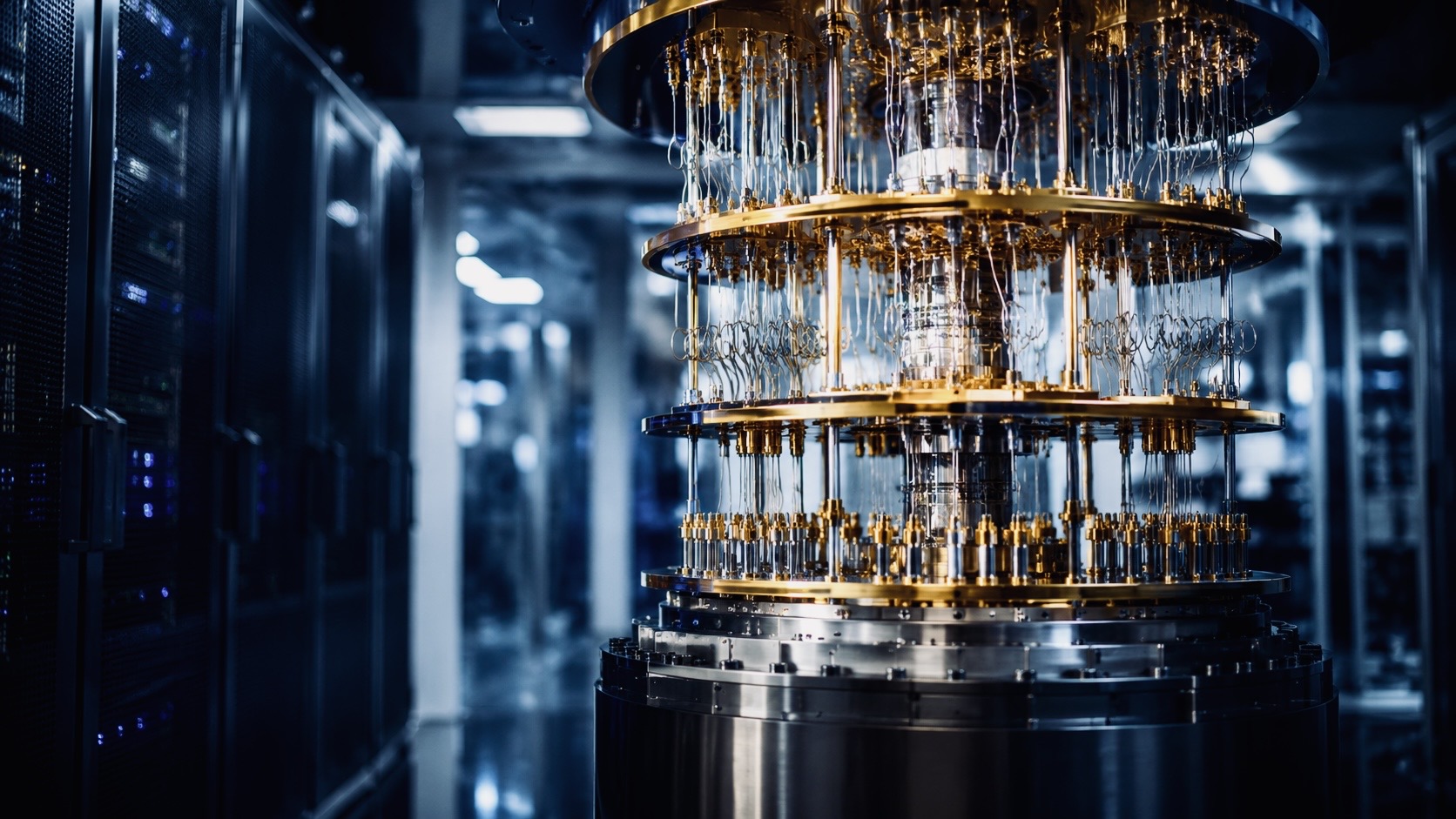
Advances in error correction and hardware reliability are bringing quantum computing closer to practical applications, though major limitations remain.
For years, quantum computing has been described as a technology of the future, powerful in theory but too fragile and error-prone for widespread real-world use. That picture is beginning to change.
Recent breakthroughs from research institutions and major technology companies suggest that quantum computing is gradually moving from experimental demonstrations toward systems capable of solving practical problems. While fully fault-tolerant quantum computers remain years away, progress in error correction, hardware stability, and algorithm development is accelerating across the industry.
The shift matters because quantum computers have the potential to tackle certain problems that would overwhelm even the most powerful conventional supercomputers. Researchers believe future systems could transform fields ranging from materials science and drug discovery to logistics, energy optimization, and advanced artificial intelligence.
The biggest obstacle has always been reliability.
Unlike traditional computers, which process information using bits that exist as either 0 or 1, quantum computers use quantum bits, or qubits. Qubits can exist in multiple states simultaneously through a phenomenon known as superposition. Combined with quantum entanglement, this allows quantum systems to explore enormous numbers of possible solutions at once.
The advantage comes with a cost.
Qubits are extremely sensitive to environmental disturbances. Temperature fluctuations, electromagnetic interference, and even tiny vibrations can introduce errors. Maintaining quantum states long enough to perform useful calculations has been one of the field’s greatest challenges.
That challenge has driven a growing focus on quantum error correction.
In recent years, companies including IBM, Google, Quantinuum, IonQ, and others have reported major advances in reducing error rates and improving qubit stability. Researchers are increasingly demonstrating logical qubits, error-corrected units built from multiple physical qubits designed to preserve information more reliably.
These developments are significant because practical quantum computing depends less on the total number of qubits and more on how accurately they can operate. A smaller machine with highly reliable logical qubits may ultimately prove more useful than a larger system plagued by errors.
The progress mirrors broader trends in advanced computing. As discussed in UR’s coverage of AI designing next-generation materials, researchers are increasingly using sophisticated computational systems to accelerate discoveries that would be difficult or impossible through traditional methods alone. Quantum computing could eventually expand those capabilities dramatically by modeling complex molecular interactions at unprecedented scales.
Several recent demonstrations have highlighted the technology’s potential.
Quantum systems have been used to simulate chemical reactions, optimize industrial processes, and explore advanced materials. Pharmaceutical researchers are studying whether future quantum computers could accelerate drug development by more accurately modeling molecular behavior. Energy companies are examining potential applications in grid optimization and battery design.
Financial institutions are also exploring quantum algorithms for portfolio analysis, risk modeling, and fraud detection.
Yet despite the excitement, experts consistently caution against overstating current capabilities.
Today’s quantum computers remain limited. Most practical demonstrations involve highly specialized tasks performed under carefully controlled conditions. For the vast majority of everyday computing workloads, including web browsing, spreadsheets, databases, and office software, classical computers remain far more efficient.
Quantum computers are not expected to replace conventional systems.
Instead, they are likely to become specialized tools used for specific classes of problems where quantum mechanics provides a computational advantage.
Another major area of interest involves cryptography.
Many of today’s encryption systems rely on mathematical problems that are extremely difficult for classical computers to solve. In theory, sufficiently advanced quantum computers could break some widely used encryption methods. This possibility has prompted governments and technology companies worldwide to develop quantum-resistant security standards.
The U.S. National Institute of Standards and Technology (NIST) has already begun implementing post-quantum cryptography standards designed to protect data against future quantum threats.
The race to develop practical quantum systems has also become increasingly international.
The United States, China, Canada, the European Union, Japan, and several other countries are investing billions of dollars into quantum research and development. Governments view the technology as strategically important due to its potential economic, scientific, and national security implications.
This competition resembles earlier technological races involving supercomputers, semiconductors, and artificial intelligence.
At the same time, researchers continue exploring how quantum computing could contribute to scientific discovery itself. Some physicists believe future quantum systems may help address complex questions about chemistry, condensed matter physics, and even the nature of quantum reality. Readers interested in the deeper scientific implications may find connections with UR’s recent examination of new links between quantum physics and the universe, where emerging research is exploring relationships between quantum phenomena and the structure of space-time.
Despite the momentum, significant barriers remain.
Building large-scale fault-tolerant quantum computers will require substantial advances in hardware engineering, error correction, software development, and manufacturing. Costs remain high, and many proposed applications have yet to be fully validated outside research environments.
Industry forecasts vary considerably.
Some experts believe commercially valuable quantum applications could emerge within the next several years. Others argue that truly transformative systems may still be a decade or more away. Much depends on whether recent gains in error correction continue to scale successfully.
What appears increasingly clear is that quantum computing has progressed beyond purely theoretical discussions.
The field is entering a phase where measurable engineering improvements, practical experiments, and early commercial deployments are beginning to emerge. While quantum computers still cannot perform many tasks better than classical machines, they are steadily approaching a threshold where specialized real-world applications become possible.
The laboratory era is not over, but it is no longer the entire story.
Quantum computing remains one of the most technically challenging fields in modern science and engineering. Yet after decades of research, the technology is showing signs that it may eventually deliver on at least part of its long-promised potential.
About the Author Brad Socha is the founder of The Universal Record, focused on sourced, factual global reporting. Coverage includes international news, geopolitics, technology, and major developments.