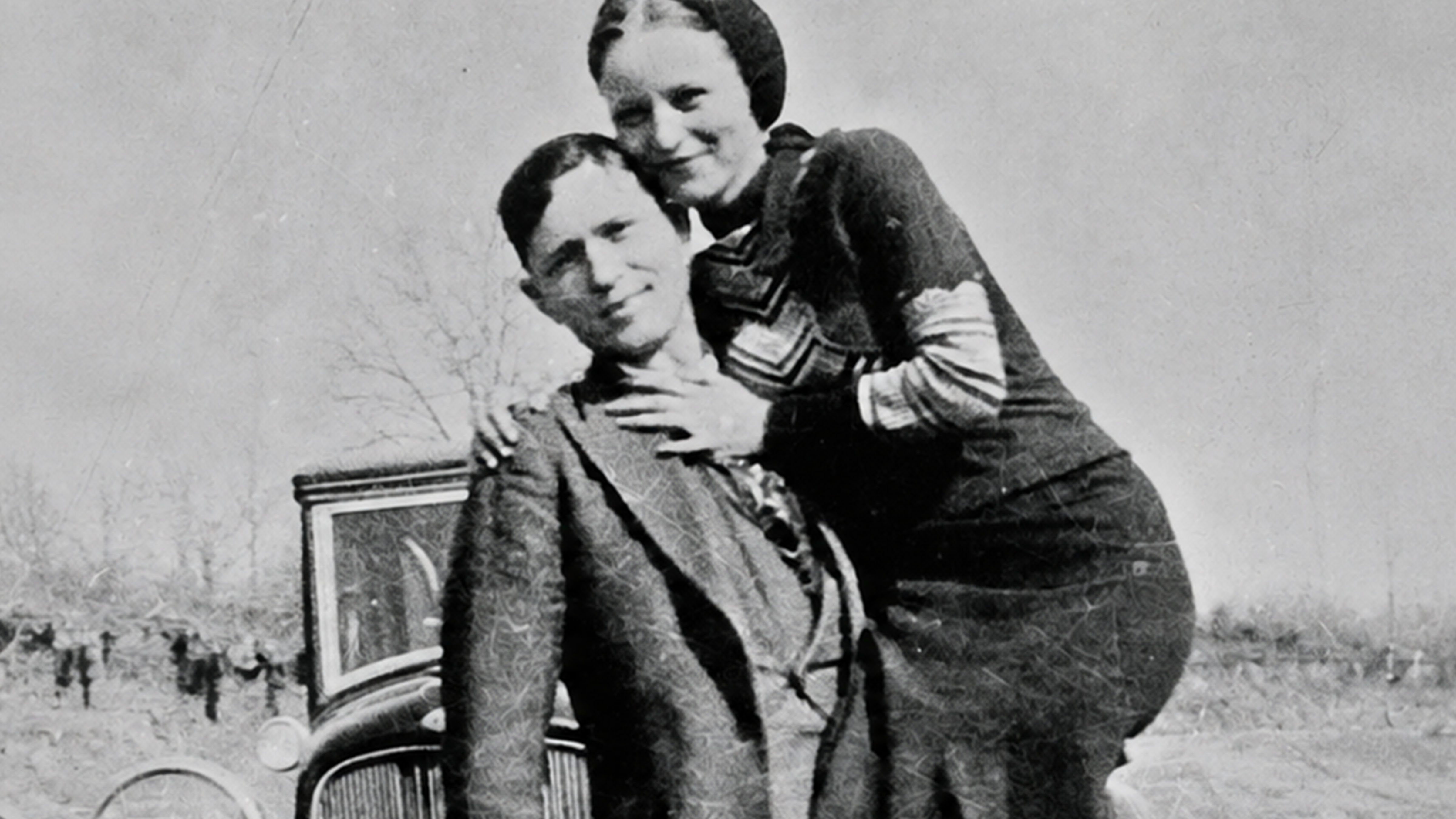
Nearly a century after their deaths on a rural Louisiana road, Bonnie Parker and Clyde Barrow remain among the most recognizable figures in American criminal history. Their story continues to shape modern portrayals of outlaws in film, television, music, and popular culture, while also reflecting the economic desperation, media fascination, and law enforcement challenges of Depression-era America.
On May 23, 1934, Bonnie and Clyde were killed in a police ambush near Gibsland, Louisiana, ending a violent crime spree that had stretched across multiple states and captured national attention. By the time of their deaths, the pair had become symbols of rebellion for some Americans, even as authorities considered them highly dangerous fugitives responsible for numerous robberies, kidnappings, and murders.
The ambush marked the climax of one of the most publicized manhunts in United States history.
Bonnie Parker was born in Rowena, Texas, in 1910, while Clyde Barrow was born near Telico, Texas, the following year. Both grew up during a period of economic instability and social hardship that worsened dramatically after the Great Depression began in 1929. Historians have noted that widespread poverty, unemployment, and distrust of banks during the era contributed to the public fascination surrounding outlaw figures.
Clyde began engaging in criminal activity at a young age, initially committing small thefts before escalating into armed robbery and other violent crimes. Bonnie met Clyde in Dallas in early 1930, and the two soon formed a close personal and criminal partnership that would become legendary in American history.
Over the next several years, the Barrow Gang carried out robberies across Texas, Oklahoma, Missouri, Arkansas, Louisiana, and other states. Contrary to later Hollywood portrayals, many of the gang’s robberies targeted small stores and gas stations rather than major banks. Nevertheless, sensational newspaper coverage transformed Bonnie and Clyde into nationally known figures.
Their notoriety expanded significantly after dramatic crime scene photographs were discovered in 1933 at a Missouri hideout abandoned by the gang. The images showed Bonnie posing with cigars and weapons, helping create the rebellious outlaw image that newspapers rapidly amplified across the country.
At the same time, law enforcement agencies viewed the pair as increasingly dangerous. Authorities linked the gang to the deaths of at least 13 people, including several police officers. Shootouts with police became more frequent as the gang attempted to evade capture while constantly moving between states.
The gang’s ability to cross state lines created major challenges for local authorities during an era before modern federal policing systems were fully developed. The case also highlighted limitations in communication and coordination between law enforcement agencies in different jurisdictions.
Former Texas Ranger Frank Hamer was eventually recruited to track the pair. Hamer spent months studying the gang’s movements, associates, and travel patterns before organizing a coordinated ambush in Bienville Parish, Louisiana.
Early on the morning of May 23, 1934, officers concealed themselves along Highway 154 near Gibsland. Investigators had determined that Bonnie and Clyde would likely travel that route while visiting the father of gang associate Henry Methvin.
When Clyde slowed the gang’s stolen Ford V8 near the roadside, officers opened fire almost immediately. Reports indicate that more than 100 rounds were fired into the vehicle within seconds. Bonnie Parker and Clyde Barrow were both killed instantly.
Photographs taken shortly after the ambush spread rapidly through newspapers nationwide. Crowds reportedly gathered at the scene within hours, and public interest surrounding the deaths became enormous. The bullet-riddled vehicle itself later became a touring attraction displayed across the United States.
The deaths of Bonnie and Clyde occurred during a period when organized crime and outlaw culture occupied a major place in American public consciousness. The Prohibition era had already elevated criminals such as Al Capone and John Dillinger into headline figures, while the hardships of the Depression contributed to a complicated public attitude toward anti-establishment figures.
Some Americans viewed Bonnie and Clyde as ruthless killers, while others saw them as rebellious outsiders resisting banks and government authority during a time of widespread economic suffering. Historians generally caution that much of the romanticized image surrounding the pair emerged from media sensationalism rather than historical reality.
Modern scholarship has increasingly focused on separating myth from fact.
Researchers note that the Barrow Gang often lived in harsh conditions, constantly fleeing authorities while suffering injuries, exhaustion, and psychological stress. Bonnie herself was severely injured in a 1933 car accident that left her with significant mobility issues during the final year of the gang’s run.
The story of Bonnie and Clyde continued evolving long after their deaths. Their lives inspired books, songs, documentaries, and films, most notably the influential 1967 movie Bonnie and Clyde starring Warren Beatty and Faye Dunaway. The film helped redefine modern crime cinema and influenced a generation of filmmakers through its stylized violence and antihero storytelling.
The cultural impact extended beyond Hollywood. The pair became embedded in American folklore as symbols of outlaw romance, rebellion, and the darker side of Depression-era survival. Their story also contributed to ongoing public fascination with true crime narratives that continues into the modern streaming and digital media era.
At the same time, the case influenced law enforcement practices in the United States. The highly publicized interstate manhunt reinforced arguments for stronger federal investigative powers and improved cooperation between agencies, developments that expanded significantly during the 1930s.
Today, Bonnie Parker and Clyde Barrow remain among the most studied and mythologized criminal figures in American history. Their deaths on May 23, 1934, ended a violent chapter of the Great Depression era, but the public intrigue surrounding their story has endured for generations.
About the Author Brad Socha is the founder of The Universal Record, focused on sourced, factual global reporting. Coverage includes international news, geopolitics, technology, and major developments.