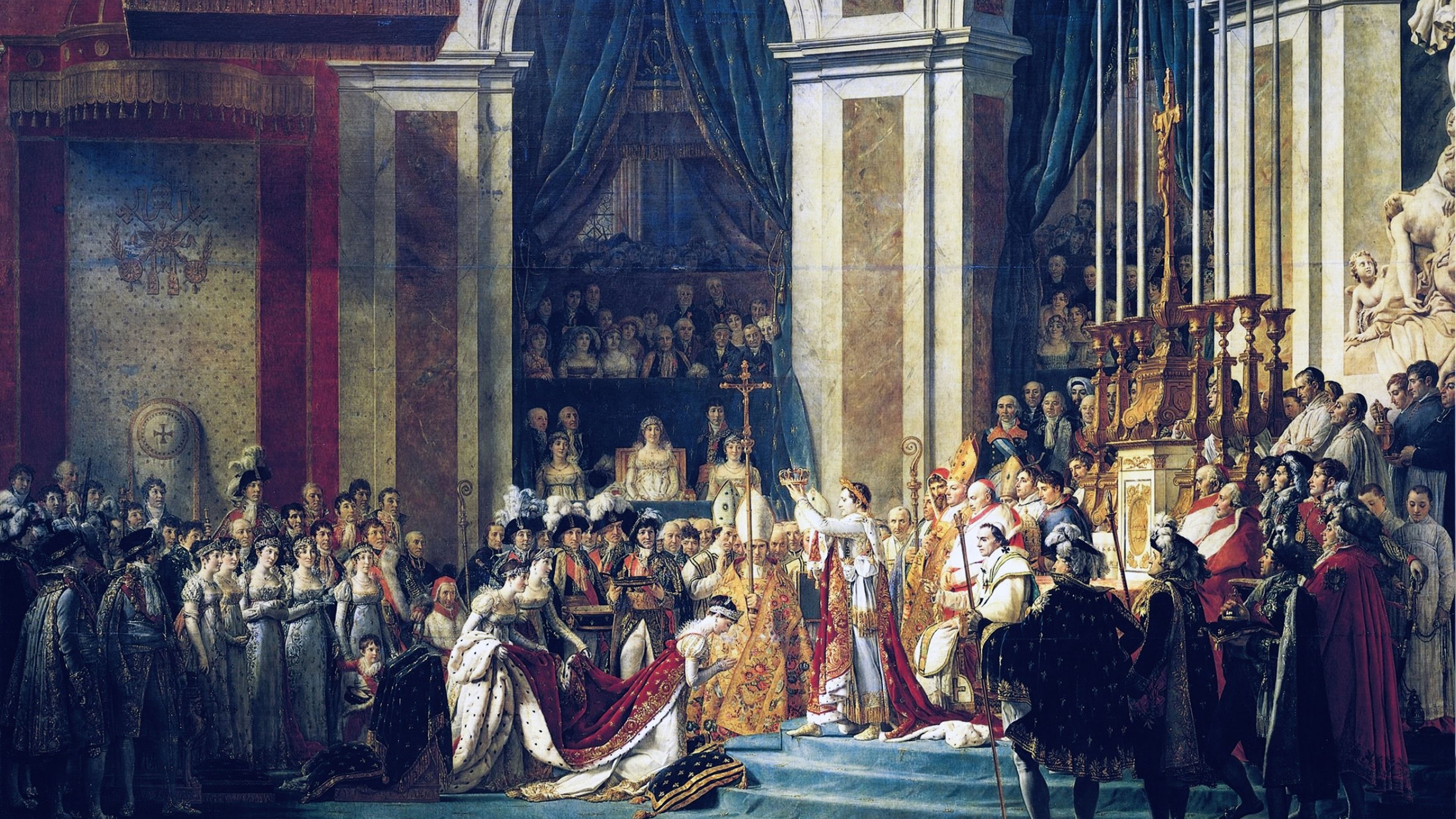
More than two centuries after Napoleon Bonaparte declared himself Emperor of France, historians continue to study the moment as one of the defining turning points in modern political history. The decision transformed France from a revolutionary republic into an empire and helped ignite a period of military expansion, political reform, and continental conflict that reshaped Europe for generations.
On May 18, 1804, the French Senate officially proclaimed Napoleon Bonaparte Emperor of the French after years of political instability following the French Revolution. The declaration marked the formal end of revolutionary republican leadership in France and the beginning of a new imperial era under one of history’s most influential military and political figures.
The event remains globally significant because it fundamentally changed the political structure of Europe during the early nineteenth century. Napoleon’s rise altered international alliances, redrew borders, modernized legal systems, and triggered wars that affected nearly every major European power. Many historians view the moment as the beginning of a new phase of centralized modern governance and nationalism that would continue influencing world politics long after Napoleon’s downfall.
Napoleon first emerged as a military commander during the turbulent years following the French Revolution. France had undergone dramatic upheaval after the monarchy was overthrown in 1789, leading to years of violence, political purges, economic instability, and conflict with foreign powers. Amid the chaos, Napoleon gained national attention through a series of military victories that strengthened France’s position across Europe.
By 1799, Napoleon seized political power through a coup and established himself as First Consul of France. Although France technically remained a republic, Napoleon gradually consolidated authority while expanding his influence over the military, judiciary, and state administration. Supporters viewed him as a stabilizing force capable of restoring order after years of revolutionary turmoil, while critics warned that France was drifting back toward authoritarian rule.
The proclamation of Napoleon as Emperor in 1804 formalized that transformation. Unlike traditional monarchies based entirely on hereditary succession, Napoleon presented his rule as a continuation of revolutionary achievements combined with strong centralized leadership. He argued that stable government and national unity were necessary to preserve France from further internal conflict and foreign threats.
The following months culminated in Napoleon’s elaborate coronation ceremony at Notre-Dame Cathedral in Paris later that year. In one of the most famous moments in European history, Napoleon crowned himself Emperor in front of Pope Pius VII, symbolically demonstrating that his authority came from his own power and the French state rather than direct approval from the Church.
Napoleon’s reign would soon expand far beyond France. Through military campaigns and political alliances, French influence spread across much of continental Europe. At the height of his power, Napoleon controlled or influenced territories stretching from Spain to parts of Eastern Europe. The Napoleonic Wars reshaped the balance of power among European nations and contributed to the rise of modern nationalism in several countries.
Despite the widespread destruction caused by years of warfare, Napoleon’s rule also produced major institutional changes that continue to influence governments today. One of the most enduring developments was the Napoleonic Code, a legal framework that standardized laws relating to property rights, civil liberties, contracts, and secular governance. Variations of the code influenced legal systems across Europe and parts of Latin America and remain foundational in many civil law jurisdictions.
Historians also point to Napoleon’s administrative reforms, infrastructure projects, education restructuring, and centralized bureaucracy as important elements of modern state development. His government improved tax collection systems, expanded public works, and strengthened state institutions that became models for future governments.
At the same time, critics argue that Napoleon’s ambition contributed to enormous human suffering across Europe. The Napoleonic Wars resulted in millions of military and civilian deaths through combat, disease, famine, and economic disruption. Nations repeatedly shifted alliances in an effort to contain French expansion, eventually leading to massive coalitions against Napoleon’s empire.
The turning point came after France’s disastrous invasion of Russia in 1812, which severely weakened Napoleon’s military strength. Over the following years, European powers gradually pushed French forces back. Napoleon was forced to abdicate in 1814, briefly returned to power during the Hundred Days in 1815, and was ultimately defeated at the Battle of Waterloo before being exiled permanently.
Even after his defeat, Napoleon’s influence continued shaping global politics, military strategy, and legal systems. Historians remain divided over whether he should primarily be remembered as a reformer who modernized Europe or as a ruler whose wars devastated the continent. Most agree, however, that his rise to emperor marked one of the most consequential political transformations of the nineteenth century.
Today, Napoleon remains one of the most studied figures in world history. Museums, archives, military academies, and universities continue examining the long-term effects of his leadership on governance, warfare, economics, and national identity. The declaration of Napoleon as Emperor on May 18, 1804 remains a defining historical moment that helped shape the modern European order and influenced global political development for generations.
About the Author Brad Socha is the founder of The Universal Record, focused on sourced, factual global reporting. Coverage includes international news, geopolitics, technology, and major developments.