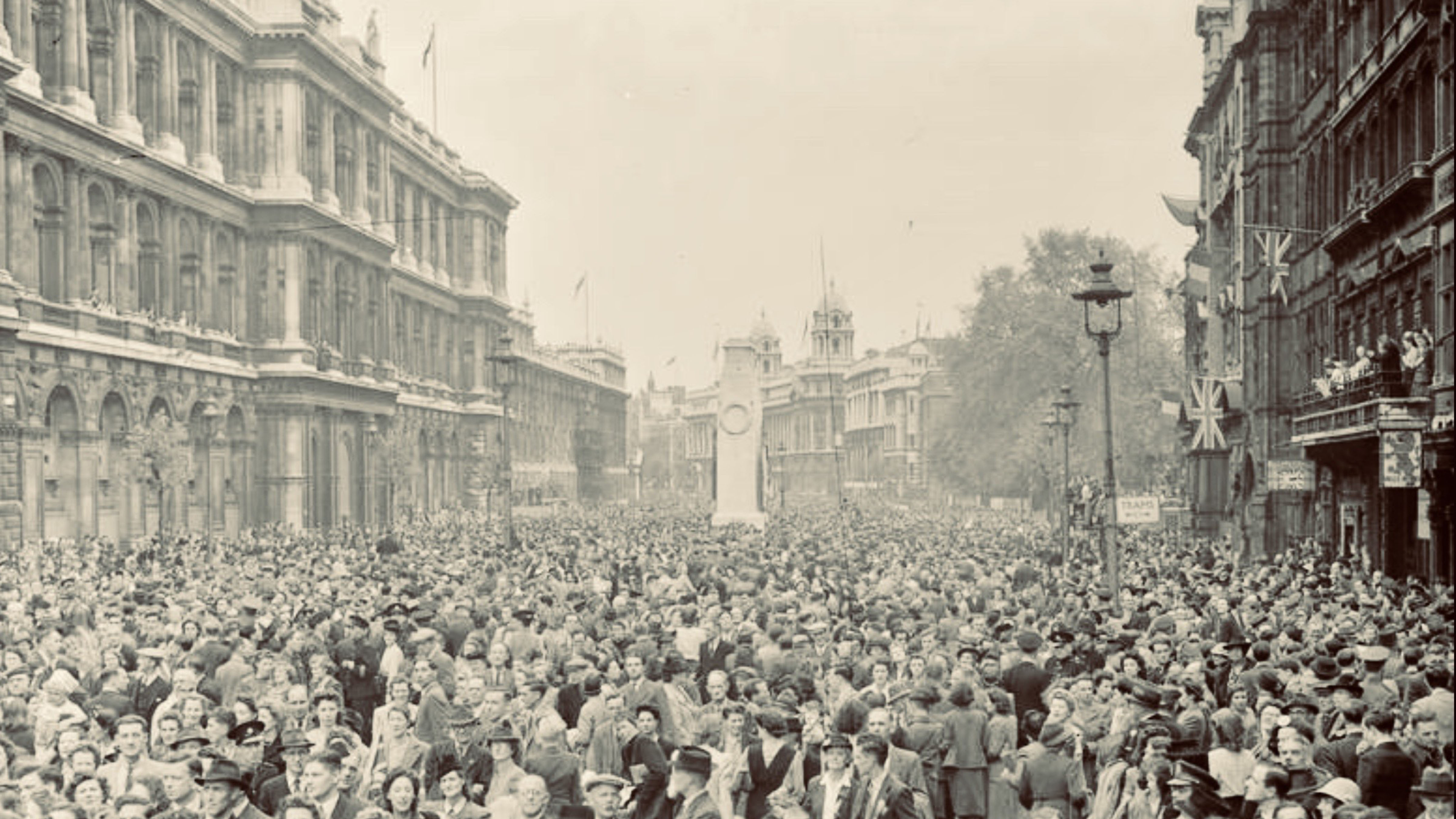
Allied nations erupted in celebration on May 8, 1945 after Nazi Germany’s surrender officially took effect, bringing an end to nearly six years of devastating war across Europe and marking one of the most significant turning points in modern world history.
Victory in Europe Day, commonly known as VE Day, remains one of the most important historical anniversaries because it marked the effective end of World War II in Europe after years of destruction, occupation, genocide, and global conflict. More than eighty years later, the moment still shapes international alliances, military strategy, collective memory, and political relations across Europe and the wider world. The surrender of Nazi Germany ended large-scale combat on the European continent and triggered massive celebrations in cities that had endured years of bombings, rationing, and wartime loss.
On May 8, 1945, citizens across Britain, France, the United States, Canada, and many other Allied nations gathered in streets and public squares after confirmation that Germany’s unconditional surrender had officially taken effect. Bells rang from churches, crowds waved national flags, and massive gatherings formed in capitals including London, Paris, and New York. The day became symbolic not only because the war ended in Europe, but because it represented the collapse of Adolf Hitler’s Third Reich and the liberation of territories occupied by Nazi forces.
The surrender itself followed months of rapid German military collapse. Soviet forces had captured Berlin after intense fighting, while Allied armies advanced into Germany from the west. Adolf Hitler died by suicide in Berlin on April 30, 1945 as Germany’s military situation became hopeless. In the days that followed, German officials sought terms to end the war. An initial surrender document was signed in Reims, France on May 7, 1945, before a second formal ratification ceremony took place in Berlin later that day to satisfy Soviet leadership demands. The ceasefire officially came into force on May 8.
British Prime Minister Winston Churchill announced victory to the public by radio, declaring that the war against Germany had ended. King George VI and members of the royal family appeared on the balcony of Buckingham Palace before enormous cheering crowds gathered in central London. In the United States, President Harry S. Truman dedicated the victory to former President Franklin D. Roosevelt, who had died only weeks earlier. Across Europe, many civilians who had survived occupation, concentration camps, and years of wartime hardship celebrated while also mourning millions killed during the conflict.
VE Day marked the end of one of the deadliest wars in human history. Tens of millions of people had died during World War II by 1945, including civilians killed in bombings, genocide victims during the Holocaust, military personnel from numerous nations, and populations devastated by famine and displacement. Entire cities across Europe had been destroyed or severely damaged. Infrastructure, transportation systems, factories, and homes across large parts of the continent required years of rebuilding after the fighting stopped.
Despite the celebrations, VE Day did not mark the complete end of World War II globally. Fighting continued in the Pacific theatre against Imperial Japan for several more months. The war officially concluded only after Japan announced its surrender in August 1945 following the atomic bombings of Hiroshima and Nagasaki and the Soviet declaration of war against Japan. Nevertheless, May 8 became one of the defining dates of the twentieth century because it represented the end of Nazi control in Europe and the beginning of a new geopolitical era.
The aftermath of VE Day reshaped the global balance of power. Europe emerged economically devastated, while the United States and Soviet Union became the world’s dominant superpowers. The political tensions that followed eventually led to the Cold War, dividing Europe between Western democracies and Soviet-controlled communist states. International institutions including the United Nations were strengthened in hopes of preventing another global conflict of similar scale.
Today, VE Day commemorations continue across Europe and North America through ceremonies, memorials, military tributes, and moments of remembrance. Veterans, political leaders, historians, and civilians gather annually to honour those who served and those who lost their lives during the war. The anniversary also serves as a reminder of the consequences of authoritarianism, nationalism, genocide, and large-scale military conflict.
As surviving veterans from the Second World War become increasingly rare, historical anniversaries such as VE Day have taken on greater importance for education and public memory. Museums, archives, documentaries, and official ceremonies continue preserving eyewitness accounts and wartime records to ensure future generations understand both the scale of the conflict and the significance of its conclusion.
The events of May 8, 1945 remain deeply connected to the modern international system, NATO alliances, European security structures, and ongoing discussions surrounding democracy and global stability. More than eight decades later, VE Day continues to stand as one of the defining moments of modern history.
About the Author Brad Socha is the founder of The Universal Record, focused on sourced, factual global reporting. Coverage includes international news, geopolitics, technology, and major developments.