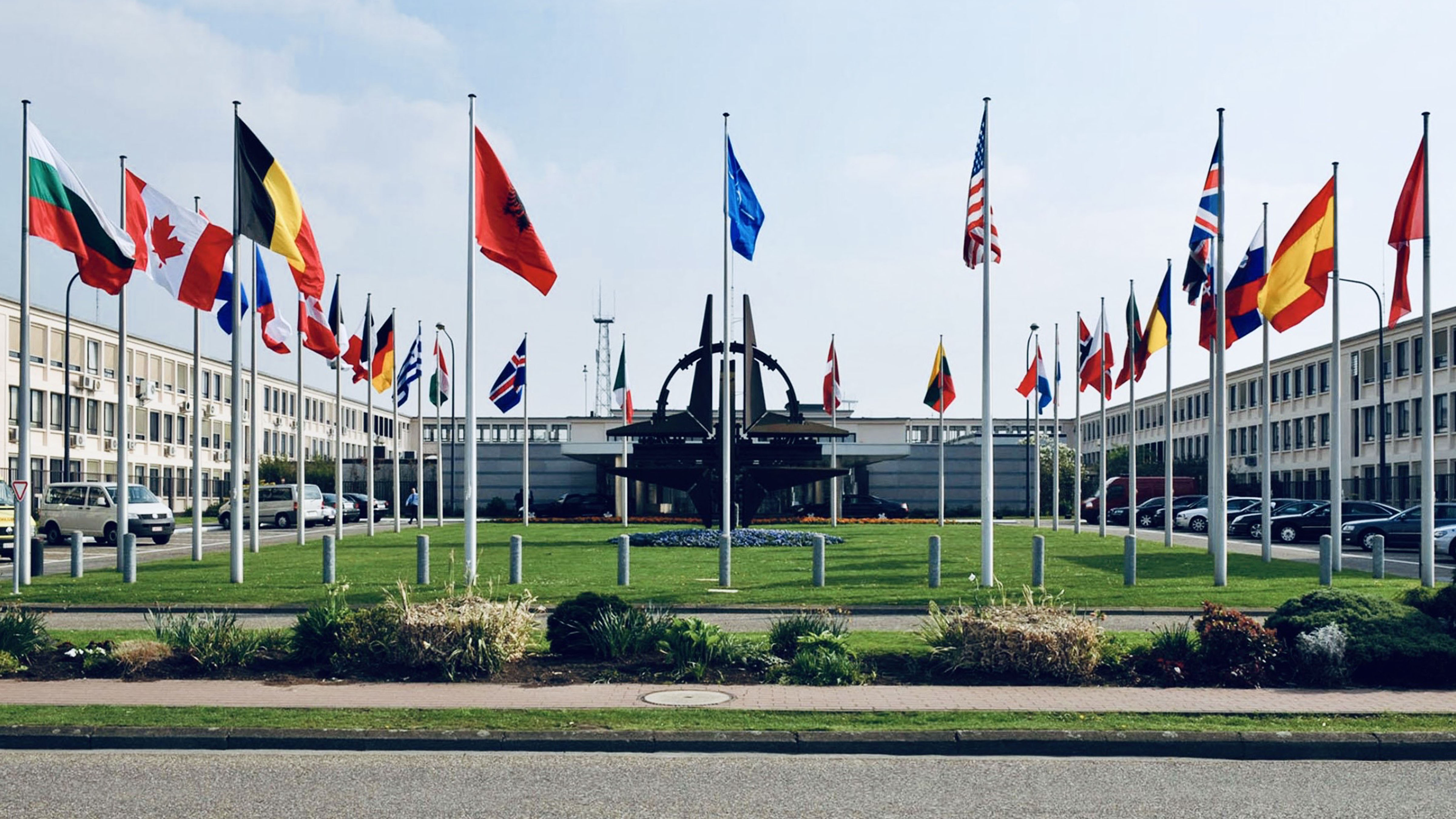
The founding of NATO on May 4, 1949, still matters today because the alliance remains one of the most powerful and consequential forces in global security. As tensions between major powers continue to evolve and conflicts reshape international relationships, the origins of NATO offer critical insight into how and why nations cooperate for collective defence. What began as a response to post-war uncertainty has become a central pillar of stability across Europe and North America.
In the aftermath of World War II, much of Europe was devastated economically and militarily. At the same time, the geopolitical landscape was rapidly shifting. The Soviet Union was expanding its influence across Eastern Europe, and Western nations grew increasingly concerned about the spread of communism and the potential for further conflict. Against this backdrop, leaders in North America and Western Europe sought a unified strategy to deter aggression and ensure mutual security.
On April 4, 1949, twelve countries signed the North Atlantic Treaty in Washington, D.C., officially establishing the North Atlantic Treaty Organization, commonly known as NATO. The founding members included the United States, Canada, the United Kingdom, France, Belgium, the Netherlands, Luxembourg, Norway, Denmark, Iceland, Italy, and Portugal. Their agreement created a collective defence pact, built on the principle that an attack on one member would be considered an attack on all.
This principle, known as Article 5 of the treaty, became the foundation of NATO’s strategic power. It was designed to prevent conflict rather than provoke it, sending a clear message that any aggression against a member state would trigger a unified response. At a time when the threat of another large-scale war loomed, this commitment to mutual defence represented a new approach to international security.
The alliance quickly became a defining feature of the Cold War. NATO stood in opposition to the Soviet-led Eastern Bloc, which later formalized its own military alliance through the Warsaw Pact. For decades, the two blocs represented competing ideologies and military power structures, with NATO serving as a key deterrent against potential Soviet expansion into Western Europe.
While NATO was originally formed as a military alliance, its role expanded over time. Beyond defence, it became a platform for political cooperation, intelligence sharing, and strategic coordination among its members. The organization developed integrated military command structures and conducted joint exercises, ensuring that member nations could operate effectively together if needed.
The end of the Cold War in the early 1990s brought significant changes to NATO’s purpose and direction. With the collapse of the Soviet Union, questions arose about whether the alliance was still necessary. Instead of dissolving, NATO adapted. It expanded its membership eastward, incorporating former Eastern Bloc countries and redefining its mission to address new global challenges.
In the decades that followed, NATO became involved in crisis management and peacekeeping operations beyond its traditional geographic boundaries. Missions in the Balkans during the 1990s demonstrated its ability to intervene in regional conflicts, while its role in Afghanistan after the September 11 attacks marked the first time Article 5 was invoked. These developments signaled a shift from a purely defensive alliance to one capable of addressing broader security threats.
Today, NATO remains highly relevant as global tensions once again rise. The alliance has taken on renewed importance in response to conflicts in Eastern Europe and shifting power dynamics involving major global players. Military cooperation, defence spending, and strategic positioning have all returned to the forefront of international discussions, reinforcing NATO’s role as a stabilizing force.
At the same time, NATO faces ongoing challenges. Differences among member states on defence priorities, political alignment, and resource commitments can create friction within the alliance. Emerging threats such as cyber warfare, artificial intelligence in military systems, and hybrid warfare tactics require NATO to continuously evolve. The organization must balance its traditional mission with the demands of a rapidly changing global landscape.
Despite these challenges, the core idea behind NATO remains unchanged. The belief that collective security is stronger than individual defence continues to guide its actions. This concept has helped prevent large-scale conflict among member nations for more than seven decades, making NATO one of the longest-standing and most influential alliances in history.
The significance of NATO’s founding goes beyond military strategy. It represents a broader commitment to cooperation, shared values, and the prevention of conflict through unity. In a world where geopolitical tensions can escalate quickly, the existence of such an alliance serves as both a deterrent and a framework for collaboration.
As of today, NATO includes more than 30 member countries, reflecting its continued expansion and relevance. Its decisions influence global security policies, defence strategies, and diplomatic relationships across multiple regions. The alliance’s ability to adapt while maintaining its founding principles is a key reason for its longevity.
Looking back at May 4, 1949, it becomes clear that the creation of NATO was not just a response to a specific moment in history. It was the beginning of a long-term strategy to maintain peace through strength and cooperation. More than 75 years later, that strategy continues to shape the world.
About the Author Brad Socha is the founder of The Universal Record, focused on sourced, factual global reporting. Coverage includes international news, geopolitics, technology, and major developments.