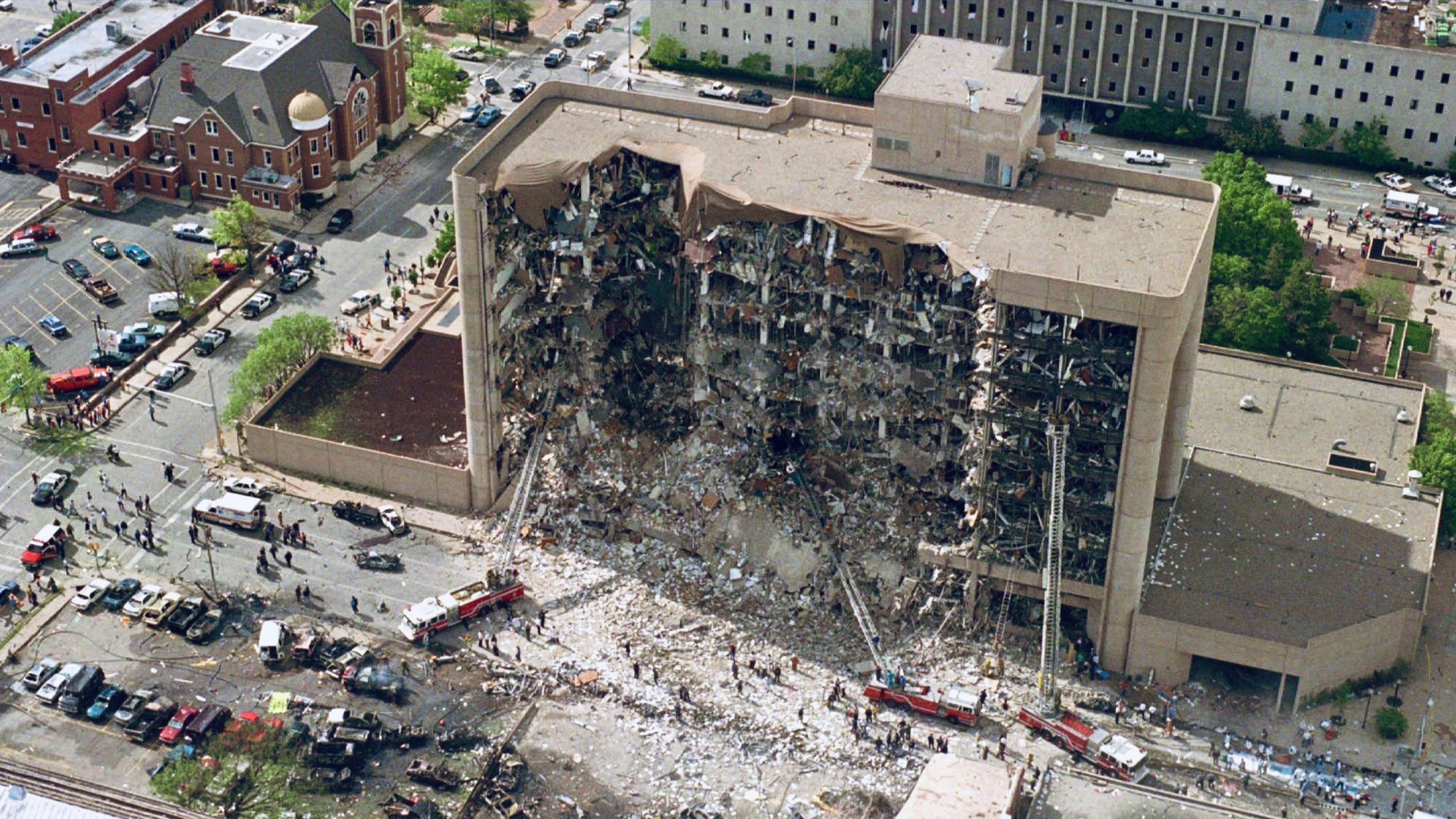
On April 19, 1995, a powerful truck bomb detonated outside the Alfred P. Murrah Federal Building in Oklahoma City, Oklahoma, killing 168 people and injuring hundreds more in what remains the deadliest act of domestic terrorism in United States history.
The explosion occurred at approximately 9:02 a.m. local time, causing the partial collapse of the nine-storey building and widespread destruction in the surrounding area. The blast destroyed or damaged more than 300 buildings, shattered windows across a large radius, and left a significant portion of downtown Oklahoma City in ruins.
Among those killed were 19 children who were in a daycare centre located within the federal building. The scale of the loss deeply affected the nation and prompted an outpouring of grief and solidarity across the United States.
Emergency responders and volunteers conducted extensive rescue and recovery operations in the aftermath, working for days to locate survivors and recover victims from the rubble.
The attack was carried out by Timothy McVeigh, who was arrested shortly after the explosion. He was later convicted on multiple federal charges and sentenced to death. An accomplice, Terry Nichols, received multiple life sentences.
Investigators determined that the bombing was motivated by anti-government extremism. The date of the attack coincided with the second anniversary of the Waco siege, which influenced the perpetrator’s actions.
The bombing led to significant changes in U.S. domestic security and counterterrorism efforts. In 1996, the U.S. government enacted the Antiterrorism and Effective Death Penalty Act, which expanded law enforcement powers and strengthened penalties related to terrorism.
The site of the attack is now home to the Oklahoma City National Memorial & Museum, which honours the victims, survivors, and first responders.
Today, the Oklahoma City bombing remains a defining moment in modern U.S. history, highlighting the threat of domestic extremism and shaping national security policies for decades.
About the Author Brad Socha is the founder of The Universal Record, focused on sourced, factual global reporting. Coverage includes international news, geopolitics, technology, and major developments.