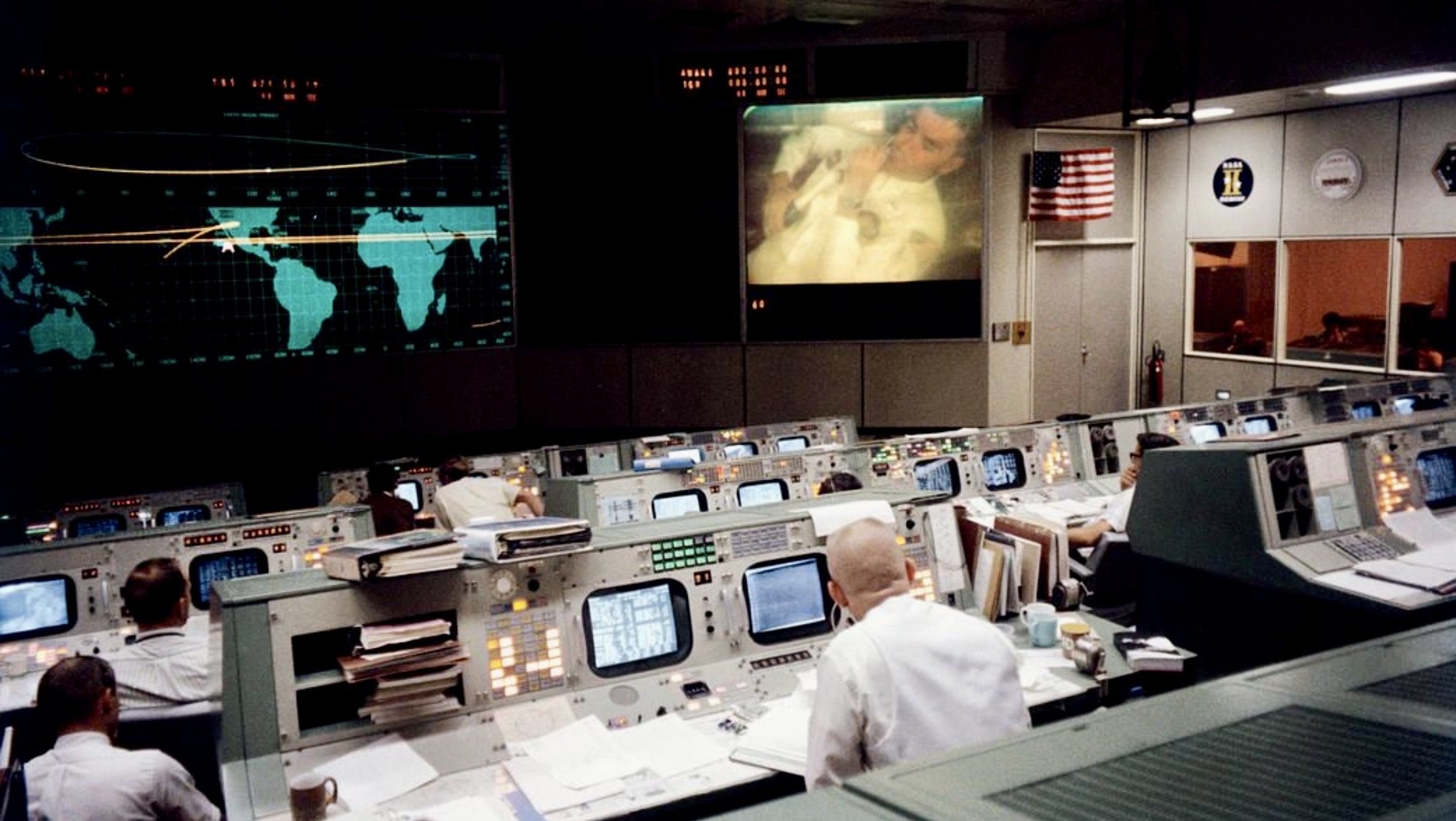
On April 13, 1970, the crew of Apollo 13 experienced a critical in-flight emergency when an oxygen tank exploded aboard the spacecraft, forcing the mission to shift from a planned lunar landing to a high-risk effort to return safely to Earth.
The explosion occurred approximately 200,000 miles from Earth, severely damaging the spacecraft and causing a rapid loss of oxygen and electrical power. Astronauts Jim Lovell, Jack Swigert, and Fred Haise were forced to abandon their original mission objectives and focus entirely on survival.
During the crisis, Swigert transmitted the now-famous message to NASA Mission Control: “Houston, we’ve had a problem,” a phrase that would become one of the most recognized lines in space exploration history.
With the command module losing power, the crew moved into the lunar module, using it as a lifeboat to sustain life while engineers on Earth worked to develop emergency procedures. Mission control teams in Houston calculated a precise trajectory to loop the spacecraft around the Moon and guide it back toward Earth.
The crew faced multiple challenges during the return journey, including limited oxygen, water shortages, and dangerously low temperatures inside the spacecraft. Engineers devised improvised solutions, including modifications to carbon dioxide filters using onboard materials, to keep the astronauts alive.
After nearly four days of crisis management, Apollo 13 safely re-entered Earth’s atmosphere and splashed down in the Pacific Ocean on April 17, 1970. All three astronauts survived, and the mission was widely hailed as a “successful failure” due to the extraordinary problem-solving and coordination between the crew and mission control.
Apollo 13 remains one of the most significant events in space exploration history, demonstrating both the risks of human spaceflight and the critical importance of engineering, teamwork, and resilience under extreme conditions.
About the Author Brad Socha is the founder of The Universal Record, focused on sourced, factual global reporting. Coverage includes international news, geopolitics, technology, and major developments.